
Seeing red or irritated skin on a puppy can be worrying for any pet owner. Sometimes the redness is caused by something minor, such as temporary irritation after playing outdoors. In other cases, it may be linked to allergies, parasites, infections, or another skin condition that needs veterinary attention.
Because many puppy skin problems can look similar, skin redness alone cannot tell you exactly what is causing the problem. The location of the redness, how long it has been present, whether your puppy is itchy, and whether other symptoms are appearing can provide useful clues.
This guide explains the common causes of puppy skin redness, what signs to watch for, what you can do at home, and when professional veterinary care is appropriate.
What Does Red Skin in a Puppy Mean?
Healthy puppy skin can vary in color depending on the puppy’s breed, coat, and natural pigmentation. When the skin becomes noticeably redder than usual, it may indicate inflammation or irritation.
Inflammation is the body’s response to irritation, injury, allergens, infection, or other triggers.
You might notice redness:
• On the belly
• Around the paws
• Between the toes
• Around the ears
• Under the armpits
• Around the neck
• On the face
• Around the tail
• In areas where the puppy has been scratching
Redness can occur by itself, but it may also be accompanied by itching, hair loss, bumps, scabs, odor, moisture, or discharge.
Common Causes of Puppy Skin Redness
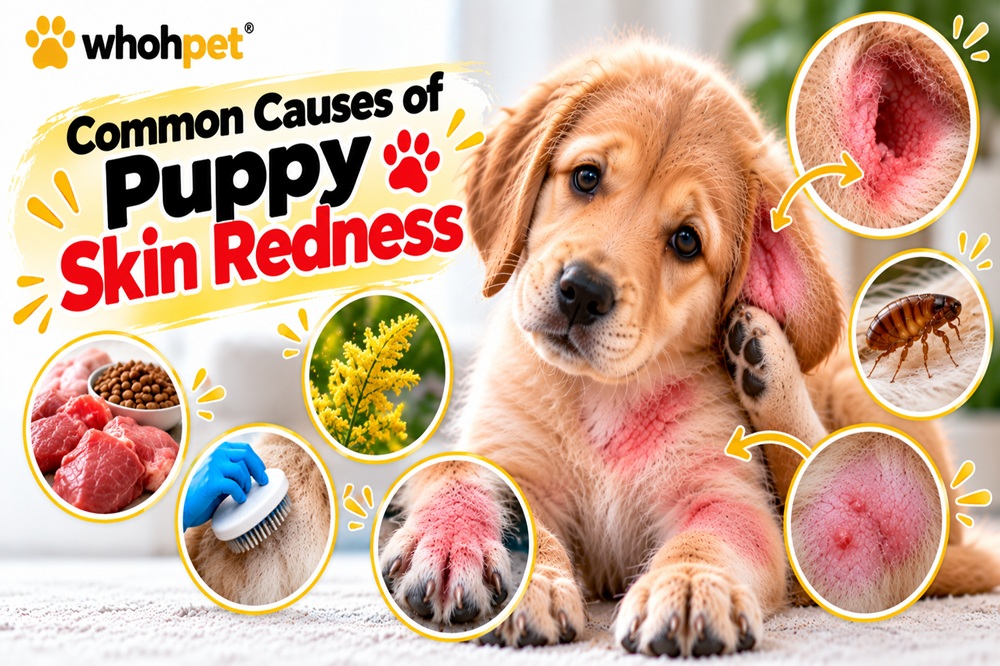
1. Allergies
Allergies are one possible reason a puppy develops red, itchy skin.
A puppy may react to environmental allergens, certain food ingredients, flea exposure, or substances that come into contact with the skin.
Allergic skin problems often cause itching along with redness. Your puppy may scratch, lick, chew, or rub the affected areas.
Common areas include:
• Paws
• Face
• Ears
• Belly
• Armpits
• Groin
However, redness does not automatically mean your puppy has an allergy. Other causes need to be considered as well.
2. Flea Bites and Flea Allergy
Even a small number of fleas can cause significant itching in a sensitive puppy.
Some dogs develop an allergic reaction to proteins in flea saliva. This can produce intense itching and inflammation.
You may notice:
• Red skin
• Excessive scratching
• Biting at the skin
• Hair thinning
• Small scabs
• Irritated areas around the rear body and tail region
Sometimes owners do not see fleas because they can be difficult to find. A veterinarian can help determine whether fleas or flea allergy could be involved.
Regular, veterinarian-recommended parasite prevention is an important part of protecting puppies.
3. Skin Infections
Bacterial and yeast-related skin problems can cause redness and irritation.
An infection may develop as a primary problem or occur after another condition, such as an allergy, damages the skin barrier.
Possible signs include:
• Redness
• Odor
• Greasy skin
• Crusts
• Pimples or small bumps
• Moist or oozing areas
• Hair loss
• Increased itching
If the skin is becoming more painful, wet, swollen, or smelly, it is better to have your puppy examined rather than trying multiple home treatments.
4. Parasites Other Than Fleas
Other parasites can also cause irritated skin.
For example, certain mites can cause intense itching, redness, hair loss, crusting, or scaly skin. The exact appearance can vary depending on the parasite and the affected area.
Because several skin conditions can look alike, identifying the specific parasite may require veterinary examination and testing.
Do not assume that every itchy, red patch is an allergy.
5. Contact Irritation
A puppy’s skin can become irritated after contact with certain substances.
Possible triggers include:
• Strong cleaning products
• Certain shampoos
• Grooming products
• Laundry products
• Plants
• Chemicals
• Rough or irritating materials
Contact irritation may appear in areas that directly touched the substance.
If the redness started after introducing a new product, tell your veterinarian about the change. Avoiding the suspected irritant may be part of managing the problem.
6. Excessive Scratching or Licking
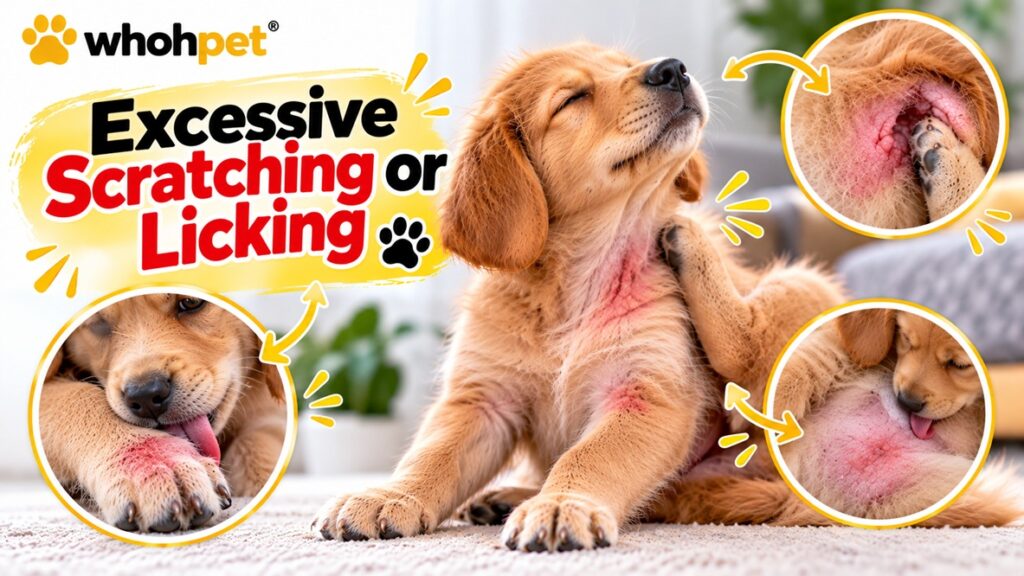
Sometimes redness becomes worse because of the puppy’s own behavior.
Imagine that your puppy has mild itching. It scratches the area repeatedly. The scratching damages the outer skin layer, which creates more irritation. The puppy then scratches even more.
This can create a cycle:
Itching → Scratching → Skin damage → More inflammation → More itching
The same can happen with excessive paw licking or chewing.
Finding the reason for the original itching is therefore important.
7. Dry Skin
Dry skin can sometimes make a puppy’s skin look irritated or slightly red.
Dryness may be associated with environmental conditions, bathing practices, or other underlying skin problems.
You may also notice:
• Flaking
• Small scales
• Mild itching
• Rough-looking skin
If dryness continues or is accompanied by significant itching, hair loss, or sores, the underlying cause should be investigated.
8. Heat and Moisture
Warm, humid conditions can make some skin problems more noticeable.
Moisture trapped in skin folds or other areas can contribute to irritation and create an environment where microorganisms may multiply.
Pay particular attention to areas such as:
• Skin folds
• Between toes
• Around the ears
• Under the armpits
• Groin area
Keeping the puppy clean and appropriately dry can help, but persistent redness should not simply be blamed on the weather.
9. Grooming-Related Irritation
Puppies have sensitive skin, and excessive bathing or the use of unsuitable products can contribute to irritation.
Problems may occur after:
• Using a new shampoo
• Using heavily fragranced products
• Leaving shampoo residue on the skin
• Bathing too frequently
• Using products not designed for dogs
Always choose grooming products appropriate for puppies and follow the product directions.
If your puppy develops significant redness after grooming, discuss it with your veterinarian before using the same product again.
10. Minor Scratches and Physical Irritation
A puppy’s active lifestyle can sometimes lead to minor skin injuries.
Running through grass, playing with another puppy, rubbing against rough surfaces, or scratching can cause small areas of irritation.
A minor injury may improve as the skin heals.
However, redness that becomes larger, painful, swollen, wet, or infected should be evaluated by a veterinarian.
Where Is the Redness Located?
The location of the redness can provide useful clues, although it cannot establish a diagnosis by itself.
- Red belly
Possible factors include allergies, contact irritation, parasites, or infection.
- Red paws
Paw redness may occur with allergies, irritation, excessive licking, or infection.
- Red ears
Possible causes include allergies, ear inflammation, parasites, or infection.
- Red armpits or groin
These areas can become irritated because of allergies, moisture, friction, or skin-fold problems.
- Red face
Possible causes include allergies, irritation, parasites, infection, or excessive rubbing.
The important point is to look at the whole pattern, rather than focusing only on the red patch.
Red Skin With Itching: What Does It Suggest?
When redness and intense itching occur together, allergies and parasites are among the possibilities.
Your puppy may:
• Scratch repeatedly
• Lick its paws
• Bite its skin
• Rub its face
• Shake its head
• Roll on the floor
• Wake up because of itching
But itching can also occur with infections and other skin conditions.
If your puppy is constantly uncomfortable, it is better to find the underlying cause rather than repeatedly trying different creams or shampoos.
Red Skin With Hair Loss
Hair loss alongside redness deserves more attention.
Repeated scratching can break or pull out hair, but hair loss may also occur with infections, parasites, allergies, or other skin disorders.
Look for:
• Circular bald patches
• Thinning fur
• Broken hairs
• Crusts
• Scaling
• Expanding areas of redness
If the hair loss is spreading or new bald areas are appearing, arrange a veterinary examination.
Red Skin With Scabs or Sores
Scabs usually indicate that the skin has been injured or inflamed.
They can develop after scratching, biting, infection, parasites, or other forms of irritation.
Do not pick at the scabs or apply random human creams.
If there are open wounds, pus, bleeding, significant swelling, or increasing pain, veterinary attention is appropriate.
How Is the Cause of Puppy Skin Redness Diagnosed?
A veterinarian will usually consider several things rather than relying on redness alone.
They may ask about:
• Your puppy’s age
• When the redness started
• Where it first appeared
• Whether it is spreading
• Itching or licking
• Diet
• Flea and parasite prevention
• Recent bathing or grooming
• Outdoor exposure
• Previous skin problems
• Other symptoms
Depending on the situation, the veterinarian may examine skin samples, look for parasites, evaluate possible infections, or recommend other testing.
The goal is to determine what is causing the inflammation, rather than simply making the skin look less red.
Can You Treat Puppy Red Skin at Home?

That depends on the cause.
For mild irritation, removing a suspected irritant and preventing further scratching may help while you arrange appropriate advice.
You can also:
• Keep bedding clean
• Keep the puppy’s environment reasonably clean
• Follow appropriate parasite prevention
• Avoid introducing several new grooming products at once
• Prevent excessive licking or scratching where possible
• Keep a record of when flare-ups occur
However, avoid experimenting with multiple medications or home remedies.
Do not use human creams, essential oils, strong antiseptics, or leftover medications on your puppy’s skin unless your veterinarian specifically recommends them.
A product that is suitable for people may not be appropriate for puppies.
When Should You Contact a Veterinarian?
• Redness persists or keeps returning
• Your puppy is constantly scratching
• Hair loss is developing
• The affected area is spreading
• There are scabs or sores
• The skin has an unusual odor
• There is discharge or pus
• The skin becomes swollen or painful
• Your puppy seems unusually uncomfortable
• Previous treatments have not solved the problem
Seek prompt veterinary care if there is severe pain, extensive swelling, significant bleeding, rapidly worsening skin damage, or major changes in your puppy’s behavior or general condition.
How Can Puppy Skin Redness Be Prevented?
You cannot prevent every skin condition, but good routine care can reduce some risks and help you notice problems early.
Maintain parasite prevention
Use a parasite-control program recommended for your puppy’s age and situation.
Feed a complete puppy diet
Good nutrition supports normal skin and coat health.
Use suitable grooming products
Choose products specifically designed for dogs and appropriate for puppies.
Don’t over-bathe
Frequent unnecessary bathing can contribute to skin irritation in some puppies.
Check the skin regularly
During normal grooming, look at the belly, paws, ears, armpits, and other areas where irritation can develop.
Pay attention to recurring patterns
If redness repeatedly appears after a particular activity, food change, season, or product, write it down and discuss the pattern with your veterinarian.
Final Thoughts
Puppy skin redness is a symptom, not a diagnosis.
Allergies, fleas, parasites, infections, contact irritation, dryness, grooming problems, and simple physical irritation can all produce red-looking skin.
The most useful thing a puppy owner can do is observe the complete picture: Where is the redness? Is the puppy itchy? Is there hair loss? Are there scabs, odor, discharge, or swelling? Is the problem getting worse or returning?
If the redness is persistent, spreading, painful, or accompanied by other concerning symptoms, a veterinarian can help identify the underlying cause and choose appropriate treatment.
Early attention is especially valuable for puppies because a small irritated area can become much more uncomfortable when repeated scratching and licking damage the skin.
Important: This article is for general educational purposes and does not replace a veterinary examination or diagnosis.