Finding a tick on your puppy may seem like a small skin problem, but ticks deserve more attention than simply removing the visible parasite. Ticks are blood-feeding parasites that can attach to puppies and, depending on the tick species and location, transmit infections.
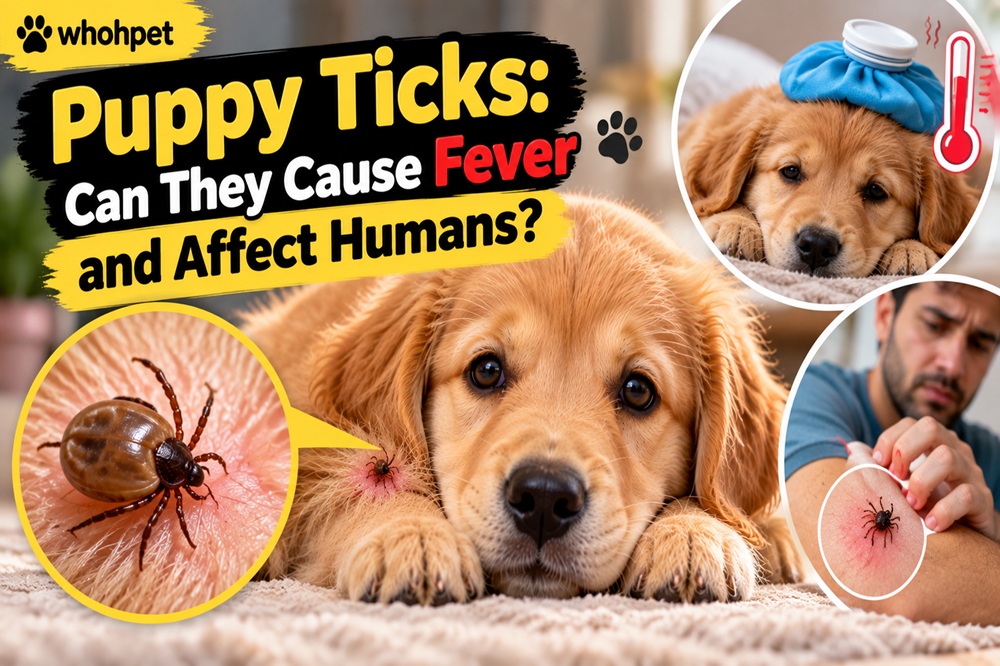
A puppy that has been bitten by a tick may remain completely normal, but some tick-borne infections can cause illness, including fever, tiredness, poor appetite, weakness, swollen lymph nodes, or other symptoms. Ticks can also enter the home on pets and later bite people.
Understanding the warning signs and knowing what to do after finding a tick can help protect both your puppy and your family.
Can a Tick Cause Fever in a Puppy?
Yes, a tick bite can be associated with fever in a puppy if the tick transmits a tick-borne infection.
The tick itself does not simply “create” a fever. The concern is that some ticks can carry bacteria or other disease-causing organisms. When an infected tick feeds on a puppy, it may transmit those organisms.
For example, canine ehrlichiosis and anaplasmosis can cause fever in dogs. Other tick-borne diseases can also produce signs such as weakness, reduced appetite, lameness, swollen lymph nodes, or bleeding problems.
However, not every puppy with a tick will develop fever or become sick. The risk depends on factors such as the tick species, the pathogen it carries, how long it was attached, and the puppy’s individual circumstances.
Signs of Tick-Borne Illness in Puppies
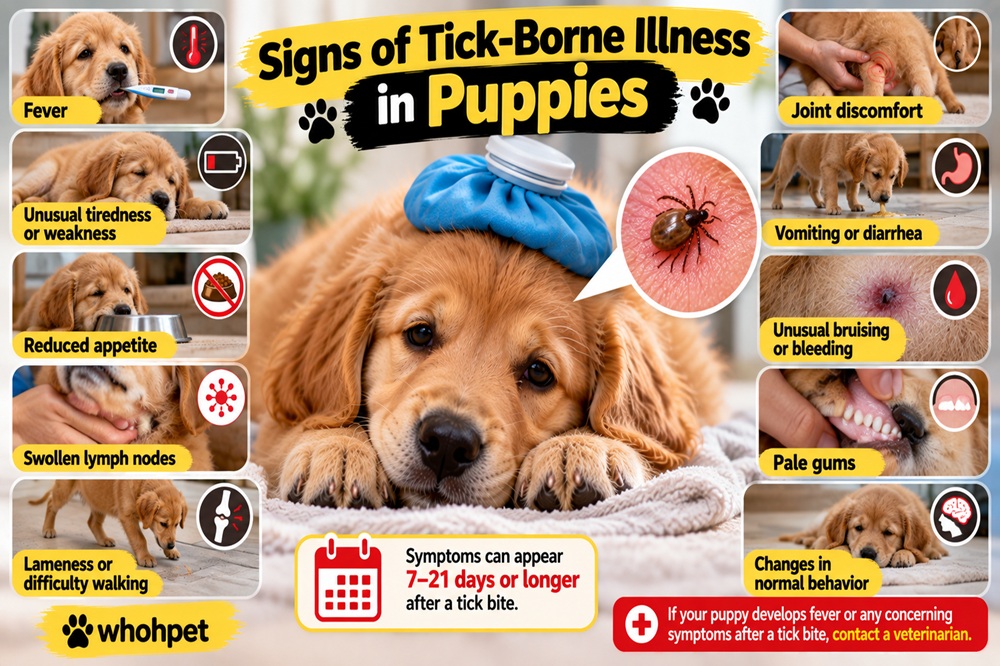
After discovering a tick, watch your puppy for changes in health and behavior.
Possible warning signs include:
- Fever
- Unusual tiredness or weakness
- Reduced appetite
- Swollen lymph nodes
- Lameness or difficulty walking
- Joint discomfort
- Vomiting or diarrhea
- Unusual bruising or bleeding
- Pale gums
- Changes in normal behavior
Some tick-borne diseases can take days or longer before signs become noticeable. The CDC notes that signs of tick-borne disease in pets may appear 7–21 days or longer after a tick bite.
If your puppy develops fever or other concerning symptoms after a tick bite, contact a veterinarian rather than trying to diagnose the infection at home.
Can Ticks on a Puppy Affect Humans?
Yes, ticks found on puppies can create a risk for people in the household.
The important point is that the usual concern is the tick, not direct transmission of a tick-borne disease from the puppy to the person.
A puppy that has been outdoors can carry a tick into the home. The tick may later detach, crawl through the environment, and attach to a person. Some ticks can feed on both animals and humans and can transmit disease.
This means finding a tick on your puppy is also a reason to check the puppy carefully and make sure people in the household check themselves for ticks.
Can a Puppy Give You a Tick-Borne Disease Directly?
Usually, tick-borne infections are not spread simply by touching or living with an infected puppy.
The main concern is an infected tick biting a person. For example, veterinary sources explain that dogs with certain tick-borne infections do not normally transmit those infections directly to people; instead, the tick acts as the vector. An infected dog can nevertheless indicate that infected ticks may be present in the surrounding environment.
There are some specific exposure situations that require extra care. For example, handling a crushed, blood-filled tick can create a risk if infected tick material contacts broken skin or mucous membranes. Therefore, avoid crushing ticks with bare fingers and use gloves and appropriate tools when removing them.
What Should You Do When You Find a Tick on Your Puppy?
Stay calm and remove the tick as soon as possible.

Use fine-tipped tweezers or a suitable tick-removal tool. Grip the tick close to the skin and pull it out steadily rather than squeezing its body.
After removal, clean the bite area appropriately and wash your hands. Do not burn the tick, pour chemicals onto it, or use irritating household substances to make it detach.
Prompt removal is important because some tick-borne infections require time for transmission, although the exact risk varies by tick species and disease.
Check Your Puppy After Outdoor Activities
Ticks can be difficult to see, particularly in puppies with thick or dark fur.
After your puppy spends time outdoors, carefully check areas where ticks commonly attach, including:
- Around and inside the ears
- Around the eyelids
- Under the collar
- Around the neck
- Under the front legs
- Between the toes
- Around the belly
- Between the back legs
- Around the tail
Daily tick checks are recommended for pets that spend time outdoors. Removing crawling or attached ticks can also reduce the chance that a tick will later enter the home and bite a person.
When Should You Contact a Veterinarian?
A veterinarian should be contacted if your puppy develops unusual symptoms after a tick bite.
Pay particular attention to:
- Fever
- Severe weakness
- Loss of appetite
- Pale gums
- Bleeding or unusual bruising
- Difficulty walking
- Persistent vomiting or diarrhea
- Multiple ticks on the body
- A tick attached near the eye, inside the ear, or around the mouth
Young puppies can become unwell more quickly than healthy adult dogs, so significant changes in behavior or appetite should not be ignored.
Your veterinarian may recommend examination and, when appropriate, blood tests or other diagnostic testing to investigate a possible tick-borne infection.
How to Protect Your Puppy and Family
Tick prevention is more useful than dealing with repeated infestations.
Ask your veterinarian about a tick-control product appropriate for your puppy’s age, weight, health, and lifestyle. Not every flea or tick product is suitable for every puppy.
Regularly check your puppy after outdoor activities and keep the sleeping and living areas clean.
If you find ticks repeatedly, do not focus only on the puppy. Ticks can persist in the environment, and some species can infest indoor areas. A recurring infestation may require professional advice about controlling ticks in the home and surrounding environment.
Can Humans Get Fever From Ticks?
Yes. People can develop fever from certain tick-borne infections.
The exact illness depends on the tick species and the pathogen involved. Human tick-borne diseases can cause fever, headache, fatigue, muscle aches, rash, or other symptoms.
For example, Rocky Mountain spotted fever is a tick-borne disease that affects both people and dogs in areas where the disease occurs. Lyme disease is another tick-borne infection that can affect people and animals.
If someone in your household develops fever or an unusual illness after a known tick bite, they should tell their healthcare professional about the tick exposure.
Final Thoughts
A tick on a puppy should not automatically cause panic, but it should not be ignored either.
A tick bite can be associated with fever and other illness in puppies when a tick transmits an infection. At the same time, ticks carried into the home by pets can later bite people and transmit certain diseases.
The safest approach is simple: remove ticks promptly, avoid handling them with bare hands, monitor your puppy for changes in health, check family members for ticks, and use veterinarian-recommended tick prevention.
A small tick may be easy to overlook, but regular checks can make a meaningful difference in protecting both your puppy and your household.