Tapeworms are intestinal parasites that can live inside puppies and dogs. They are made up of flat, ribbon-like segments and attach themselves to the lining of the small intestine.
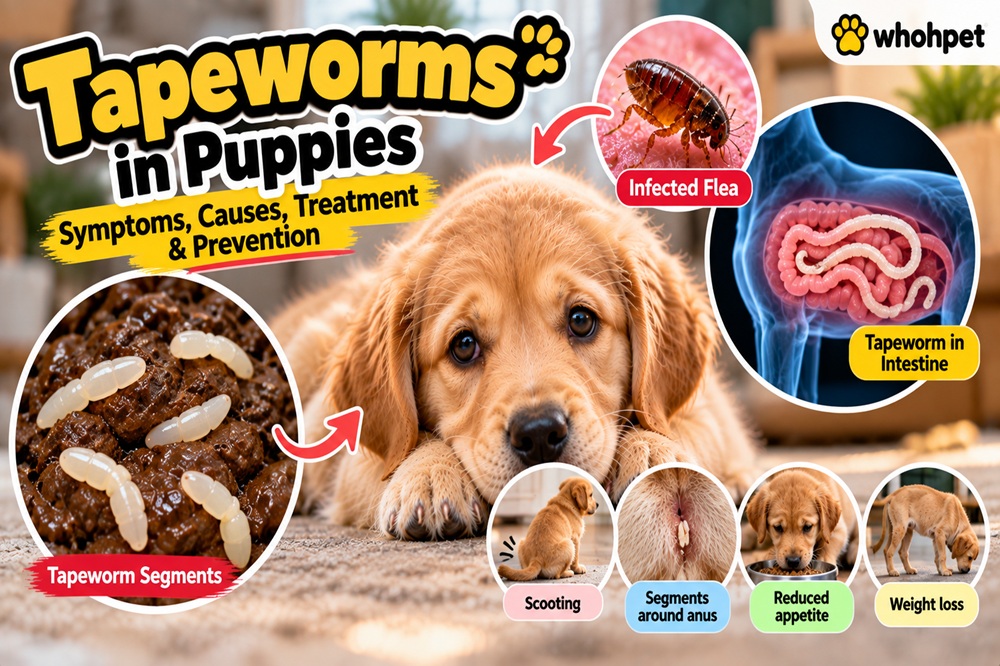
Many puppies with tapeworms do not become seriously ill, but an infection can sometimes cause digestive problems, poor body condition, irritation around the anus, or weight loss. Puppies can also become infected again if the source of the parasite, such as fleas or infected prey, is not addressed.
The good news is that tapeworm infections can usually be treated with appropriate veterinary medication. Understanding how puppies get tapeworms and how to prevent reinfection can help keep them healthy.
What Are Tapeworms in Puppies?
Tapeworms are flat, segmented worms that live mainly in the small intestine.
One of the common tapeworms found in dogs is Dipylidium caninum. Dogs can become infected with this tapeworm by swallowing an infected flea while grooming. Other tapeworm species can be acquired when dogs eat infected rodents, rabbits, raw tissues, or other intermediate hosts.
Adult tapeworms attach to the intestinal wall and produce segments as they grow. These segments can eventually break away and pass out of the dog’s body.
How Do Puppies Get Tapeworms?
Puppies can get tapeworms through several routes, depending on the type of tapeworm.
Swallowing an Infected Flea
This is an important route for Dipylidium caninum.
A flea can carry the immature stage of the tapeworm. When a puppy bites or grooms itself and accidentally swallows an infected flea, the parasite can develop into an adult tapeworm inside the intestine.
This is why flea control is an important part of preventing this type of tapeworm infection.
Eating Infected Animals
Some tapeworm species use small animals as intermediate hosts.
A puppy or dog that hunts or eats infected rodents, rabbits, or other prey can become infected. Dogs that have access to raw animal tissues or hunt outdoors may therefore have a higher exposure risk to certain tapeworms.
Contaminated Environment
Tapeworm segments or eggs can enter the environment through an infected dog’s feces.
Although simply being near contaminated ground does not always cause infection, dogs can encounter parasite stages while exploring their surroundings.
Signs of Tapeworms in Puppies
Many puppies with tapeworms show few or no obvious symptoms.
When signs do occur, they may include:
- Small white segments around the anus
- Worm segments in the stool
- Scooting across the floor
- Licking or biting the area around the anus
- Mild diarrhea
- Abdominal discomfort
- Reduced appetite
- Weight loss
- Poor body condition
- A dull or rough-looking coat
The severity of symptoms depends on the type and amount of infection. Most intestinal tapeworm infections do not cause severe disease, but puppies with other health problems may be affected more noticeably.
What Do Tapeworm Segments Look Like?
One of the easiest clues for owners to notice is a tapeworm segment.
Fresh segments of Dipylidium caninum may look somewhat like small grains of rice or cucumber seeds. They may be seen in fresh stool, around the puppy’s anus, or on bedding.
After drying, the segments can look different and may become more yellowish or seed-like.
However, not every small white object found in stool is a tapeworm. If you notice something unusual, taking a photograph or showing the material to your veterinarian can help with identification.
Can Tapeworms Make Puppies Sick?
Tapeworm infections are often mild, and many infected dogs show no obvious illness. However, some puppies may develop digestive discomfort, diarrhea, changes in appetite, or poor body condition.
In rare situations, intestinal parasites can contribute to more serious complications. Therefore, a puppy with persistent digestive problems, weight loss, or unusual behavior should be examined by a veterinarian rather than assuming that tapeworms are the only possible cause.
How Are Tapeworms Diagnosed?
A veterinarian may diagnose tapeworms by identifying characteristic worm segments or eggs.
For Dipylidium caninum, observing segments around the anus or in the stool can be particularly useful because routine fecal flotation tests may not always detect the infection reliably.
Your veterinarian may therefore ask about:
- What you noticed in the stool
- Whether your puppy has fleas
- Whether your puppy hunts or eats rodents
- Any recent diarrhea or weight loss
- Your puppy’s parasite-prevention history
Additional testing may be recommended when another type of parasite or medical condition is suspected.
Treatment for Tapeworms in Puppies
Tapeworms can be treated with appropriate antiparasitic medication.
The specific treatment depends on the tapeworm species and the puppy’s age, weight, health, and exposure risk. Medications such as praziquantel are used against several canine tapeworm infections, but the appropriate product and dose should be selected by a veterinarian.
Treatment alone may not prevent the infection from returning.
For example, if a puppy has Dipylidium caninum and continues to have flea exposure, it may become infected again after treatment. Effective flea control is therefore an important part of managing the infection.
Do not give your puppy human medication or leftover deworming medicine without veterinary advice.
Can Tapeworms Come Back After Treatment?
Yes.
Reinfection is possible when the original source of exposure remains.
For example, a puppy treated for flea-associated tapeworms can become infected again if fleas are still present. Dogs that hunt or eat infected prey can also repeatedly acquire certain tapeworm species.
This is why successful parasite control involves more than simply treating the worm.
How to Prevent Tapeworms in Puppies
Control Fleas
Regular flea prevention is one of the most important steps for preventing Dipylidium caninum.
If fleas are present in the home, treating only the puppy may not be enough. Your veterinarian can recommend an appropriate flea-control strategy for the puppy and the household environment.
Prevent Hunting and Scavenging
Try to prevent your puppy from eating rodents, rabbits, dead animals, or other wildlife.
Eating infected intermediate hosts can expose dogs to several types of tapeworms.
Dispose of Dog Feces Promptly
Clean up your puppy’s feces regularly.
Good hygiene helps reduce environmental contamination and can also reduce exposure to other intestinal parasites.
Maintain Regular Parasite Prevention
Ask your veterinarian about a parasite-prevention plan suitable for your puppy.
The right plan depends on the puppy’s age, lifestyle, location, and exposure to fleas, wildlife, and other sources of parasites.
Keep the Puppy’s Environment Clean
Wash bedding regularly and keep sleeping and playing areas clean.
If your puppy has fleas or has been diagnosed with a parasite, your veterinarian may recommend additional environmental cleaning.
Can Humans Get Tapeworms From Puppies?
Some tapeworms that infect dogs can occasionally infect humans.
For Dipylidium caninum, human infection generally occurs when a person accidentally swallows an infected flea. This is uncommon but can occur, particularly in children.
Other canine tapeworms, including certain Echinococcus species, have different transmission routes and can pose more important public-health concerns in areas where they occur.
Good hygiene, prompt removal of dog feces, flea control, and appropriate veterinary parasite prevention can help reduce these risks.
When Should You Contact a Veterinarian?
Contact your veterinarian if you notice:
- White or rice-like segments in your puppy’s stool
- Worm segments around the anus
- Persistent scooting
- Repeated diarrhea
- Unexplained weight loss
- Poor growth
- Reduced appetite
- Persistent abdominal discomfort
- Fleas on your puppy
- Repeated parasite infections
A very young puppy that becomes weak, stops eating, repeatedly vomits, develops severe diarrhea, or shows other signs of serious illness should receive prompt veterinary attention.
Tapeworms vs. Other Intestinal Worms
Not all worms found in puppies are tapeworms.
Roundworms are long, cylindrical worms and can sometimes be passed in stool or vomit.
Hookworms are much smaller and attach to the intestinal lining, where they can cause blood loss and anemia.
Whipworms affect the large intestine and can cause diarrhea and weight loss.
Tapeworms are flat and segmented, and their segments may be visible around the puppy’s anus or in fresh stool.
Because different parasites require different treatments, identifying the parasite correctly is important before choosing medication.
Final Thoughts by whohpet
Tapeworms may look alarming when you notice a small white segment in your puppy’s stool or around its rear, but they are a treatable parasite problem.
The most important thing is not to panic or give your puppy random deworming medicine. First, try to identify what you have noticed and speak with your veterinarian about the appropriate testing and treatment.
For Dipylidium caninum, flea control is especially important because a puppy can become infected again by swallowing an infected flea. Preventing hunting and scavenging can also reduce the risk of other tapeworm infections.
At whohpet, we believe that good puppy care is not only about treating a problem after it appears. Regular veterinary checkups, appropriate parasite prevention, good hygiene, flea control, and watching your puppy’s everyday behavior can all help catch problems early.
A healthy puppy starts with consistent care, attention, and the right information.