
As dogs grow older, changes in their immune system, digestion, and overall health can make even common illnesses more important to watch. Intestinal parasites are one of the problems senior dog owners should not overlook.
Worms and other intestinal parasites can cause digestive problems, weight loss, poor appetite, diarrhea, and weakness. In an older dog, these symptoms may also overlap with other age-related health conditions, which can make it difficult to identify the underlying problem at home.
The good news is that most intestinal parasites can be diagnosed and treated by a veterinarian. Understanding the warning signs can help you get your senior dog the right care sooner.
What Are Intestinal Parasites in Dogs?
Intestinal parasites are organisms that live in or around a dog’s digestive tract and obtain nutrients from the host. Some are worms, while others are microscopic organisms such as Giardia.
Dogs can become infected by swallowing parasite eggs or larvae from contaminated soil, water, food, feces, or other animals. Some parasites can also be associated with fleas or prey animals.
Parasite infections can affect dogs of any age. Being a senior does not make a dog immune to them.
Common Intestinal Parasites in Senior Dogs
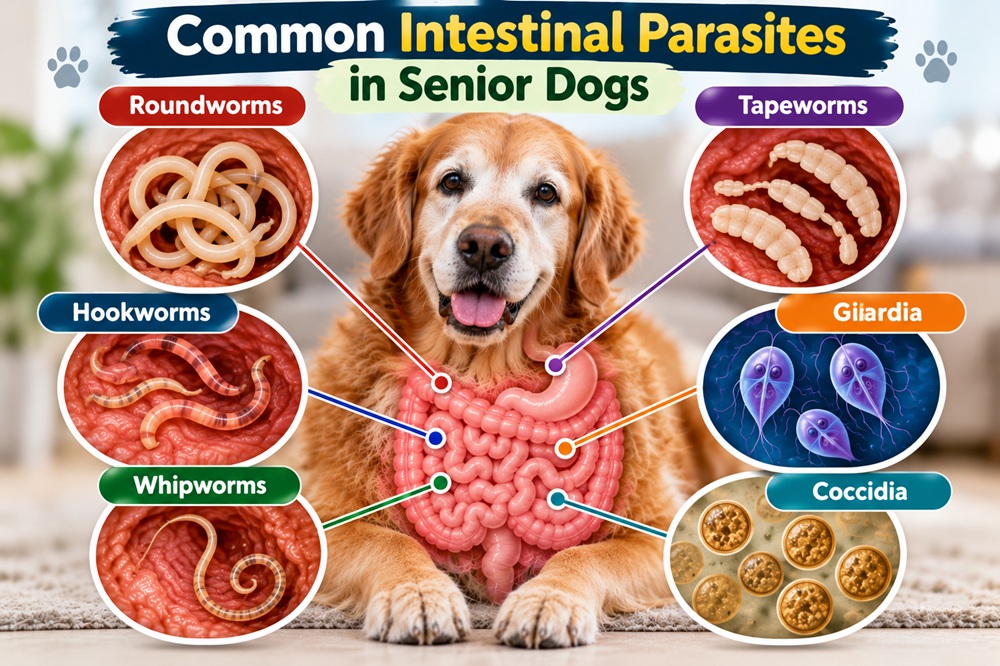
Several types of intestinal parasites can affect older dogs.
Roundworms
Roundworms are common intestinal worms. An infected dog may develop digestive upset, a poor coat, reduced appetite, or weight loss. Some dogs show few obvious symptoms.
Hookworms
Hookworms attach to the intestinal lining and feed on blood. Heavy infections can lead to anemia, weakness, diarrhea, and other serious problems.
This can be particularly concerning in an older dog that already has another condition affecting its health.
Whipworms
Whipworms live in the large intestine. They can cause chronic or recurring diarrhea, mucus or blood in the stool, abdominal discomfort, and weight loss.
Because these symptoms can have many causes in senior dogs, veterinary testing is important.
Tapeworms
Tapeworm infections are often associated with dogs swallowing infected fleas or, depending on the parasite, eating infected prey.
Owners may sometimes notice small, rice-like segments around the dog’s rear end or in fresh stool. However, visible segments are not present in every case.
Giardia
Giardia is a microscopic intestinal parasite rather than a traditional worm. It can cause soft or watery stool, diarrhea, gas, and digestive discomfort. Some infected dogs may show very few signs.
Signs of Intestinal Parasites in a Senior Dog
Parasite infections do not always produce obvious symptoms. When signs occur, they may include:
- Persistent or recurring diarrhea
- Soft stool or mucus in the stool
- Blood in the stool
- Vomiting
- Weight loss
- Reduced appetite
- Increased or unusual hunger
- Gas or abdominal discomfort
- A dull or poor-quality coat
- Scooting or irritation around the rear end
- Weakness or unusual tiredness
- Pale gums in dogs with significant blood loss
Not every senior dog with these symptoms has parasites. Kidney disease, liver disease, gastrointestinal disorders, infections, cancer, and dietary problems can produce similar signs.
That is why testing is especially useful when symptoms persist.
Why Parasites Can Be More Concerning in Older Dogs
A healthy adult dog may tolerate some infections with relatively mild symptoms. A senior dog may have less physiological reserve, particularly if it already has chronic health problems.
For example, an older dog with anemia, poor nutrition, gastrointestinal disease, or another condition may be affected more severely by a parasite infection.
Senior dogs also tend to develop health problems that can mimic parasite symptoms. A change in appetite, weight, stool quality, or energy should therefore not automatically be blamed on aging.
How Do Senior Dogs Get Intestinal Parasites?
A dog can encounter parasites in several ways.
Common routes include:
- Contact with contaminated soil
- Eating contaminated material
- Drinking contaminated water
- Contact with infected feces
- Swallowing infected fleas
- Eating infected wildlife or prey
- Contact with environments where many dogs have been present
Even dogs that spend most of their time indoors can encounter parasites.
How Are Intestinal Parasites Diagnosed?
Your veterinarian may recommend a fecal examination when intestinal parasites are suspected.
During a fecal test, a stool sample is examined for evidence of parasites or their eggs, cysts, or other diagnostic material. Depending on the suspected parasite and the dog’s symptoms, additional testing may sometimes be appropriate.
One negative test does not necessarily rule out every possible parasite. Some parasites can be difficult to detect with a single routine examination.
For a senior dog with ongoing gastrointestinal symptoms, your veterinarian may also recommend bloodwork or other diagnostic tests to look for anemia, dehydration, organ problems, infection, or other causes of the symptoms.
Treatment for Intestinal Parasites
Treatment depends on the specific parasite involved.
Veterinarians may use different medications for different parasites, and the appropriate treatment can depend on the dog’s age, weight, medical history, kidney and liver function, and other medications.
For this reason, do not give a senior dog a random dewormer simply because you suspect worms.
A medication that treats one parasite may not work against another. In addition, an older dog may have underlying health issues that affect which medications are appropriate.
Follow your veterinarian’s instructions carefully, including any recommendation to repeat treatment or return for follow-up testing.
Preventing Intestinal Parasites in Senior Dogs
Prevention is an important part of keeping an older dog healthy.
Keep Up With Veterinary Parasite Prevention
Ask your veterinarian which parasite-prevention plan is appropriate for your dog’s lifestyle, location, age, and medical history.
Schedule Regular Veterinary Checkups
Senior dogs benefit from regular health examinations. Discuss fecal testing and parasite prevention with your veterinarian, especially if your dog spends time outdoors, visits dog parks, boards frequently, or has a history of parasites.
Pick Up Dog Waste Promptly
Removing feces from your yard and public areas reduces environmental contamination and helps limit exposure to parasite eggs and larvae.
Control Fleas
Good flea control is important because fleas can play a role in the transmission of certain tapeworms.
Be Careful With Food and Water
Prevent your dog from eating feces, drinking from questionable outdoor water sources, or consuming dead animals and wildlife.
When Should You Call the Veterinarian?
Contact your veterinarian if your senior dog develops persistent diarrhea, repeated vomiting, unexplained weight loss, blood in the stool, reduced appetite, or a noticeable change in energy.
Seek urgent veterinary care if your dog is extremely weak, collapses, has very pale or white gums, has difficulty breathing, cannot keep water down, or appears severely ill.
These signs can indicate a serious problem and should not be assumed to be caused by parasites alone.
Can Humans Catch Parasites From Dogs?
Some intestinal parasites that affect dogs can also pose a risk to people. The risk depends on the parasite and the method of transmission.
Good hygiene can reduce exposure. Wash your hands after handling dog feces, keep children’s play areas away from contaminated soil, and dispose of pet waste promptly.
People with concerns about possible exposure should speak with a healthcare professional.
Final Thoughts From WHOHPET
Intestinal parasites are something every senior dog owner should take seriously, but they do not have to become a source of unnecessary worry. With regular veterinary care, appropriate parasite prevention, good hygiene, and attention to changes in your dog’s health, many parasite-related problems can be identified and managed early.
At WHOHPET, we believe senior dogs deserve thoughtful care at every stage of their lives. If your older dog develops ongoing digestive problems, unexplained weight loss, weakness, or changes in appetite or stool, don’t simply assume it is part of aging. Talk with your veterinarian and get the right testing before starting treatment.
A little attention today can make a meaningful difference to your senior dog’s comfort and well-being tomorrow.