
Finding a tick attached to your senior dog can be worrying, especially when your dog is already more vulnerable to health problems that can come with age. The good news is that a tick can often be removed safely at home when it is visible and accessible.
However, senior dogs deserve a little extra care. Older dogs may have thinner skin, arthritis, chronic health conditions, or medications that can affect how they respond to stress or illness. Knowing how to remove the tick properly—and when to contact a veterinarian—can help protect your dog’s health.
Why Tick Removal Matters for Senior Dogs
Ticks can attach to dogs and feed on their blood. Depending on the tick species and where you live, ticks may transmit infections and other diseases.
A single tick does not necessarily mean your dog will become sick, but removing an attached tick promptly is an important part of reducing potential exposure to tick-borne disease.
Senior dogs may also have underlying health conditions that make illness more difficult to tolerate. This makes regular tick checks and appropriate prevention especially important.
What Tools Do You Need to Remove a Tick?
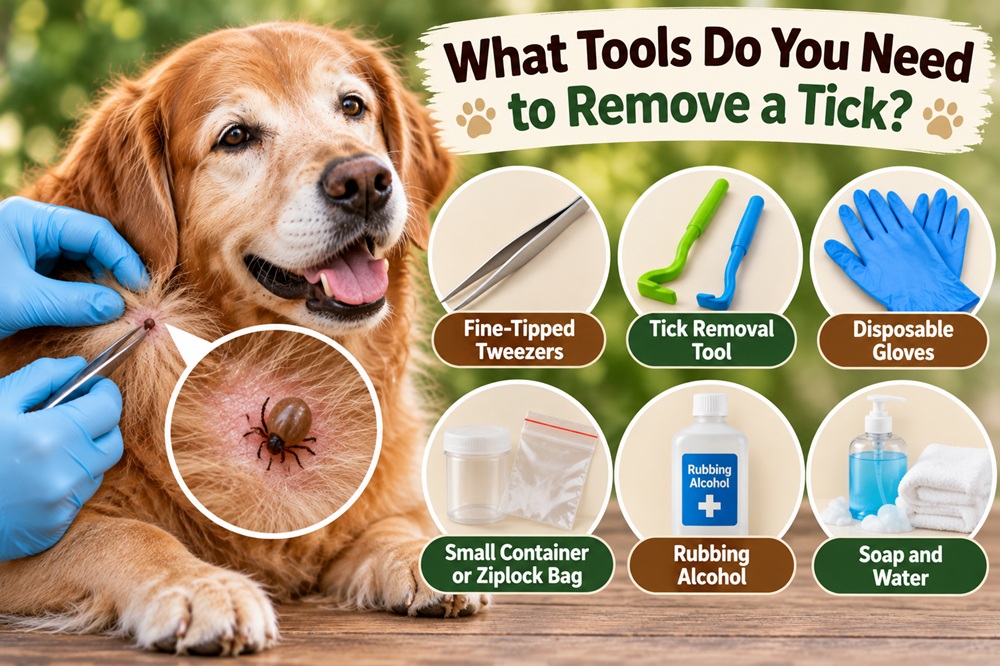
You do not need a large collection of supplies to remove a tick. Having the right tool can make the process easier and reduce the chance of squeezing the tick.
Fine-Tipped Tweezers
Fine-tipped tweezers are one of the most useful tools for tick removal. They allow you to grip the tick close to your dog’s skin rather than grabbing the swollen body.
Avoid using blunt household tweezers if possible because they can make it harder to get a good grip near the attachment point.
Tick Removal Tool
A dedicated tick-removal tool, such as a tick hook or removal device, can also be useful. These tools are designed to help remove a tick close to the skin.
Follow the instructions supplied with the particular tool because designs differ. Some tools are designed for a steady upward pull, while others use a specific lifting or rotating motion.
Disposable Gloves
Gloves are helpful when handling ticks. They also prevent direct contact between your hands and the tick or material around the bite.
Small Container or Ziplock Bag
Keep a small container, jar, or Ziplock bag available for the removed tick. Your veterinarian may want to identify the tick if your dog later develops symptoms.
Rubbing Alcohol
Rubbing alcohol can be used to kill and contain a removed tick. Do not pour alcohol directly onto a tick that is still attached to your dog.
Soap and Water
After removing and disposing of the tick, wash your hands thoroughly with soap and water.
How to Remove a Tick From a Senior Dog
1. Keep Your Dog Calm
Start by helping your dog relax. Speak gently and avoid sudden movements.
For an older dog with arthritis or mobility problems, avoid forcing them to stand or changing their position unnecessarily. Let your dog remain in a comfortable position if possible.
Another person can calmly reassure or hold the dog while you remove the tick.
2. Find the Tick Clearly
Part the dog’s fur so you can see the tick and the skin around it.
Ticks can attach almost anywhere, so check areas such as:
- Around the ears
- Under the collar
- Around the neck
- Between the toes
- Between the legs
- Around the face
- Under the tail
If you find one tick, carefully check the rest of your dog’s body for additional ticks.
3. Position Your Tool Close to the Skin
If using fine-tipped tweezers, hold them close to the dog’s skin and position the tips around the tick’s attachment point.
Try to grip the tick as close to the skin as possible.
If using a tick-removal hook or another dedicated tool, position it according to the manufacturer’s instructions.
The important goal is to avoid squeezing the tick’s body.
4. Pull the Tick Out Slowly
With tweezers, pull upward using slow, steady pressure.
Do not jerk the tweezers or crush the tick while it is attached.
If your chosen tick-removal tool requires a specific movement, follow its instructions rather than improvising.
5. Check the Bite Area
Once the tick has been removed, look at the skin.
A small amount of redness or irritation can occur around the attachment site. Do not aggressively dig into the skin if you believe a small piece of the tick may remain.
If the area becomes increasingly red, swollen, painful, warm, or produces discharge, contact your veterinarian.
6. Clean the Area
Gently clean the bite area as appropriate for your dog’s skin.
Avoid repeatedly irritating the site. Your veterinarian can advise you about the best way to care for the area if it looks inflamed or damaged.
How to Dispose of a Removed Tick Safely
Once the tick has been removed, dispose of it immediately so it cannot crawl away or come into contact with another person or pet. Do not crush a live tick with your bare fingers.
Rubbing Alcohol
Drop the live tick directly into a small container or jar filled with rubbing alcohol to kill it. Close the container securely afterward and keep it away from children and pets.
Sealed Bag or Container
Place the tick inside a Ziplock bag or sealed pill bottle so it cannot escape. If you want your veterinarian to identify the tick later, label the container with the date it was removed and keep it in a safe place.
Wrap in Tape
Stick the tick firmly onto a piece of packing or duct tape, fold the tape over to trap it completely, and throw the sealed tape in the trash.
Flush Down the Toilet
Drop the tick straight into the toilet and flush it away immediately. Make sure the tick is actually flushed rather than left on the toilet or bathroom surface.
After Disposal
Wash your hands thoroughly with soap and water after handling the tick.
If you used reusable tweezers or a tick-removal tool, clean it according to the manufacturer’s instructions before storing it.
What Not to Do When Removing a Tick
Avoid methods that can unnecessarily irritate your dog or make removal more difficult.
Do not:
- Burn the tick with a match or hot object
- Apply gasoline, kerosene, or other harsh chemicals
- Put household substances on the tick while it is attached
- Pour rubbing alcohol directly onto an attached tick
- Squeeze the tick’s swollen body
- Crush the tick with your bare fingers
- Repeatedly dig into your dog’s skin with a sharp object
- Forcefully pull or twist the tick
A simple, controlled removal with the appropriate tool is preferable.
What If the Tick Breaks or Part of It Remains?
Sometimes a tick may break during removal or a small portion may appear to remain attached.
Do not repeatedly dig into your dog’s skin trying to remove tiny fragments. Doing so can cause additional irritation or injury.
Instead, clean the area appropriately and monitor it. If the area becomes increasingly swollen, painful, red, or develops discharge, contact your veterinarian.
If you are unsure whether the entire tick was removed, your veterinarian can examine the area.
What Should You Watch for After Tick Removal?
Removing the tick does not mean you should immediately forget about it. Monitor your senior dog for changes in health over the following days and weeks.
Contact your veterinarian if you notice:
- Unusual tiredness or weakness
- Loss of appetite
- Fever
- Vomiting
- Diarrhea
- Joint stiffness or lameness
- Swollen or painful joints
- Pale gums
- Breathing difficulties
- Dark or unusual urine
- A significant change in normal behavior
These symptoms can have many causes and do not automatically mean your dog has a tick-borne disease. However, a new or unexplained change in a senior dog’s health deserves attention.
When Should a Veterinarian Remove the Tick?
Professional help may be the safest option if the tick is located near the eye, inside the ear, around the mouth, or in another difficult-to-reach area.
You should also consider veterinary assistance if your dog will not remain still, multiple ticks are attached, the tick appears deeply embedded, or your dog becomes extremely stressed during handling.
A veterinarian can remove the tick and evaluate your dog if there are concerns about possible tick-borne illness.
How to Prevent Ticks in Senior Dogs
Removing a tick is only one part of tick protection. Prevention can reduce future exposure.
Talk with your veterinarian about a tick-prevention product appropriate for your dog’s age, health status, lifestyle, and geographic location.
Make tick checks part of your routine after outdoor activities, particularly after walks through wooded, grassy, or brushy areas.
Check the coat and skin carefully, including the ears, neck, paws, between the toes, under the collar, and around the tail.
Keeping your yard maintained and reducing areas where ticks may thrive can also help lower exposure.
Senior Dogs Need Extra Attention
Older dogs often benefit from closer observation because subtle health changes can be easy to miss.
A senior dog may already have stiffness, reduced energy, or changes in appetite, making it difficult to know whether a new symptom is related to aging or something else.
Knowing your dog’s normal behavior is therefore valuable. A sudden change after tick exposure should not simply be dismissed as part of getting older.
Final Thoughts From WHOHPET
Finding a tick on your senior dog can be unsettling, but staying calm and using the right removal technique can make the situation much easier. Fine-tipped tweezers or a dedicated tick-removal tool can help you remove the tick close to the skin, while proper disposal—using rubbing alcohol, a sealed bag or container, folded tape, or immediate flushing—helps prevent further contact.
At WHOHPET, we believe caring for a senior dog means paying attention to the small details that can make a big difference. Regular tick checks, veterinarian-recommended prevention, safe tick removal, and attention to unusual symptoms can help your older companion stay comfortable, active, and protected.
If you are unsure about removing a tick or your senior dog becomes unwell afterward, contact your veterinarian for personalized guidance.