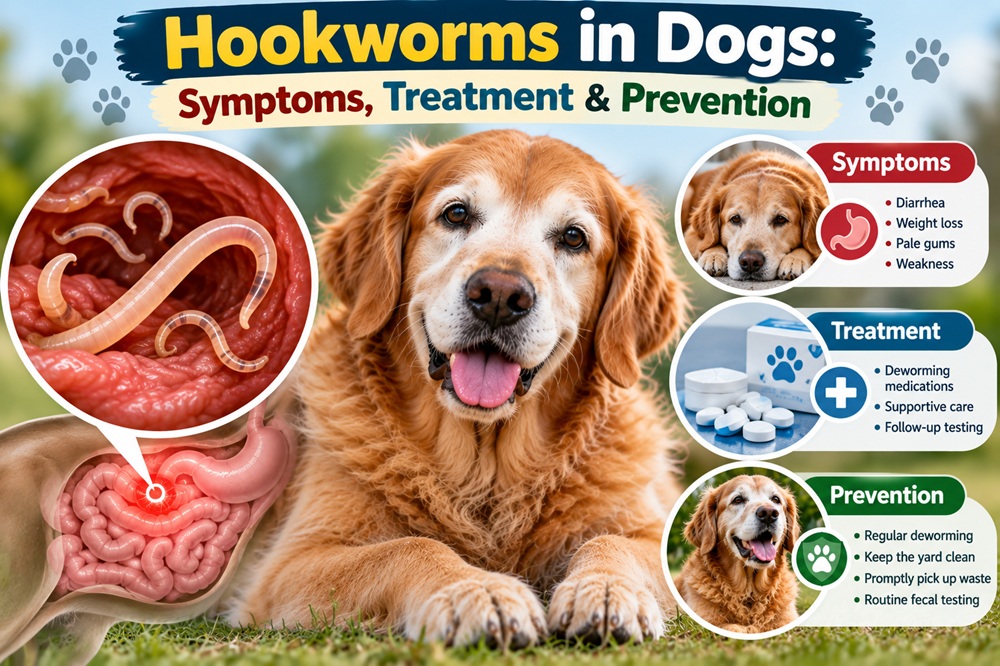
Hookworms are small worms that can live inside a dog’s intestines. They attach to the intestinal wall and feed on blood. A serious hookworm infection can cause blood loss, anemia, weakness, weight loss, and diarrhea.
Hookworms can affect dogs of any age. Puppies can become very sick from heavy infections, but senior dogs can also have problems, especially if they already have other health conditions.
Knowing the signs and taking steps to prevent hookworms can help keep your dog healthy.
What Are Hookworms in Dogs?
Hookworms are tiny intestinal parasites that live mainly in a dog’s small intestine.
Common hookworms that can affect dogs include Ancylostoma caninum, Ancylostoma braziliense, and Uncinaria stenocephala.
Hookworms attach themselves to the intestinal lining and feed on blood. Because of this, a heavy infection can cause blood loss and anemia.
Some dogs may have hookworms without showing obvious signs. Others can become sick, especially when there are many worms.
How Do Dogs Get Hookworms?
Dogs can get hookworms in several ways.
Walking on Contaminated Soil
Hookworm eggs pass out of an infected dog’s body through feces. The eggs can develop in the environment and produce larvae.
Dogs can pick up these larvae when they walk, sit, or play on contaminated ground.
Through the Skin
Hookworm larvae can enter a dog’s body through the skin after contact with contaminated soil.
Swallowing Larvae
Dogs can also become infected by swallowing hookworm larvae from contaminated soil or other material.
From Their Mother
Some hookworms can pass from an infected mother to her puppies while the puppies are nursing.
This is one reason hookworms can be especially dangerous for young puppies.
Hookworm Symptoms in Dogs
The signs of hookworms can be different from one dog to another.
Common symptoms include:
- Pale gums
- Weakness
- Tiredness
- Poor appetite
- Weight loss
- Diarrhea
- Dark or black stool
- Poor body condition
- Dehydration
- Dull-looking coat
- Stomach discomfort
Some infected dogs may not show obvious symptoms.
If the infection causes significant blood loss, anemia can develop.
What Does Hookworm Stool Look Like?
Hookworms can sometimes cause dark, sticky, or tar-like stool. This black stool may happen when blood is being lost inside the digestive tract.
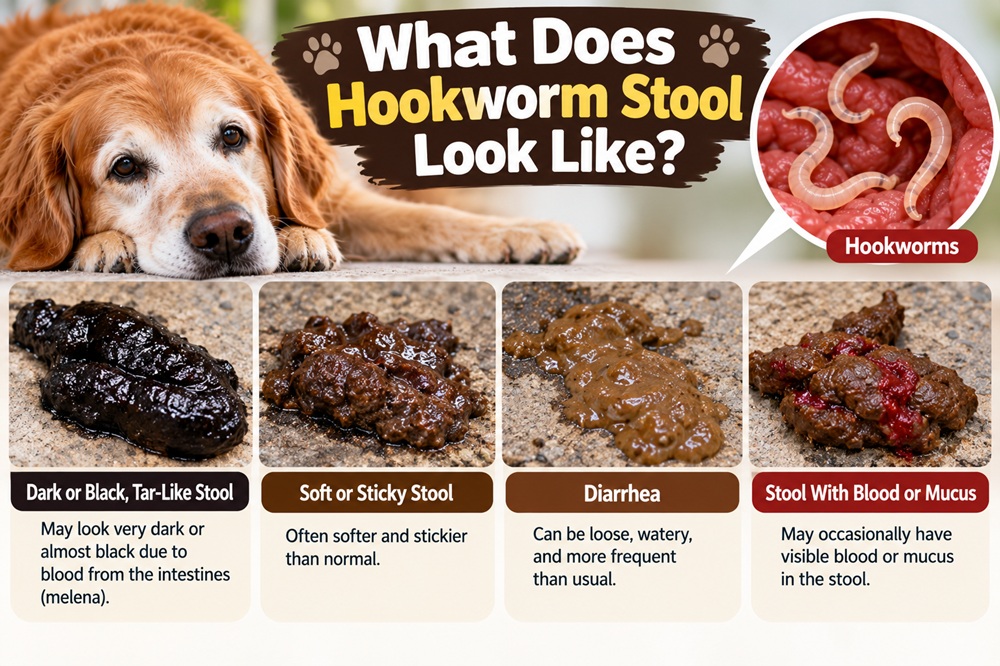
A dog with hookworms may also have diarrhea or softer-than-normal stool. Some dogs may have blood or mucus in their stool.
However, stool appearance alone cannot confirm hookworms.
Black stool can have other causes, so it is important to have your dog checked by a veterinarian if the stool suddenly becomes black or tar-like.
Call your veterinarian if your dog has black stool along with weakness, pale gums, vomiting, poor appetite, or weight loss.
Hookworms in Senior Dogs
Senior dogs need extra attention when hookworms are suspected.
Older dogs may already have health problems involving their kidneys, liver, digestive system, or blood. Blood loss from hookworms can make these problems harder to manage.
Signs can also be easy to miss in senior dogs.
For example, you may notice that your dog is:
- Sleeping more
- Eating less
- Losing weight
- Having diarrhea
- Less interested in normal activities
These changes should not always be blamed on old age.
If your senior dog has unexplained changes in appetite, weight, energy, or stool, talk with your veterinarian.
Can Hookworms Cause Anemia?
Yes.
Hookworms feed on blood, so a heavy infection can cause enough blood loss to lead to anemia.
Signs of anemia can include:
- Pale or white gums
- Weakness
- Low energy
- Less interest in exercise
- Fast breathing
- Poor appetite
- Collapse in severe cases
Severe anemia can be life-threatening.
If your dog has very pale gums, severe weakness, collapse, or trouble breathing, seek veterinary care immediately.
How Are Hookworms Diagnosed?
A veterinarian will usually check a stool sample for signs of intestinal parasites.
Fecal testing can help identify hookworm eggs. In some cases, additional tests such as antigen testing or PCR may also be useful.
Your veterinarian may also recommend bloodwork if your dog is weak or appears anemic.
For senior dogs, bloodwork can be especially helpful because it can check for anemia and other health problems at the same time.
Hookworm Treatment for Dogs
Hookworms are treated with appropriate deworming medication.
The right medication depends on your dog’s age, weight, health, and the parasites involved.
Do not choose a dewormer based only on your dog’s symptoms. Different parasites may require different medications.
Your veterinarian may recommend another stool test after treatment to make sure the infection has cleared.
What If the Infection Is Severe?
Dogs with a serious hookworm infection may need more than deworming medication.
If a dog has severe blood loss or anemia, treatment may include fluids, nutritional support, iron supplementation, or, in serious cases, a blood transfusion.
Dogs that are very weak or dehydrated may need hospital care.
Can Hookworms Come Back After Treatment?
Yes.
Treatment kills the worms inside the dog, but it does not automatically remove hookworm larvae from the environment.
A dog can become infected again after walking or playing in contaminated soil.
This is why parasite prevention and keeping the dog’s environment clean are both important.
Some drug-resistant hookworm infections have also been reported in dogs in the United States. If hookworms continue to be found after treatment, your veterinarian may need to investigate further.
How to Prevent Hookworms in Dogs
The good news is that there are several ways to reduce your dog’s risk.
Use Parasite Prevention
Ask your veterinarian about a year-round parasite prevention plan that protects against hookworms.
The best product depends on your dog’s health, lifestyle, location, and exposure risk.
Pick Up Dog Poop Quickly
Clean up dog waste from your yard as soon as possible.
Leaving feces on the ground gives parasite eggs and larvae more time to develop and spread.
Keep the Yard Clean
Regularly clean areas where your dog spends a lot of time.
Keeping the environment clean can help reduce the chance of reinfection.
Stop Scavenging
Try to prevent your dog from eating feces, dead animals, or other potentially contaminated material.
Supervising your dog outside can help reduce exposure.
Regular Stool Testing
Regular fecal testing can help find intestinal parasites, even when your dog looks healthy.
CAPC recommends fecal testing for adult dogs at least twice a year, with the schedule adjusted based on the dog’s health, lifestyle, and exposure risk.
Your veterinarian may recommend more frequent testing for dogs with higher parasite exposure.
Can People Get Hookworms From Dogs?
Some hookworms that infect dogs can also affect people.
People can become exposed to hookworm larvae through contaminated soil. Some species can cause cutaneous larva migrans, an itchy skin condition caused by larvae moving under the skin.
You can reduce the risk by:
- Washing your hands after handling dog waste
- Wearing shoes outdoors
- Wearing gloves when handling potentially contaminated soil
- Cleaning up dog poop promptly
If you develop an unusual itchy or winding rash after possible exposure to contaminated soil, talk with a healthcare professional.
When Should You Call the Veterinarian?
Contact your veterinarian if your dog has:
- Ongoing diarrhea
- Unexplained weight loss
- Poor appetite
- Weakness
- Black or unusually dark stool
- Repeated digestive problems
Get urgent veterinary help if your dog has:
- Very pale or white gums
- Severe weakness
- Collapse
- Trouble breathing
- Severe dehydration
- Bloody or black stool
- Extreme tiredness
These signs can be caused by serious blood loss or other health problems.
Final Thoughts From WHOHPET
Hookworms are small parasites, but they can cause serious problems for dogs. Because they can cause blood loss and anemia, early treatment is important.
Senior dogs deserve extra attention because they may already have other health problems and may not show obvious signs of infection.
At WHOHPET, we believe simple prevention can make a big difference. Keep your dog’s environment clean, use veterinarian-recommended parasite prevention, stay on top of fecal testing, and pay attention to changes in your dog’s appetite, weight, energy, and stool. If you think your dog may have hookworms, don’t try to diagnose the problem from symptoms alone. Your veterinarian can perform the right tests and recommend the safest treatment for your dog