
Seeing your senior dog scratch more than usual can be worrying. Sometimes the cause is fleas, but itching can also happen because of allergies, dry skin, infections, parasites, or other skin problems.
Older dogs may also develop new skin issues as they age. That is why it is important not to assume that every scratching problem is caused by fleas.
Finding the cause early can help your senior dog feel more comfortable and prevent a small skin problem from becoming worse.
Why Is My Senior Dog Scratching?
Dogs scratch for many reasons. Occasional scratching is normal, but frequent or intense scratching may mean something is irritating the skin.
Common causes include:
- Fleas
- Flea allergy
- Environmental allergies
- Food allergies
- Dry or irritated skin
- Skin infections
- Mites and other parasites
- Hot spots
- Contact with irritating products
- Underlying health problems
The location of the itching, changes in the skin, and other symptoms can provide useful clues.
Could Fleas Be Causing the Scratching?
Yes.
Fleas are one of the most common causes of itching in dogs. A dog may scratch, bite, lick, or chew areas where fleas are feeding.
You may notice itching around:
- The base of the tail
- Lower back
- Belly
- Inner thighs
- Neck
- Behind the ears
However, fleas can be difficult to see because they move quickly through the coat.
You may also find flea dirt, which looks like tiny black or dark-brown specks in the fur.
A flea comb can help you check your senior dog more closely.
What Is Flea Allergy Dermatitis?
Some dogs are allergic to substances in flea saliva.
This condition is called flea allergy dermatitis.
For a sensitive dog, even a small number of flea bites can cause intense itching.
Signs may include:
- Severe scratching
- Constant licking
- Biting the skin
- Hair loss
- Red skin
- Small scabs
- Thickened skin
- Hot spots
The itching can continue even when you do not see many fleas.
If your senior dog suddenly becomes very itchy, fleas should be one of the things you check for.
Scratching Does Not Always Mean Fleas
If you cannot find fleas, there may be another reason for the itching.
Environmental Allergies
Dogs can react to things in their surroundings, such as pollen, grass, dust, or mold.
Some dogs experience seasonal itching, while others may have symptoms throughout the year.
You may notice:
- Itchy paws
- Face rubbing
- Ear scratching
- Red skin
- Licking
- Repeated scratching
Food Allergies
Food-related allergies can also cause skin problems in some dogs.
A dog may develop itchy skin, ear problems, or repeated licking.
Food allergies cannot usually be confirmed simply by looking at the skin. Your veterinarian may recommend a carefully controlled diet trial when a food allergy is suspected.
Dry Skin
Older dogs may sometimes develop dry or irritated skin.
Dry skin can be associated with environmental conditions, frequent bathing, poor skin health, or certain medical problems.
You may notice:
- Flaking
- Mild itching
- Dry-looking skin
- Dull coat
However, severe or ongoing itching should not automatically be blamed on dry skin.
Could a Skin Infection Cause Scratching?
Yes.
Bacterial or yeast infections can make a dog’s skin very itchy.
Signs may include:
- Redness
- Bad odor
- Greasy skin
- Crusts or scabs
- Hair loss
- Moist skin
- Darkened skin
- Repeated licking
Sometimes an infection develops after a dog has been scratching for a long time.
Scratching damages the skin, and damaged skin can become more vulnerable to infection. This can create a cycle where itching leads to more scratching, which leads to more irritation.
Could Mites Cause My Senior Dog to Scratch?
Some types of mites can cause significant itching.
Depending on the type of mite, a dog may develop:
- Severe itching
- Hair loss
- Red skin
- Crusting
- Scabs
- Irritation around the ears or body
Some mite-related conditions can spread between animals.
If your senior dog has intense itching and skin changes, your veterinarian may recommend skin testing to look for mites or other causes.
Where Your Dog Is Scratching Can Give You Clues
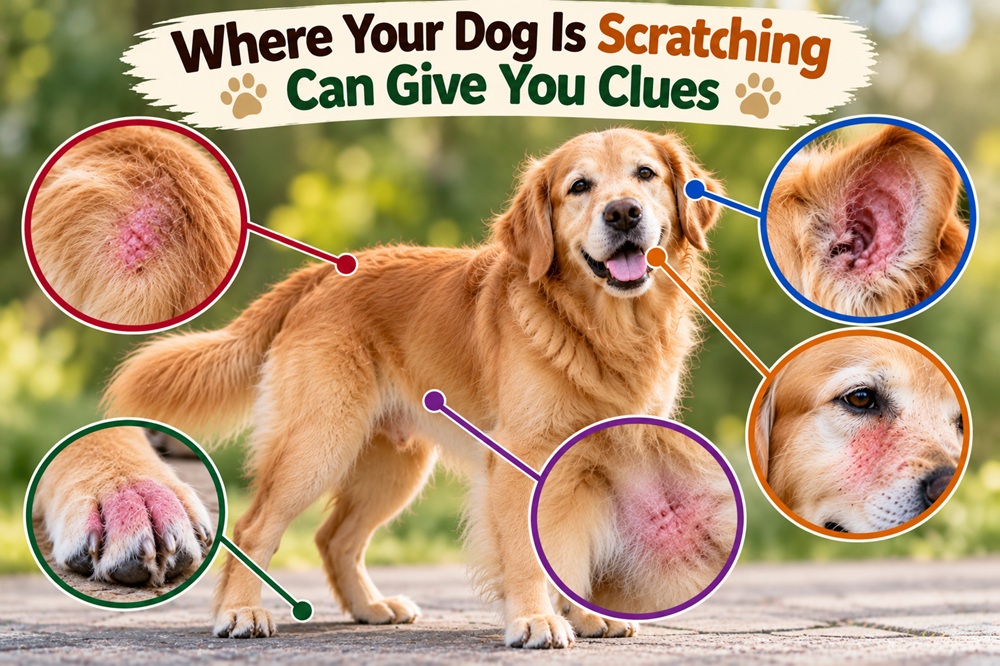
The location of the itching does not provide a diagnosis, but it can give your veterinarian useful information.
Tail Base and Lower Back
Flea irritation is one possible cause, especially when there is hair loss or small scabs.
Paws
Licking or chewing the paws can happen with allergies, irritation, or infection.
Ears
Frequent ear scratching or head shaking can be linked to ear infections, allergies, mites, or other problems.
Belly and Armpits
Redness or itching in these areas can occur with allergies, irritation, or skin infections.
Face
Face rubbing may happen because of allergies, skin irritation, or ear problems.
How Can You Tell If Your Senior Dog Has Fleas?
Start with a careful coat check.
Use a flea comb and pay special attention to the lower back, tail base, belly, neck, and areas where the coat is thick.
Look for:
- Live fleas
- Tiny dark specks
- Red bumps
- Scabs
- Hair loss
- Excessive licking or chewing
If you find dark specks, place some on a damp white paper towel. Flea dirt may leave a reddish-brown mark because it can contain digested blood.
Not finding a flea does not always mean your dog is flea-free. Fleas can be difficult to spot, especially when a dog has thick fur.
What Should You Do If Your Senior Dog Keeps Scratching?
First, try to find out whether the itching is occasional or persistent.
Check your dog’s coat and skin regularly.
If you suspect fleas, talk with your veterinarian about an appropriate flea-control product. Senior dogs may have medical conditions or take medications that need to be considered when choosing parasite prevention.
Avoid using random flea products or home remedies without checking whether they are safe for your dog.
If the itching continues even after appropriate flea control, another cause may need to be investigated.
When Should You Take Your Senior Dog to the Vet?
Contact your veterinarian if your senior dog has:
- Constant or severe scratching
- Hair loss
- Red or swollen skin
- Repeated licking or chewing
- Scabs or sores
- Bad skin odor
- Oozing or moist areas
- Frequent ear problems
- Persistent paw licking
- Changes in appetite or energy along with skin problems
You should seek veterinary care promptly if your dog has severe skin irritation, extensive wounds, significant swelling, severe weakness, or seems very unwell.
Why Senior Dogs Need Extra Attention
Senior dogs can have several health problems at the same time.
For example, an older dog may have arthritis and become less active while also developing an itchy skin condition. It can be easy to think the change in behavior is simply part of aging.
But new scratching, licking, hair loss, or skin changes should not automatically be considered normal for an older dog.
Your veterinarian can help determine whether the problem is caused by fleas, allergies, infection, parasites, or another condition.
How to Help Prevent Itchy Skin Problems
You cannot prevent every cause of itching, but good routine care can help.
Check the Skin Regularly
During grooming, look for redness, bumps, scabs, hair loss, or unusual spots.
Keep Flea Prevention Up to Date
Ask your veterinarian about a flea-prevention plan that is appropriate for your senior dog’s health and lifestyle.
Keep Bedding Clean
Wash bedding regularly and keep your dog’s resting area clean.
Avoid Over-Bathing
Bathing too often or using unsuitable products can irritate the skin.
Use dog-safe grooming products recommended for your dog’s skin needs.
Pay Attention to Changes
If your dog suddenly starts scratching much more than usual, look for other changes too.
Changes in appetite, energy, weight, coat condition, or behavior can provide important clues.
Fleas or Something Else? A Simple Guide
| Signs | Possible Cause |
| Scratching around tail base | Fleas or flea allergy |
| Black specks in fur | Flea dirt |
| Itchy paws | Allergies, irritation, or infection |
| Ear scratching and head shaking | Ear infection, allergies, or mites |
| Red, smelly skin | Possible skin infection |
| Severe itching with scabs | Fleas, mites, allergy, or infection |
| Seasonal itching | Possible environmental allergy |
| Hair loss with repeated licking | Fleas, allergy, infection, or other skin problem |
This table is only a starting point. The same symptom can have several different causes, so a veterinary examination may be needed.
Final Thoughts From WHOHPET
When a senior dog starts scratching more than usual, fleas are worth checking for—but they are not the only possible cause.
Allergies, dry skin, mites, infections, and other skin problems can also make an older dog itchy. Finding the real cause is important because the right treatment depends on what is causing the irritation.
At WHOHPET, we believe that small changes in your senior dog’s skin and behavior deserve attention. Regular grooming, flea prevention, clean bedding, and routine veterinary care can help you catch problems early.
If your senior dog keeps scratching, don’t simply assume it is part of getting older. A proper veterinary check can help identify the problem and get your dog back to feeling comfortable.