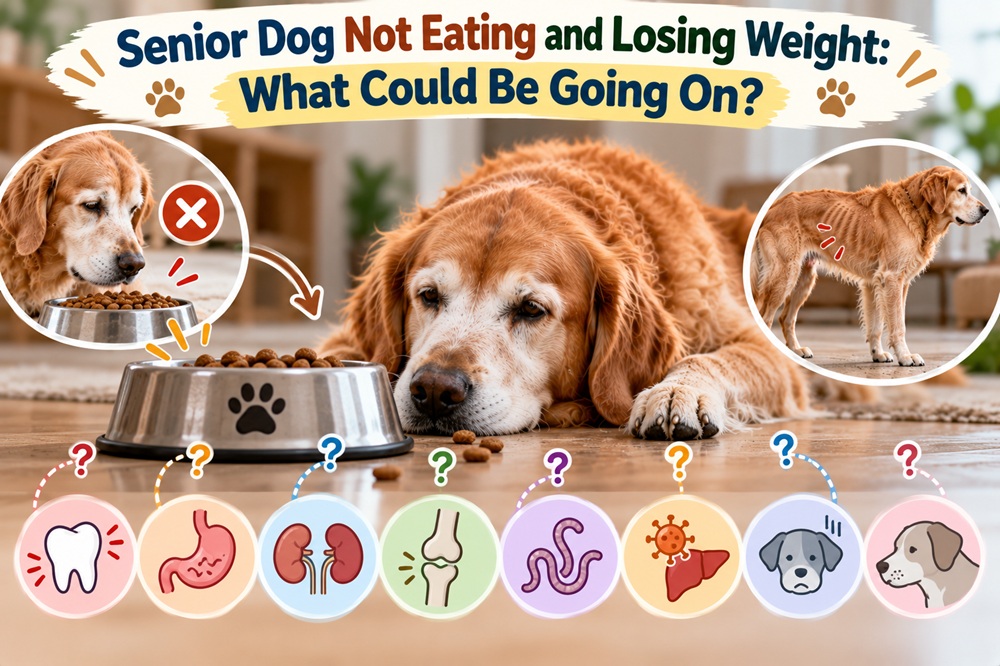
Senior dog not eating and losing weight can be worrying, especially when you also notice your dog’s body becoming thinner..
Maybe the bowl that used to disappear within minutes is now left half full. Maybe your dog sniffs the food and walks away. Or perhaps they eat a few bites but never finish the meal.
When an older dog is not eating and losing weight, it is important to look beyond the food bowl.
Sometimes appetite changes can happen for simple reasons. But in senior dogs, reduced appetite can also be connected to dental problems, digestive issues, pain, organ disease, parasites, or other health conditions.
The important thing is to notice the change and look for the reason.
Why Is Your Senior Dog Not Eating and Losing Weight?
Senior dogs can develop different eating habits as they age.
Your dog may take longer to finish a meal, become less interested in certain foods, or occasionally skip part of a meal.
But a noticeable or continuing reduction in appetite deserves attention.
If your dog is also losing weight, becoming weaker, or showing other changes, don’t assume the problem is simply that they are getting older. Appetite loss and weight loss can be signs of an underlying medical problem.
Is Your Dog Not Hungry—or Unable to Eat?
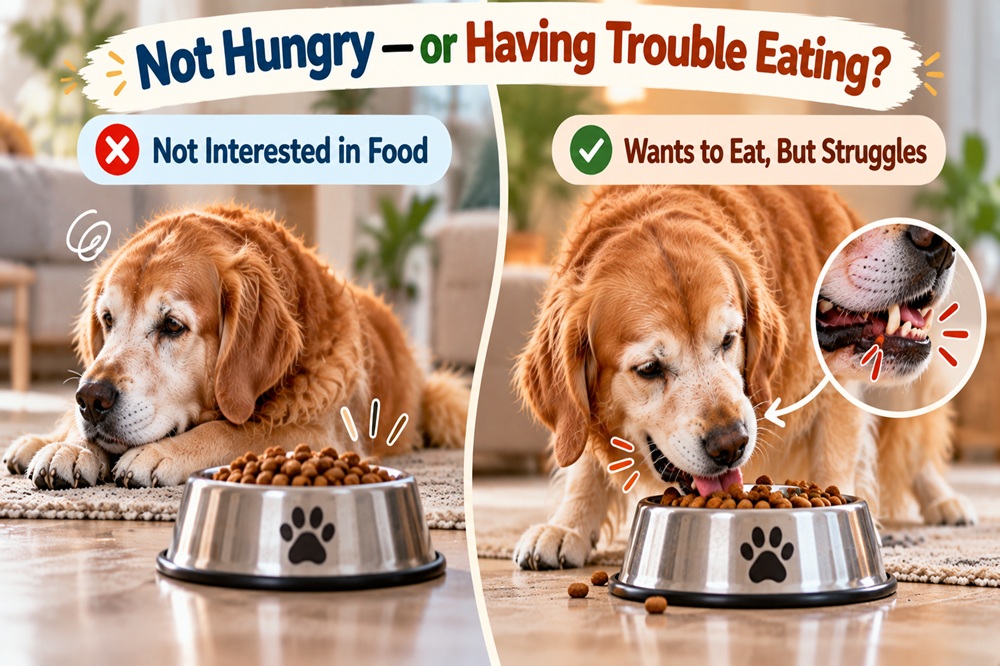
There is an important difference between not wanting food and wanting food but having difficulty eating it.
A dog may approach the bowl, seem interested, and then walk away because chewing or swallowing is uncomfortable.
Dental disease, mouth inflammation, throat problems, or difficulty picking up food can all interfere with eating.
Watch what your dog actually does at mealtime.
Do they ignore the food completely?
Or do they seem hungry but struggle once they try to eat?
That small detail can give your veterinarian an important clue.
When the Food Bowl Is Full but Your Dog Keeps Getting Thinner
Weight loss happens when a dog is not taking in enough usable energy for what their body needs, but the reason can vary widely.
A dog may eat less, have difficulty digesting or absorbing nutrients, lose nutrients through vomiting or diarrhea, or have a health condition that changes how the body uses energy.
This is why simply offering more food does not always solve unexplained weight loss.
The first goal should be to understand why your senior dog is losing weight.
Dental Pain Can Hide Behind a Lost Appetite
Imagine being hungry but finding every bite uncomfortable.
Dental disease can make eating painful for an older dog. Some dogs continue eating despite mouth pain, while others gradually lose interest in food.
Look for clues such as:
- Bad breath
- Dropping food
- Chewing differently
- Difficulty picking up food
- Excessive drooling
- Pawing at the mouth
- Avoiding dry or hard food
- Approaching food but walking away
If your dog seems interested in eating but cannot comfortably manage the meal, an oral examination may be important. Dental disease is common in dogs and can contribute to poor appetite.
Could an Upset Stomach Be the Reason?
Digestive problems can make food much less appealing.
A dog experiencing nausea, vomiting, diarrhea, abdominal discomfort, or other gastrointestinal problems may eat less.
If your senior dog is losing weight at the same time, the combination becomes more important.
Keep track of changes in:
- Stool consistency
- Vomiting
- Gas
- Appetite
- Abdominal discomfort
- Frequency of meals
- Energy level
These details can help your veterinarian understand whether the digestive system may be involved.
When Aging Comes With More Thirst and Less Appetite
Sometimes appetite changes appear alongside changes in drinking and urination.
For example, kidney disease can be associated with increased thirst and urination, and more advanced disease can include loss of appetite, vomiting, dehydration, and weight loss.
That does not mean every senior dog who drinks more has kidney disease.
It simply means that changes in thirst, urination, appetite, and weight occurring together are worth discussing with your veterinarian.
Pain Can Quietly Change Mealtime
Pain does not always look dramatic in an older dog.
Some senior dogs simply become quieter, sleep more, move less, or lose interest in activities they once enjoyed.
Joint pain can reduce activity, while other painful conditions may also affect appetite and overall behavior. Older dogs can be surprisingly subtle about discomfort.
If your dog has become slower, avoids stairs, struggles to get up, or seems uncomfortable along with eating less, tell your veterinarian about all of these changes—not just the appetite problem.
Could Parasites or Poor Nutrient Absorption Be Involved?
Parasites and gastrointestinal disorders can sometimes interfere with normal nutrition and contribute to weight loss.
Some dogs may also have problems digesting or absorbing nutrients even when they are eating.
Depending on your dog’s history and symptoms, your veterinarian may recommend a fecal examination or other diagnostic tests as part of the investigation.
The right testing depends on the individual dog.
Stress Can Change Appetite Too
Not every appetite change is caused by a physical illness.
Changes in the home, loss of a companion, a new pet, travel, or other stressful situations can affect a dog’s interest in food.
However, when a senior dog is not eating and losing weight, it is important not to assume stress is the cause without considering medical problems as well.
Especially in an older dog, persistent appetite loss deserves proper attention.
Your Senior Dog Is Getting Older—But This May Be More Than Aging
There is something emotional about watching your dog grow older.
The walks become slower. The naps become longer. The gray around their face becomes more noticeable.
Because these changes are expected, it can be easy to think:
“Maybe they just don’t need as much food anymore.”
Sometimes appetite does change with age.
But a clear loss of appetite combined with weight loss should not automatically be dismissed as normal aging. Senior dogs can develop health problems that initially appear as subtle changes in eating, energy, or body condition.
Your dog’s normal routine gives you an important baseline.
Small Changes Around the Food Bowl Can Tell You a Lot
Pay attention to how your dog eats, not just how much they eat.
You may notice:
- Sniffing food but refusing it
- Eating only a few bites
- Taking much longer to finish
- Dropping pieces of food
- Preferring softer food
- Walking away during meals
- Eating better at certain times
- Suddenly becoming selective
Write down when you first noticed the change.
Even a small observation can become useful when your veterinarian is trying to understand the pattern.
Don’t Keep Changing Foods Every Few Days
When a dog refuses food, it is tempting to keep buying different foods until someth koing works.
Occasionally, improving the smell or texture of a food may help encourage eating, but constantly changing diets can make it harder to understand what is actually happening.
It may also contribute to digestive upset in some dogs.
If your senior dog has persistent appetite loss, discuss the feeding plan with your veterinarian rather than relying on repeated food changes.
Gentle Ways to Encourage Eating
If your veterinarian has already evaluated your dog or advised you to support food intake at home, a few simple approaches may sometimes help.
Depending on your dog’s condition and diet, you might discuss:
- Offering smaller meals more frequently
- Keeping the feeding area quiet
- Making food more aromatic by gently warming it
- Using an appropriate canned formulation if recommended
- Keeping fresh water available
- Following the diet recommended for your dog’s health needs
For some dogs with specific medical conditions, smaller and more frequent meals may be easier to tolerate.
Do not add rich foods, supplements, or large amounts of treats without considering your dog’s overall nutritional needs.
What Your Veterinarian May Check
When a senior dog is not eating and losing weight, your veterinarian will usually want the full story.
Be ready to explain:
- When the appetite changed
- How much your dog is eating
- How quickly the weight has changed
- Whether vomiting or diarrhea is present
- Changes in drinking or urination
- Changes in energy
- Difficulty chewing
- Current medications
- Recent diet changes
- Any other unusual behavior
A veterinary examination may include an assessment of the mouth, body condition, hydration, abdomen, and overall health. Depending on the findings, bloodwork, urine testing, fecal testing, imaging, dental evaluation, or other tests may be recommended.
When a Senior Dog Needs Prompt Attention
Do not ignore ongoing appetite loss, especially when weight is also dropping.
Contact your veterinarian if your senior dog:
- Continues refusing or eating very little food
- Is losing weight
- Becomes unusually weak or tired
- Repeatedly vomits
- Has ongoing diarrhea
- Has difficulty chewing or swallowing
- Shows signs of pain
- Drinks or urinates much more than usual
- Becomes dehydrated
- Has trouble standing or walking
- Develops several new symptoms together
A sudden or significant change deserves particular attention. Senior veterinary guidance also recommends evaluation for weight loss and significant appetite changes rather than simply attributing them to age.
Keep a Simple Food and Weight Record
A small record can help you see patterns that are difficult to remember.
Weight
Record the date and your dog’s weight.
Food
Write down approximately how much was offered and eaten.
Appetite
Normal, slightly reduced, or clearly reduced.
Stool
Normal or changed.
Vomiting
Record whether it occurred and how often.
Water
Notice any major change in drinking.
Energy
Compare your dog’s activity with their normal routine.
Behavior
Record changes such as hiding, restlessness, or losing interest in favorite activities.
Regular weight checks and body-condition monitoring can help identify gradual changes earlier.
The Goal Isn’t Just to Make Your Dog Eat
When an older dog stops eating, it is natural to focus on getting food into them.
But the bigger question is:
Why did they stop eating?
If dental pain is involved, the mouth needs attention.
If nausea is involved, the underlying problem needs evaluation.
If kidney, liver, gastrointestinal, metabolic, infectious, or another disease is contributing, treating or managing that condition becomes part of helping your dog eat normally again.
Food is important, but finding the cause is often even more important.
A Simple Senior Dog Appetite Checklist

Keep these questions in mind:
☐ Is my dog eating the usual amount?
☐ Has their weight changed?
☐ Do they seem interested in food but struggle to eat?
☐ Are they chewing normally?
☐ Have I noticed bad breath or mouth discomfort?
☐ Has vomiting or diarrhea started?
☐ Has drinking or urination changed?
☐ Is my dog less active than usual?
☐ Have they lost interest in favorite activities?
☐ Have I noticed several changes happening together?
If the answers are concerning, share the pattern with your veterinarian.
Final Thoughts From WHOHPET
There is a big difference between an older dog becoming a little more selective and a senior dog consistently refusing food while losing weight.
Your dog may not be able to tell you that their mouth hurts, their stomach feels uncomfortable, or something inside their body has changed.
Instead, they may simply leave food in the bowl.
As your dog gets older, those small changes become important clues.
Don’t automatically think, “They’re just getting old.”
Watch their appetite. Watch their weight. Notice how they eat, how they move, how much they drink, and whether they still enjoy the things they normally love.
And when something feels different from your senior dog’s normal, getting veterinary advice early can help you find the reason and give your aging companion the care they need.