Flea allergy dermatitis (FAD) is one of the most common causes of intense itching and skin irritation in dogs. It can be especially frustrating in puppies because their skin is sensitive, and even a small number of flea bites may cause a strong reaction.
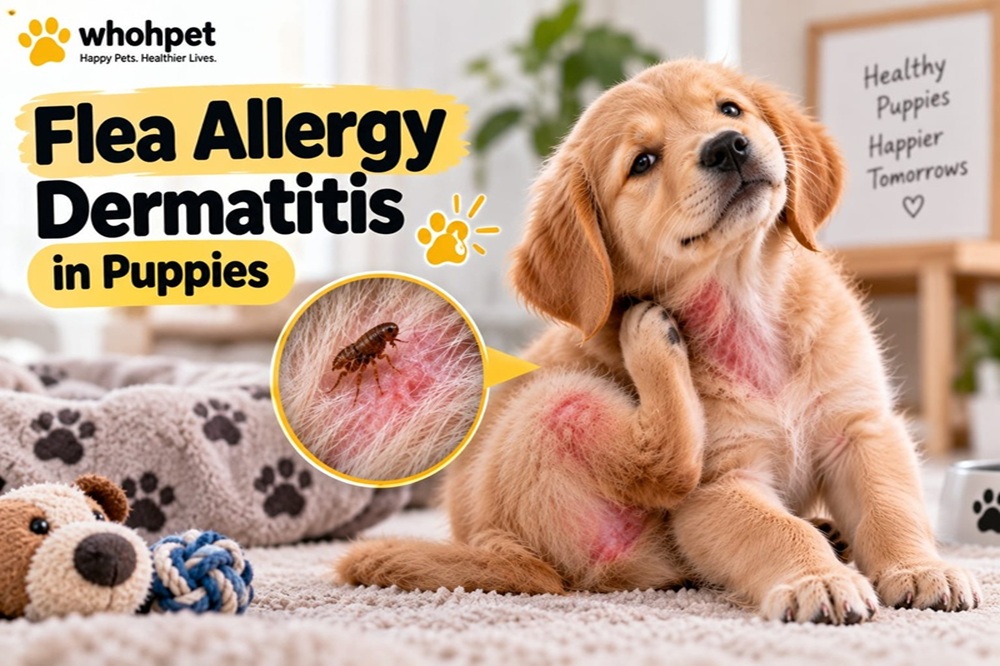
Many pet owners assume that a puppy must have a large number of fleas to develop a flea allergy. That is not always true. A sensitive puppy can develop significant itching after only a few flea bites.
In this guide, we’ll explain what flea allergy dermatitis is, how to recognize it, what causes it, how veterinarians diagnose it, and how you can help prevent future flea problems.
What Is Flea Allergy Dermatitis?
Flea allergy dermatitis is an allergic skin reaction caused by proteins in flea saliva.
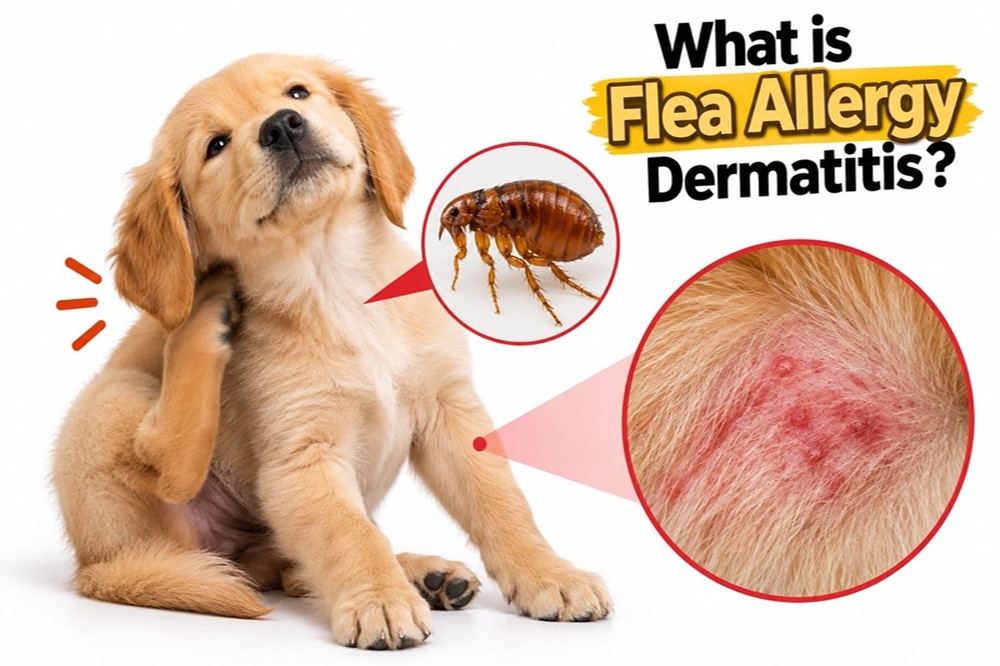
When a flea bites a puppy, it feeds on blood and releases saliva into the skin. A puppy that is sensitive to these saliva proteins may develop an exaggerated immune response.
This means the problem is not simply the flea bite itself. The puppy’s immune system reacts strongly to the flea saliva, leading to itching, inflammation and skin irritation.
A puppy may continue scratching even after the flea has disappeared because the allergic reaction can persist for some time.
Why Are Puppies Vulnerable?
Puppies are still developing their immune systems and have delicate skin. Their smaller bodies can also make irritation appear more noticeable.
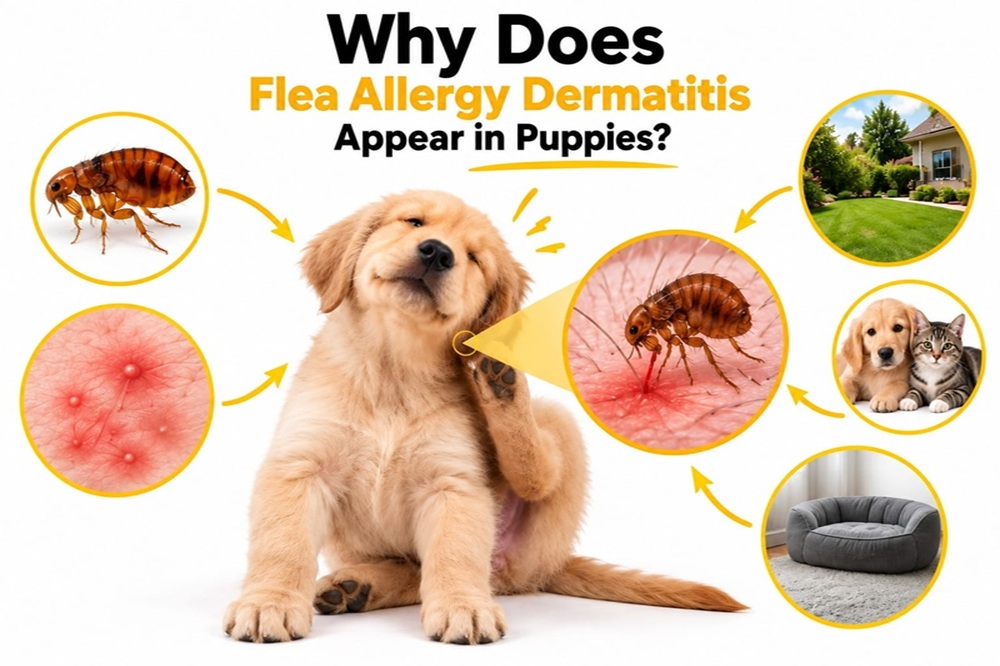
Fleas can enter the puppy’s environment through:

Other dogs or cats
Outdoor areas
Bedding and carpets
Gardens and grassy areas
People or animals that have been exposed to fleas
Importantly, seeing only one flea does not mean there is only one flea problem. Much of the flea life cycle occurs in the environment rather than directly on the puppy.
Common Symptoms of Flea Allergy Dermatitis
The symptoms can vary from one puppy to another, but intense itching is one of the most noticeable signs.
1. Excessive Scratching
A puppy may repeatedly scratch around the tail, back, hips or hind legs.
2. Frequent Biting or Chewing
Some puppies chew their skin or fur instead of scratching with their paws.
3. Red or Inflamed Skin
Repeated scratching can make the skin red, irritated and uncomfortable.
4. Hair Loss
Constant scratching and chewing can break the hair and create thin or bald areas.
5. Small Scabs
Repeated irritation can produce tiny scabs, particularly around the back and hindquarters.
6. Licking the Paws or Body
Some puppies respond to itching by repeatedly licking affected areas.
7. Darkened or Thickened Skin
Long-term irritation can cause the skin to become thicker or darker.
8. Restlessness
An itchy puppy may have difficulty relaxing or sleeping comfortably.
Where Does Flea Allergy Usually Appear?
Flea-related irritation often affects the lower back, base of the tail, rump and back legs.
However, symptoms aren’t always limited to these areas. A puppy with a strong allergic reaction may develop irritation across larger areas of the body.
This is why location alone cannot confirm flea allergy dermatitis.
Flea Allergy vs. Normal Flea Infestation
These two problems are related but not exactly the same.
A puppy can have fleas without developing an allergic reaction. Another puppy may be highly sensitive to flea saliva and develop severe itching after only a few bites.
Therefore:
Fleas + sensitive puppy = potentially severe skin reaction
You should not judge the seriousness of the problem only by the number of fleas you can see.
How Is Flea Allergy Dermatitis Diagnosed?
A veterinarian usually considers several things when evaluating an itchy puppy.
They may look for:
Evidence of fleas or flea dirt
The location and pattern of skin irritation
Scratching and chewing behavior
Skin infections
Other parasites
Possible food or environmental allergies
The puppy’s response to appropriate flea control
Flea allergy dermatitis can look similar to other skin conditions. Therefore, assuming that every itchy puppy has a flea allergy can lead to the wrong treatment.
If your puppy is scratching continuously, developing sores, losing hair or showing signs of infection, a veterinary examination is appropriate.
Treatment for Flea Allergy Dermatitis

Treatment generally has two goals:
1. Control the allergic skin reaction and secondary problems.
2. Eliminate the flea infestation.
Veterinary Flea Control
Your veterinarian can recommend a flea-control product appropriate for your puppy’s age, weight and health status.
Never use a flea product simply because it worked for another dog. Some products have age or weight restrictions, and products intended for other animals can be dangerous.
Treat Secondary Skin Problems
Constant scratching can damage the skin and allow bacteria or yeast to multiply.
If a secondary infection develops, your veterinarian may recommend appropriate treatment based on the puppy’s condition.
Reduce Itching
Depending on the severity of the reaction, a veterinarian may recommend treatments to control inflammation and itching.
Do not give your puppy human anti-itch medicines unless your veterinarian specifically tells you to do so.
Don’t Forget the Home
Treating only the puppy may not completely solve the problem.
Fleas have multiple life stages, and eggs and immature stages can remain in the environment. Your home may therefore need attention as part of the flea-control plan.
Pay particular attention to:
Puppy bedding
Blankets
Carpets
Rugs
Sofas and other resting areas
Cracks and areas where your puppy spends time
Regular cleaning and vacuuming can help reduce environmental flea stages. Your veterinarian or a qualified pest-control professional can advise you if the infestation is significant.
How to Prevent Flea Allergy Dermatitis
Prevention is especially important for a puppy that has already experienced flea allergy dermatitis.

Follow a Consistent Flea-Control Plan
Use a veterinarian-recommended flea preventive according to its instructions.
Check Your Puppy Regularly
Look through the coat, especially around the back, tail base and belly.
Keep Bedding Clean
Wash bedding regularly and keep your puppy’s sleeping area clean.
Maintain the Home Environment
Regular vacuuming can help reduce flea stages in areas where your puppy spends time.
Watch Other Pets
If you have multiple pets, fleas can move between animals. Your veterinarian can help you create an appropriate parasite-control plan for the household.
Can Flea Allergy Dermatitis Be Cured?
The allergic sensitivity itself may remain throughout a dog’s life. However, the condition can usually be managed by preventing flea exposure and treating flare-ups appropriately.

For a puppy that is sensitive to flea saliva, preventing flea bites is much more important than simply treating visible fleas after they appear.
When Should You Contact a Veterinarian?

Contact your veterinarian if your puppy:
Scratches constantly
Has open sores or bleeding skin
Develops significant hair loss
Has a strong unpleasant skin odor
Has pus, discharge or crusting
Seems unusually uncomfortable
Becomes lethargic or stops eating
Has a widespread skin reaction
Very young puppies with significant flea infestations also deserve prompt veterinary attention because heavy flea burdens can contribute to blood loss and anemia.
Final Thoughts
Flea allergy dermatitis is more than a simple flea problem. For a sensitive puppy, even a small number of flea bites can trigger intense itching and skin inflammation.
The most effective approach is to identify the cause, control fleas consistently, protect the puppy’s skin, and address any secondary infection with veterinary guidance.
If your puppy suddenly starts scratching, don’t wait until the skin becomes severely damaged. Early attention can make the problem easier to manage and help your puppy get back to being comfortable, playful and happy.
whohpet Tip: A healthy puppy doesn’t just need occasional flea treatment—it needs a consistent parasite-prevention routine suited to its age, weight and lifestyle.