Finding stray hairs in the house is normal for a lot of pets, especially when it’s shedding season. But bald spots, thinning fur, excessive shedding with itchy or damaged skin may be a sign of something more.
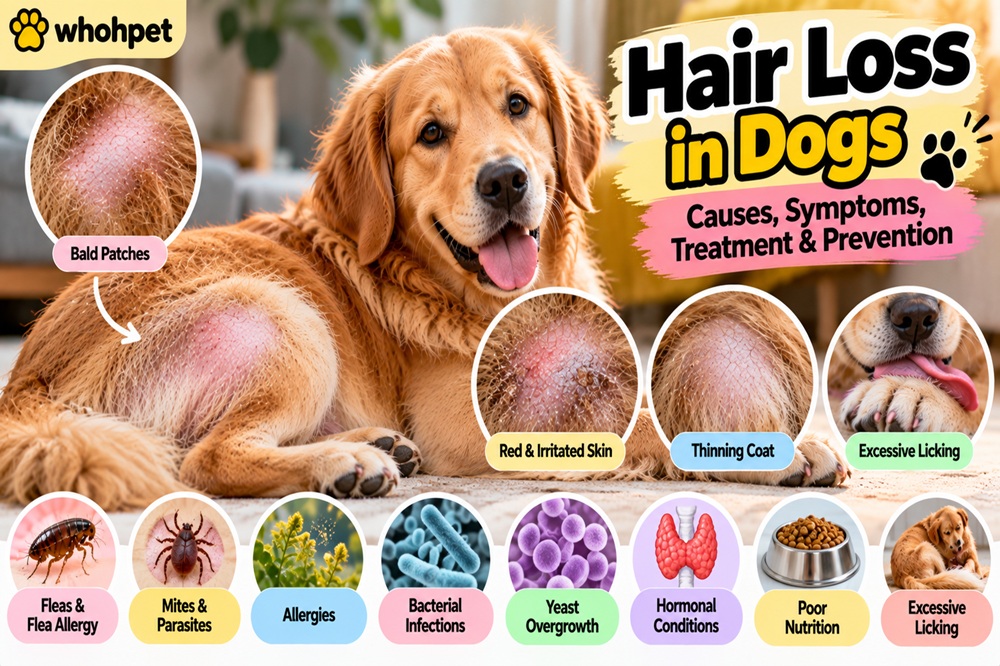
Hair loss in dogs can be called alopecia. It can happen for a lot of reasons, including normal shedding, parasites, allergies, skin infections, hormonal issues, nutritional or dietary problems, and excessive licking or scratching.
The causes can be numerous, but observing patterns and other symptoms may help your veterinarian narrow down what’s happening.
Is Shedding Normal in Dogs?
Yes, a lot of pets shed old or damaged hairs naturally during their hair-growth cycle.
The amount of shedding can be different depending on:
• Breed
• Coat type
• Season
• Age
• Environment
• Overall health
Some pets shed year-round while other dogs have heavier seasonal shedding.
Normal shedding usually doesn’t make bald patches or greatly affect the skin, unlike abnormal hair loss.
If your pet’s fur is coming off in strange ways or the skin looks abnormal, it’s worth investigating.
What’s Considered Abnormal Hair Loss?
Abnormal hair loss includes things like:
• Bald patches
• Thinning coat
• Hair breaking easily
• Hair loss on specific body parts
• Red or inflamed skin
• Scabs or crusts
• Excessive scratching
• Excessive licking or chewing
• Darkened skin
• Changes in coat texture
(If you notice white flakes along with fur loss, read our guide on Dog Dandruff: Causes & How to Treat Dry Flaky Skin to see if dry skin is triggering the itch.)
Hair loss along with itching, redness, smell, or sores is a more worrying sign than regular shedding.
Common Causes
Fleas and Flea Allergy
Fleas can cause intense itching.
Some dogs are allergic to flea saliva and can experience flea allergy dermatitis.
These pets may scratch, bite, or lick their skin until they lose hair.
The hair loss is often seen on the lower back, tail base, and hind quarters, but can occur on other parts of the body as well.
Mites and Other Parasites
Mites can be a problem too.
Depending on the type, mites can cause:
• Severe itchiness
• Redness
• Crusting
• Hair loss
• Thickened skin
Parasites may be harder to find on your own.
Allergies
Allergies are another common cause of itchy skin and hair loss.
Dogs can have reactions to various environmental allergens such as pollens, molds, or dust mites. Food related allergies can also be a trigger.
Scratching, licking, and chewing can damage the dog’s coat leading to spots of hair loss.
Bacterial Skin Infections
Bacterial infections can affect the skin and sometimes cause hair loss.
Other signs may be:
• Red bumps
• Pustules
• Crusts
• Redness
• Itching
• Moist or irritated skin
Sometimes infections occur as a secondary problem after other conditions damage the skin.
Yeast Overgrowth
Yeast that has grown too much on the skin can be irritating and inflamed.
Dogs may experience:
• Itching
• Greasy skin
• Hair loss
• Redness
• Darkened skin
• A noticeable odor
Sometimes recurrent yeast related infections warrant investigating the underlying cause.
Hormonal Conditions
Some hormonal conditions can cause hair loss without much associated scratching.
For example, some endocrine conditions can have symmetrical thinning of the dog’s coat or altered skin appearance.
If your dog experiences unexplained hair loss without much associated scratching, your veterinarian may try to investigate hormonal or other internal reasons.
Poor Nutrition
A balanced diet is very important for a dog’s skin and healthy hair growth.
Nutritional issues can impact the dog’s coat quality and skin. However, the diet is only a possible reason if other reasons have been ruled out.
If you’re considering that the dog’s diet may be affecting the fur, speak to a veterinarian before giving supplements or making a major change to the diet.
Excessive Licking
Dogs can sometimes lick specific areas excessively because of itchiness, pain, anxiety, or another issue.
Constant licking can damage the skin and cause bald spots.
Where Does Hair Loss Usually Occur?
Where the hair loss is can help determine the issue, but it doesn’t make the diagnosis.
Common areas include:
• Tail base
• Lower back
• Hind legs
• Paws
• Face
• Ears
• Abdomen
• Flanks
• Around the eyes
Sometimes the pattern is symmetrical or patchy.
A veterinarian will take into account where the hair loss is along with the dog’s age, symptoms, and other findings.
Hair Loss With Itching vs. Hair Loss Without Itching
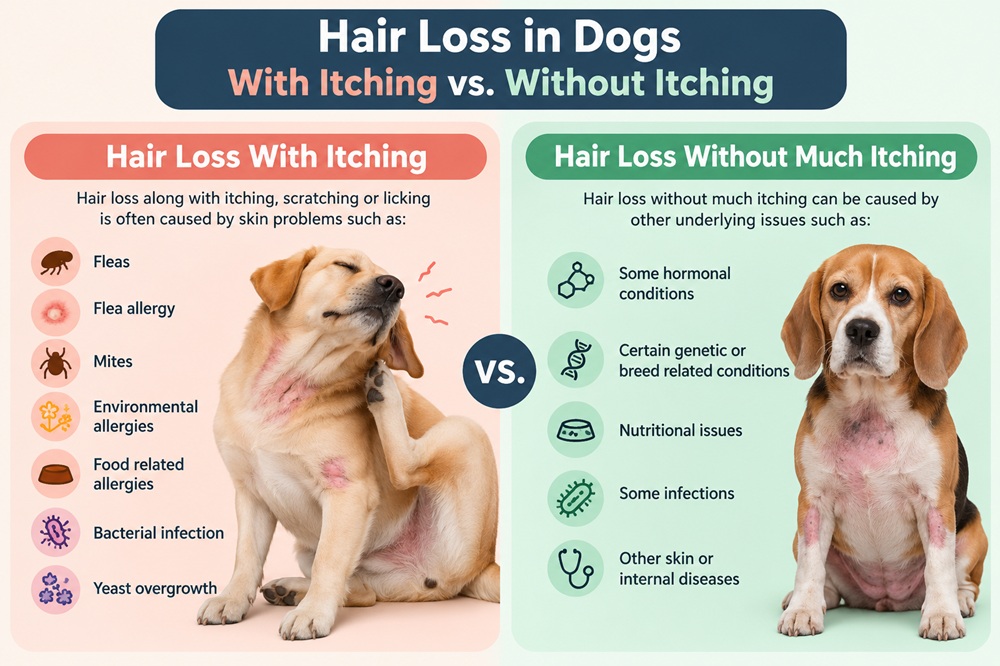
This can be an important distinction for determining hair loss reasons.
Hair Loss With Itching
Possible causes include:
• Fleas
• Flea allergy
• Mites
• Environmental allergies
• Food related allergies
• Bacterial infection
• Yeast overgrowth
Hair Loss Without Much Itching
Possible causes can be:
• Some hormonal conditions
• Certain genetic or breed related conditions
• Nutritional issues
• Some infections
• Other skin or internal diseases
This is just to give an idea of possible causes. Some conditions have similar patterns, so a veterinarian may need to help with the diagnosis.
Can Stress Cause Hair Loss in Dogs?
Stress can impact a dog’s skin and coat, but it shouldn’t immediately be blamed for unexplained hair loss.
Dogs sometimes lick themselves because of stress or anxiety, but itchiness, parasites, allergies, pain, and other medical issues should also be considered.
It’s important to get a proper diagnosis if the dog is constantly damaging one area through licking or chewing.
How Is Hair Loss Diagnosed?
Your veterinarian can usually start with a detailed history and physical examination.
They may ask about:
• When the hair loss started
• Whether it’s worsening
• Whether the dog is itchy
• Flea and parasite prevention
• Diet
• Past skin problems
• Seasonal changes
• Medications
• Other symptoms
Depending on the possible cause, the veterinarian may recommend tests such as:
• Skin scrapings
• Hair or skin examination
• Cytology
• Fungal testing
• Blood tests
• Hormonal testing
• Other tests
The proper tests depend on your dog’s individual case.
Treatment for Hair Loss in Dogs
There isn’t one specific treatment for hair loss as it really depends on what’s causing it.
If Parasites Are Responsible
The veterinarian may recommend the proper parasite control treatment.
Flea prevention is really important if there is flea allergy.
If an Infection Is Responsible
Bacterial or yeast infections may need proper veterinary treatment.
The treatment depends on the infection and its severity.
If Allergies Are Responsible
Allergy management typically involves controlling the itchiness, any secondary infections, avoiding triggers, and other veterinary recommended treatments.
If a Hormonal Problem Is Responsible
The treatment depends on the issue.
Your veterinarian may recommend additional tests before deciding on any treatment.
If Nutrition Is Involved
The veterinarian may look at the dog’s diet and overall health before making any recommendations.
Do not take multiple supplements without veterinary advice as excessive amounts of nutrients can also be harmful.
How to Prevent Hair Loss in Dogs
Not all causes can be prevented, but routine care can help prevent some causes.
Maintain Flea and Parasite Prevention
Follow parasite prevention as recommended by your veterinarian.
Feed a Complete and Balanced Diet
Good nutrition supports skin and coat health.
Groom Regularly
Brushing can help remove loose hair, and also helps you notice any changes in the skin or coat.
Keep the Skin Clean and Dry
Dry the dog properly after bathing or swimming.
Watch for Itching
Scratchiness, licking, or chewing should never be ignored.
The earlier you can catch a skin problem, the easier it can be to manage.
Keep Bedding Clean
Wash the dog’s bedding regularly and keep resting areas clean.
Can Hair Grow Back After Hair Loss?
Hair usually grows back after the underlying issue is treated, but it can vary.
The time it takes to regrow fur can depend on:
• The cause
• How long it’s been going on
• Whether the skin was affected
• Whether there’s infection
• The individual dog’s hair-growth cycle
Some chronic skin conditions can cause ongoing or recurrent hair loss.
Some dogs may not grow fur back after being affected for a considerable time. If the hair loss seems to be recurring or there isn’t a noticeable change after the underlying cause is addressed, your veterinarian may have further recommendations.
When Should You Take Your Dog to a Veterinarian?
Schedule a vet visit if your dog develops:
• Sudden or significant hair loss
• Bald patches
• Persistent scratching
• Red or inflamed skin
• Open wounds
• Scabs or crusting
• Strong smell of skin
• Repeated infections
• Darkened or thickened skin
• Hair loss that keeps returning
• Hair loss along with changes in appetite, weight, energy, or behavior
See a vet immediately if your dog has extensive skin damage or seems quite unwell.
Final Thoughts by whohpet
Hair loss in dogs can be perfectly normal, but bald spots or excessive shedding with itching or skin changes should absolutely not be ignored.
Fleas, allergies, parasites, infections, excessive licking, hormonal issues, and nutritional problems can all be potential culprits. As each one can have similar signs, figuring out the underlying cause is an important part of the treatment.
At whohpet, we believe that a healthy coat starts with healthy skin. Routine grooming, parasite prevention, good nutrition, and paying attention to any changes in your dog’s skin or coat can help detect issues sooner.
If your dog’s hair loss is sudden, severe, recurring, or comes with itching or skin damage, it’s a good idea to speak to a veterinarian.