Taking care of your puppy’s teeth is an important part of overall pet care. Puppies eventually lose their baby teeth and develop permanent adult teeth, but that doesn’t mean dental care should wait until adulthood.
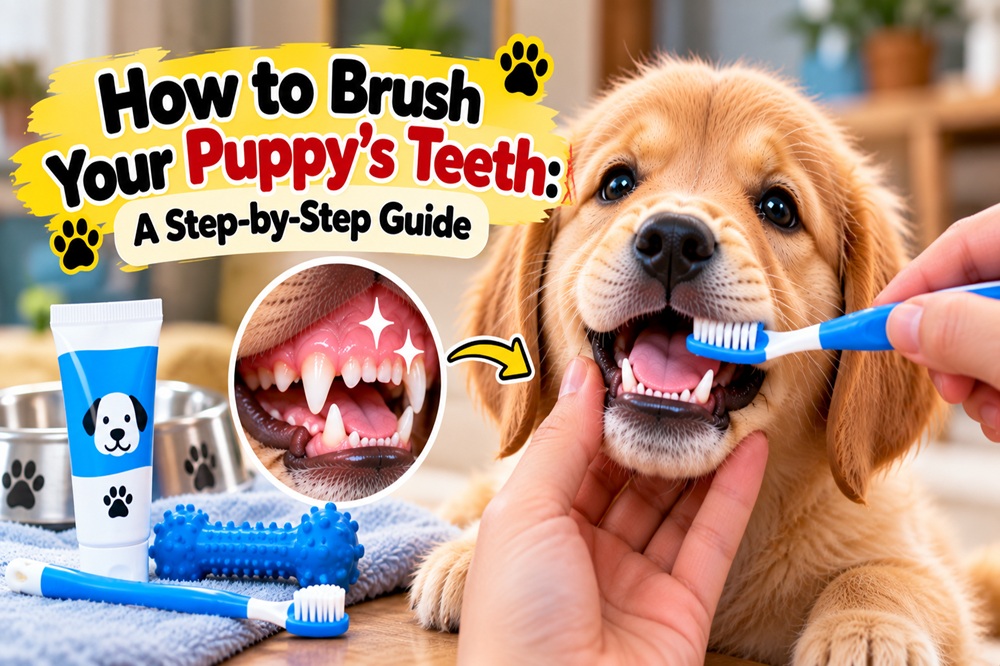
Starting a simple tooth-brushing routine while your puppy is young can help them become comfortable with having their mouth handled. It can also help remove plaque from the teeth and support healthier gums.
The key is to start slowly, use dog-safe products, and make the experience positive.
Why Should You Brush Your Puppy’s Teeth?
Plaque can build up on teeth when bacteria and food particles remain around the mouth. If plaque isn’t regularly removed, it can contribute to gum inflammation and other dental problems.
Regular brushing helps clean the surfaces of the teeth that are easiest to reach at home.
However, brushing is only one part of dental care. Puppies should also have their mouths checked regularly and receive appropriate veterinary dental care when needed.
When Should You Start Brushing a Puppy’s Teeth?
You can begin introducing your puppy to dental care as soon as they come home. You do not need to wait until all of the permanent teeth have appeared. Veterinary guidance recommends starting young because puppies can gradually learn that mouth handling and tooth brushing are normal parts of their routine.
Puppy Dental Care by Age
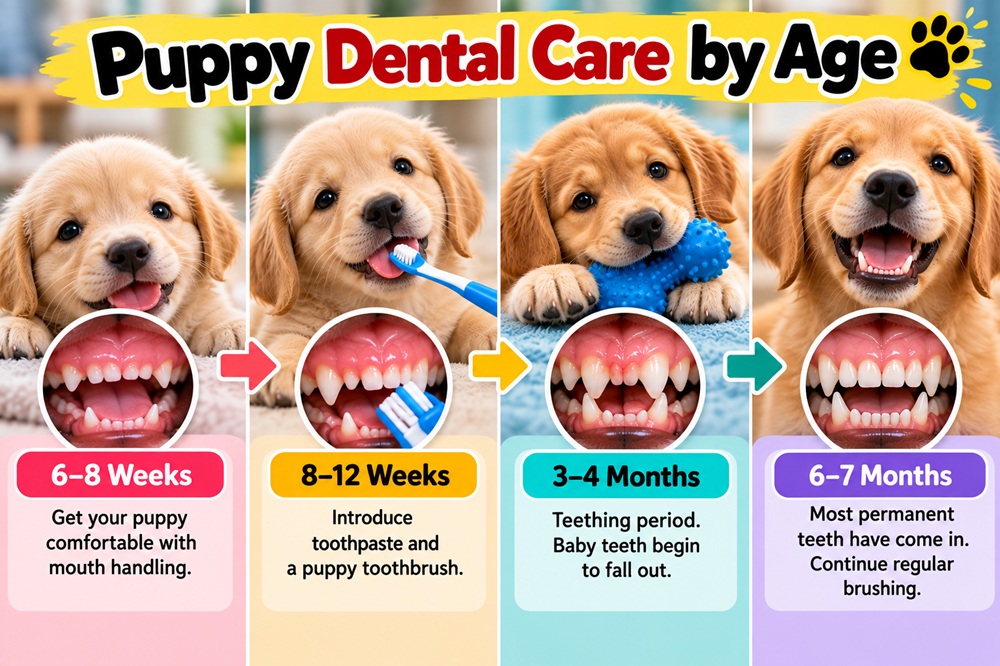
Around 6–8 weeks:
This is a good time to begin getting a newly adopted puppy comfortable with gentle mouth handling. You can gently touch the muzzle, lift the lips, and briefly look at the teeth and gums.
Around 8–12 weeks:
Gradually introduce dog-safe toothpaste and a puppy-appropriate toothbrush. At first, allow your puppy to sniff and lick the toothpaste and toothbrush rather than immediately trying to brush the entire mouth. Some veterinary puppy-care guidance specifically recommends starting tooth brushing around this stage.
Around 3–4 months:
Your puppy will usually begin losing baby teeth and entering the active teething period. Continue gentle dental training, but be especially careful because the gums may be sensitive during this stage.
Around 6–7 months:
Most puppies have their permanent teeth by this age. Continue regular brushing and check that baby teeth have fallen out normally. If a baby tooth remains beside an adult tooth, ask your veterinarian to examine it.
The Important Point
There is no need to wait for the permanent teeth to appear before teaching your puppy about brushing. Start the training early, introduce the toothbrush gradually, and aim for regular brushing once your puppy is comfortable.
If your puppy is already older than these age ranges, don’t worry. It is still possible to teach an older puppy or dog to accept tooth brushing. Go slowly and build the habit step by step.
What Do You Need to Brush a Puppy’s Teeth?
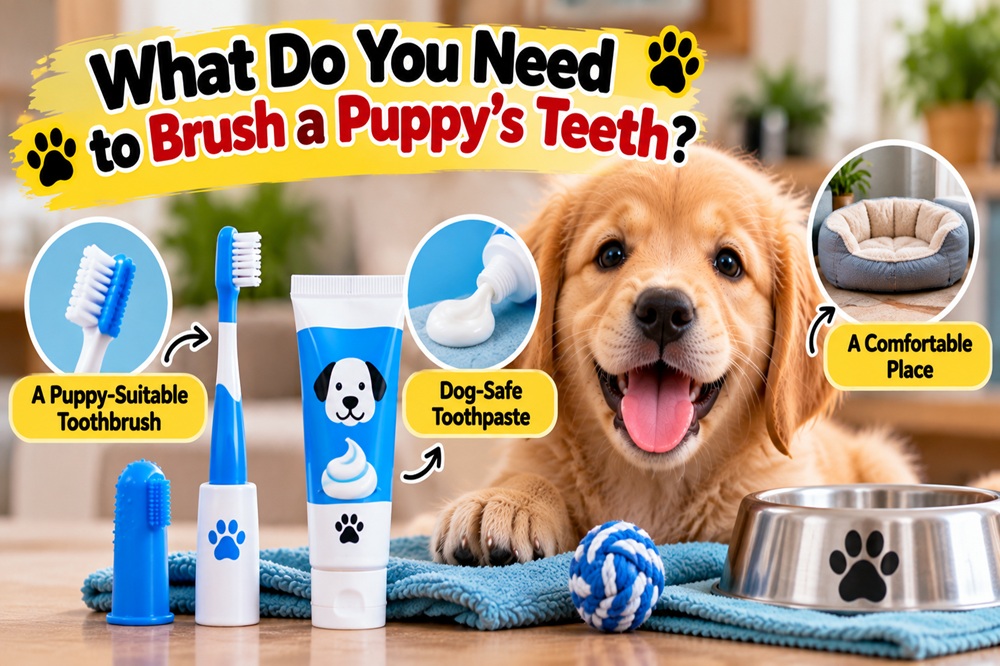
You only need a few basic items.
A Puppy-Suitable Toothbrush
Choose a toothbrush designed for dogs or one that is appropriate for your puppy’s mouth size.
A small brush is usually easier to control in a young puppy’s mouth.
Dog-Safe Toothpaste
Use toothpaste specifically made for dogs.
Do not use human toothpaste for your puppy. Dogs generally swallow toothpaste rather than rinsing and spitting it out, so the product must be suitable for dogs.
A Comfortable Place
Choose a quiet location where your puppy feels relaxed.
You don’t need a special dental station. A comfortable room with good lighting can work perfectly well.
Step 1: Get Your Puppy Comfortable With Mouth Handling
Before introducing a toothbrush, gently touch your puppy’s muzzle.
Lift the lip for a second or two and look at the teeth.
Then release the mouth and reward your puppy with praise.
Repeat this regularly.
The goal is to teach your puppy that having their mouth checked is nothing to fear.
Step 2: Let Your Puppy Taste the Toothpaste
Put a tiny amount of dog-safe toothpaste on your finger.
Allow your puppy to smell and taste it.
Don’t immediately start brushing.
If your puppy likes the taste, the toothbrush introduction may become easier.
If your puppy doesn’t like the toothpaste, don’t force it into their mouth. You can discuss alternative dog-safe dental products with your veterinarian.
Step 3: Introduce the Toothbrush
Let your puppy see and sniff the toothbrush.
You can gently touch the brush against their lips before placing it against the teeth.
Keep the first attempts very short.
Even a few seconds of calm cooperation is a good beginning.
Step 4: Start With the Outer Surfaces
When your puppy is comfortable with the toothbrush, gently brush the outside surfaces of the teeth.
You don’t need to force your puppy’s mouth wide open.
Lift the lip gently and move the brush along the teeth using small, gentle motions.
Pay particular attention to the areas near the gumline, where plaque can accumulate.
Step 5: Gradually Increase the Brushing Time
Don’t expect your puppy to sit perfectly still during the first session.
Start with a short session and gradually increase the time as your puppy becomes more comfortable.
If your puppy becomes stressed, stop and try again later.
A calm, short session is better than a long struggle.
Step 6: Reward Your Puppy
After brushing, praise your puppy.
You can offer a suitable reward and plenty of positive attention.
This helps create a positive connection with dental care.
Over time, your puppy may become much more cooperative when they see the toothbrush.
How Often Should You Brush a Puppy’s Teeth?
For the best routine, aim for daily brushing once your puppy is comfortable with the process. Daily brushing is commonly recommended because it helps regularly remove plaque before it can accumulate.
If daily brushing isn’t possible at first, don’t give up.
Building the habit gradually is more important than expecting perfect cooperation immediately.
A consistent routine can make dental care easier as your puppy grows.
Should You Brush a Puppy’s Baby Teeth?
Yes. Gentle dental care can be introduced while puppies still have their baby teeth.
Baby teeth are temporary, but looking after the mouth during this period helps your puppy become accustomed to brushing.
It also gives you an opportunity to notice problems such as unusual redness, swelling, damaged teeth, or a baby tooth that remains beside an emerging adult tooth.
What If Your Puppy Bites the Toothbrush?
Many puppies naturally want to chew anything placed near their mouth.
If your puppy tries to bite the toothbrush, don’t turn the session into a battle.
Allow them to investigate it, then gently redirect them toward the brushing motion.
You can also practice touching the toothbrush to the teeth without immediately trying to complete a full brushing session.
Patience is especially important during the teething stage.
What If Your Puppy Refuses Tooth Brushing?
Don’t force the toothbrush into the mouth.
Instead, go back one step.
For example:
Step 1: Touch the muzzle.
Step 2: Lift the lip.
Step 3: Touch the teeth with your finger.
Step 4: Introduce toothpaste.
Step 5: Introduce the toothbrush.
Step 6: Brush for a few seconds.
Move forward only when your puppy is comfortable with the previous step.
Some puppies need several days or longer to accept the process.
Common Mistakes to Avoid
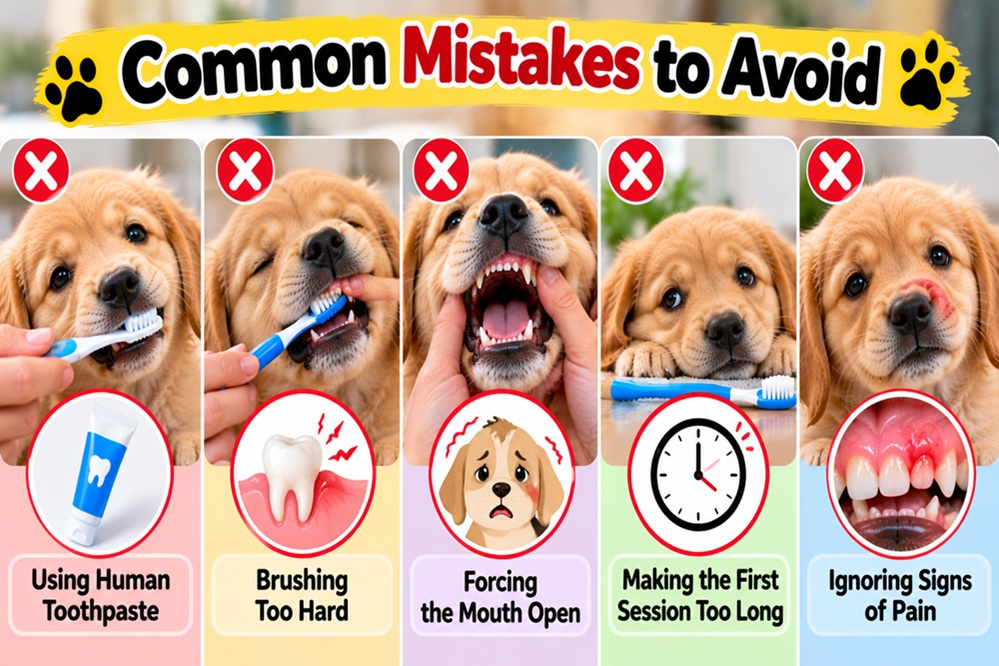
Using Human Toothpaste
Human toothpaste isn’t designed to be swallowed by dogs.
Choose a toothpaste made specifically for dogs.
Brushing Too Hard
You don’t need to scrub aggressively.
Use gentle movements and let the toothbrush do the work.
Forcing the Mouth Open
Forcing your puppy’s mouth open can create fear and make future dental care more difficult.
Making the First Session Too Long
A five-minute struggle isn’t better than a calm 20-second session.
Start small and build gradually.
Ignoring Signs of Pain
If your puppy suddenly cries, pulls away, bleeds significantly, or seems to have pain while you touch the mouth, stop the session and contact your veterinarian.
What Else Can Help Puppy Dental Health?
Tooth brushing is an important part of home dental care, but it isn’t the only one.
You should also:
- Provide appropriate puppy-safe chew toys
- Avoid extremely hard objects that can damage teeth
- Check your puppy’s mouth regularly
- Monitor for retained baby teeth
- Watch for persistent bad breath
- Pay attention to red or swollen gums
- Attend regular veterinary checkups
Dental chews and other dental products should be selected according to your puppy’s age, size, chewing habits, and veterinary advice.
When Should You Contact a Veterinarian?
Don’t assume every mouth problem is caused by teething.
Contact your veterinarian if your puppy has:
- Significant gum swelling
- Persistent or heavy bleeding
- Severe mouth pain
- Persistent bad breath
- Difficulty eating
- Refusal to eat
- A broken tooth
- Facial swelling
- Pus or unusual discharge
- A retained baby tooth
- Teeth growing in an unusual position
A veterinarian can determine whether your puppy simply needs improved dental care or has a problem requiring professional treatment.
How to Make Tooth Brushing a Daily Habit
The easiest way to maintain dental care is to connect brushing with something your puppy already does every day.
For example, you might brush your puppy’s teeth after an evening play session when they are relaxed.
Keep the routine predictable.
Use the same toothbrush, a comfortable location, and a calm voice.
With repetition, the process can become a normal part of your puppy’s routine rather than something unusual.
Final Thoughts
Teaching a puppy to accept tooth brushing takes patience, but starting early can make dental care much easier in the future.
Don’t worry if your first few attempts are very short. Your initial goal is simply to make your puppy comfortable with having their mouth handled.
Introduce the toothbrush gradually, use dog-safe toothpaste, brush gently, reward cooperation, and increase the routine slowly.
If you notice significant swelling, bleeding, pain, bad breath, or another unusual change in your puppy’s mouth, speak with a veterinarian instead of trying to solve the problem through brushing alone.
A few calm minutes of dental care today can help establish a healthy habit that lasts throughout your puppy’s life.