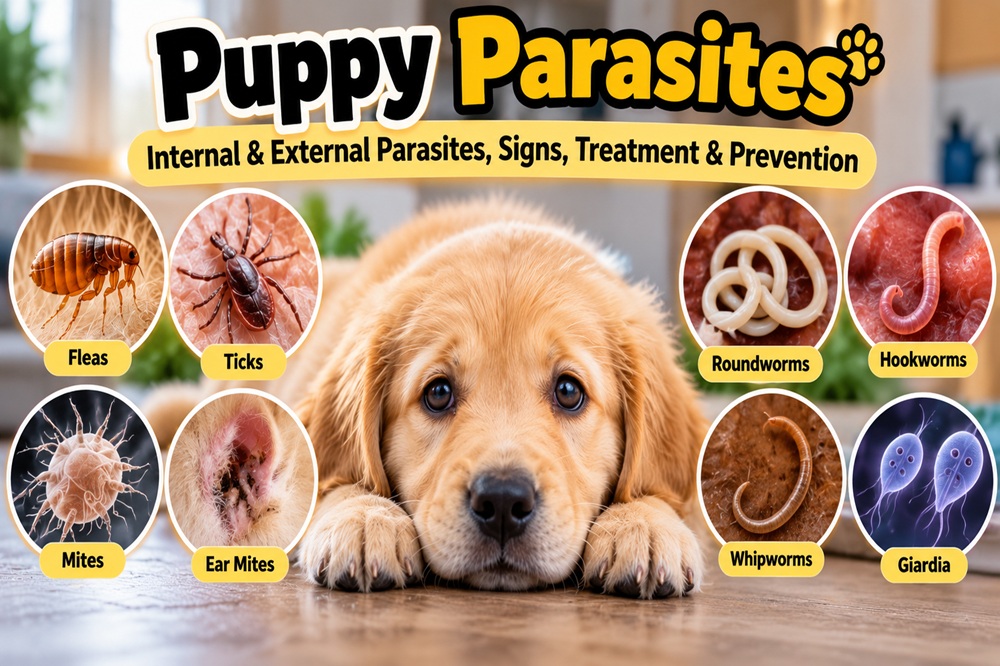
Puppies are curious, playful, and still developing their immune systems. Unfortunately, this can make them more vulnerable to parasites. Parasites are organisms that live on or inside a puppy and obtain nutrients from the animal, sometimes causing irritation, weakness, digestive problems, anemia, or other health complications.
Some parasites are easy to notice, such as fleas and ticks, while others, including intestinal worms, may remain hidden for a long time. Regular veterinary care, appropriate parasite prevention, good hygiene, and early treatment can help protect puppies from many parasite-related problems.
What Are Parasites in Puppies?
Parasites are organisms that live on or inside another animal and depend on that host for survival. In puppies, parasites are generally divided into two major groups: internal parasites and external parasites.
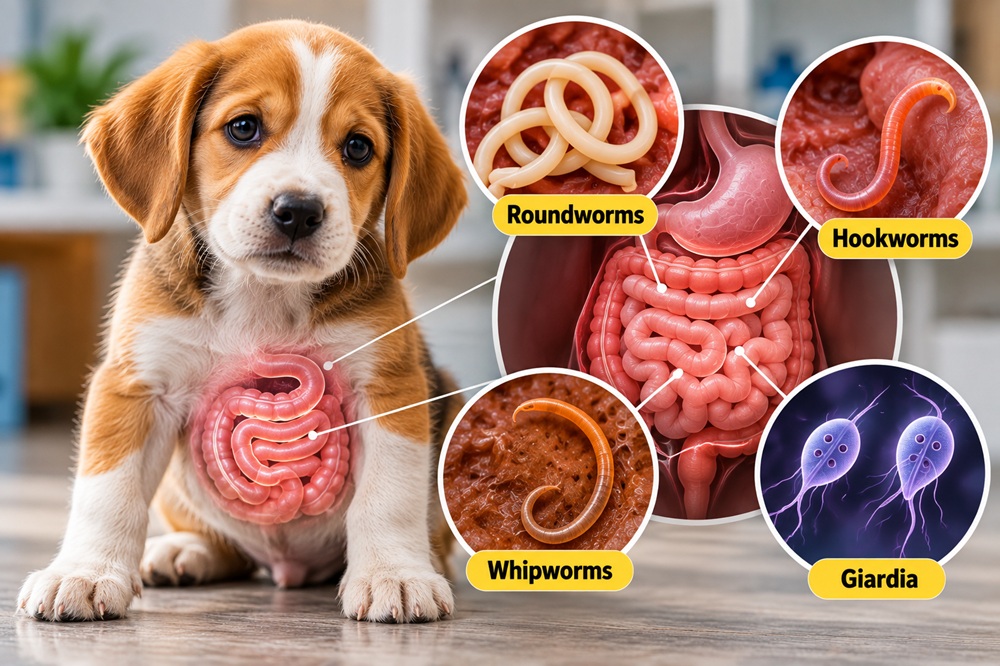
Internal parasites live inside the puppy’s body and commonly affect the digestive system. Examples include roundworms, hookworms, whipworms, and protozoan parasites such as Giardia.
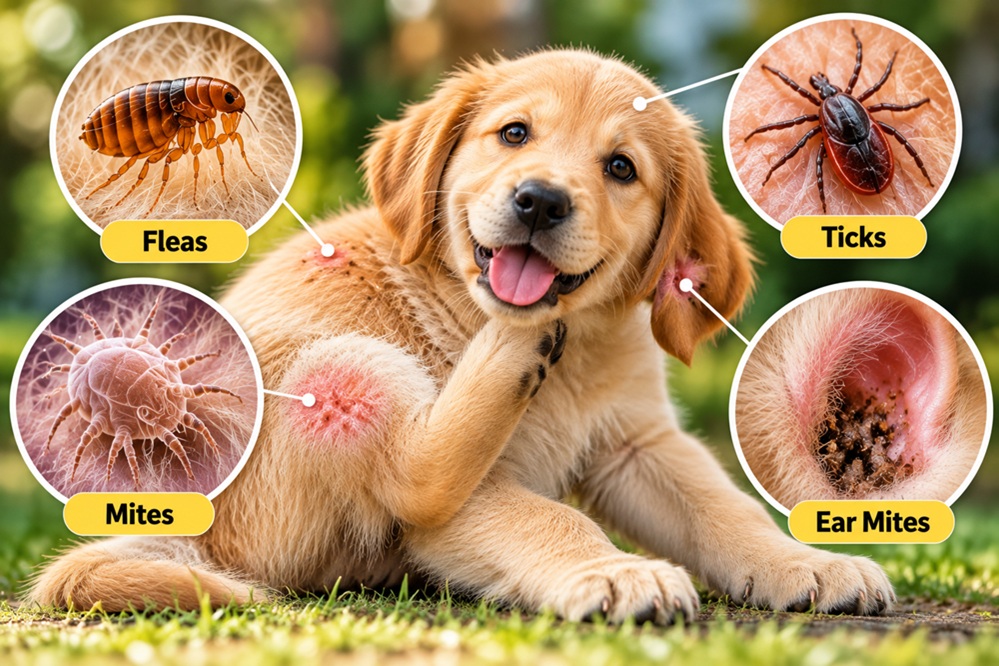
External parasites live on the puppy’s skin, coat, or ears. Fleas, ticks, and certain types of mites are common examples.
A puppy can sometimes have more than one type of parasite at the same time, which is why regular veterinary examinations are important.
Common Types of Puppy Parasites
Internal Parasites
Internal parasites live inside a puppy’s body. Many affect the intestinal tract, but some parasites can cause problems in other organs as well.
1. Roundworms
Roundworms are common intestinal worms in puppies. Puppies can sometimes become infected before birth or through their mother’s milk.
An infected puppy may have a swollen or rounded belly, poor growth, diarrhea, vomiting, or a dull coat. Some puppies may show few obvious signs even when worms are present.
Veterinarians can diagnose roundworms through fecal testing and recommend an appropriate deworming treatment.
2. Hookworms
Hookworms attach to the intestinal lining and feed on blood. They can be particularly dangerous for young puppies because heavy infections may contribute to significant blood loss and anemia.
Possible signs include pale gums, weakness, poor appetite, diarrhea, weight loss, and slow growth.
Because hookworm infections can become serious in puppies, veterinary attention is important when these signs occur.
3. Whipworms
Whipworms live in the large intestine and may cause digestive problems.
An infected puppy can develop diarrhea, mucus or blood in the stool, weight loss, reduced appetite, or poor body condition. Diagnosis usually involves examining a stool sample.
4. Giardia and Other Protozoan Parasites
Giardia is a microscopic parasite that can affect the intestinal tract. Puppies may become exposed through contaminated water, food, soil, or infected fecal material.
Possible signs include loose or watery stool, diarrhea, abdominal discomfort, and poor weight gain.
Because several gastrointestinal conditions can cause similar symptoms, stool testing may be needed.
External Parasites
External parasites live on the surface of a puppy’s body. They commonly cause itching, skin irritation, inflammation, hair loss, or discomfort. Some can also transmit infections.
5. Fleas
Fleas are tiny external parasites that feed on blood. They can cause intense itching and irritation.
Some puppies develop an allergic reaction to flea saliva, resulting in severe itching, redness, hair loss, and skin irritation. Heavy flea infestations can also contribute to blood loss, particularly in very young or small puppies.
6. Ticks
Ticks attach to a puppy’s skin and feed on blood. Depending on the region and tick species, they can transmit several diseases.
A puppy with ticks may have visible parasites attached to its skin, although small ticks can be difficult to find. After outdoor activities, checking the puppy’s coat and skin can help identify ticks early.
7. Ear Mites
Ear mites are microscopic parasites that commonly affect the ear canal.
Affected puppies may repeatedly scratch their ears, shake their heads, or rub their ears against furniture. Dark, crumbly debris inside the ears may also be present.
A veterinarian should confirm the cause because several different ear conditions can produce similar symptoms.
8. Mites That Affect the Skin
Some types of mites can cause skin disease in puppies. Depending on the specific mite, puppies may develop itching, redness, hair loss, crusting, or irritated skin.
Not every itchy puppy has mites, so veterinary examination is useful for determining the actual cause.
Signs of Parasites in Puppies
The symptoms depend on the type and severity of the infection. Common warning signs include:
- Persistent scratching or itching
- Red or irritated skin
- Hair loss
- Frequent ear scratching or head shaking
- Visible fleas or ticks
- Worms or unusual material in stool
- Diarrhea
- Vomiting
- Swollen abdomen
- Poor appetite
- Weight loss or poor growth
- Weakness or unusual tiredness
- Pale gums
- Scooting or irritation around the rear
Some puppies may have parasites without showing obvious symptoms. This is one reason routine veterinary care and parasite screening are important.
How Do Puppies Get Parasites?
Puppies can encounter parasites in several ways.
They may become infected through their mother, contaminated soil, feces, food, water, or contact with infected animals. Fleas and ticks can attach to puppies during outdoor activities, while some parasites can spread through contaminated environments.
Young puppies also explore their surroundings with their mouths, which can increase their exposure to infectious material.
Are Puppy Parasites Dangerous?
Some parasite infections are mild, but others can become serious if they are left untreated.
For example, heavy hookworm infections can cause blood loss and anemia. Severe flea infestations can also be dangerous for very young puppies. Certain intestinal parasites may cause dehydration, poor growth, or significant digestive problems.
The risk depends on the parasite, the number of parasites, the puppy’s age, and the puppy’s overall health.
How Are Parasites Diagnosed?
Veterinarians may use different methods depending on the suspected parasite.
A physical examination can help identify fleas, ticks, skin problems, or other external parasites. For intestinal parasites, the veterinarian may recommend a fecal examination.
In some cases, additional tests may be needed to identify the specific parasite or determine whether another medical condition is causing the symptoms.
Treatment for Puppy Parasites
Treatment depends on the type of parasite and the puppy’s condition.
Veterinarians may prescribe deworming medication for certain intestinal worms or recommend appropriate products for fleas, ticks, or mites. Some parasites require more than one treatment because eggs or immature stages may remain in the environment or develop later.
Do not give a puppy human medication or use a parasite product without checking whether it is appropriate for the puppy’s age, weight, and species.
Very young puppies require particular care because some parasite-control products are not suitable for them.
How to Prevent Parasites in Puppies
Prevention is an important part of puppy healthcare.
Follow a Veterinary Parasite-Control Plan
Ask your veterinarian about a parasite-prevention schedule appropriate for your puppy’s age, weight, lifestyle, and local parasite risks.
Keep the Environment Clean
Remove feces promptly from the yard and living areas. Wash bedding regularly and keep food and water bowls clean.
Check Your Puppy After Outdoor Activities
Inspect the coat and skin after walks or outdoor play, particularly around the ears, neck, between the toes, and other areas where ticks may attach.
Prevent Contact With Contaminated Areas
Avoid allowing puppies to eat feces, drink from potentially contaminated water sources, or play in heavily contaminated environments.
Maintain Regular Veterinary Visits
Routine examinations allow your veterinarian to monitor growth and discuss appropriate parasite screening and prevention.
When Should You Contact a Veterinarian?
Contact a veterinarian if your puppy has persistent diarrhea, repeated vomiting, significant weight loss, weakness, pale gums, severe itching, extensive hair loss, or visible parasites.
Seek prompt veterinary care if a young puppy appears extremely weak, has difficulty breathing, collapses, has very pale gums, or shows signs of severe dehydration.
Early treatment can reduce the risk of complications and help your puppy recover more safely.
Final Thoughts
Parasites are a common health concern in puppies, but many parasite-related problems can be prevented or treated with appropriate veterinary care.
Internal parasites such as roundworms, hookworms, whipworms, and Giardia can affect a puppy from inside the body, while external parasites such as fleas, ticks, and mites can cause skin and ear problems.
A combination of regular veterinary checkups, appropriate parasite prevention, good hygiene, environmental cleaning, and early treatment can help give your puppy a healthier start in life.
If you notice unusual symptoms or suspect that your puppy has parasites, speak with a veterinarian rather than attempting to diagnose or treat the problem yourself.