A puppy’s mouth can change quickly during the first several months of life. As baby teeth appear and later make room for permanent teeth, the gums may look slightly different from one day to the next.

But what if your puppy’s gums look noticeably red, swollen, or irritated?
Sometimes mild gum redness can happen during normal teething. In other situations, swollen gums may point to a dental problem that needs veterinary attention.
Knowing the difference can help you decide when you can simply monitor your puppy and when it is time to call a veterinarian.
What Should Healthy Puppy Gums Look Like?
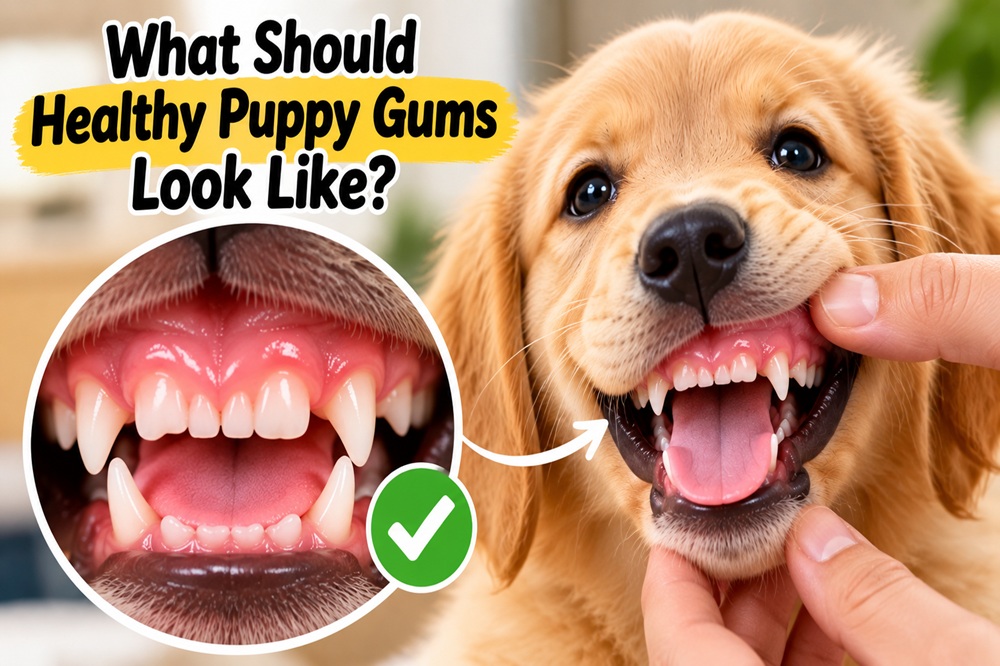
Healthy puppy gums are generally moist and pink, although the exact shade can vary between individual dogs. Some puppies also naturally have darker areas of pigmentation on their gums.
During normal teething, you may notice mild redness around a tooth that is emerging or a tiny amount of blood on a chew toy. This can happen as baby teeth are replaced by permanent teeth.
However, gums that are very swollen, intensely red, repeatedly bleeding, painful, or accompanied by other symptoms deserve closer attention.
Why Do Puppy Gums Become Red During Teething?
Teething is one of the most common explanations for mild gum irritation in puppies.
Permanent teeth begin replacing baby teeth at roughly 3–4 months of age, with most puppies having their adult teeth by around 6–7 months. As the permanent teeth emerge, the surrounding gum tissue can become tender.
You may notice:
- Mild redness around emerging teeth
- Increased chewing
- More drooling
- Slight mouth sensitivity
- Small amounts of blood on a toy
- Temporary changes in eating or chewing
These signs can occur during normal teething, but they should not be severe or progressively worsening.
Common Causes of Red or Swollen Puppy Gums
1. Normal Teething
For a young puppy, teething is an important possibility.
As adult teeth develop, the roots of baby teeth are gradually resorbed and the baby teeth fall out. The new teeth then emerge through the gums.
This process can make certain areas of the gums look slightly irritated.
If your puppy is otherwise active, eating normally, and showing only mild gum changes, teething may be the reason.
2. Gingivitis
Gingivitis means inflammation of the gums.
Plaque contains bacteria and can build up around the teeth. When the gum tissue reacts to this buildup, the gums can become red, swollen, and prone to bleeding. Bad breath may also occur.
Good dental care from an early age can help reduce plaque accumulation and support healthier gums.
If your puppy’s gum inflammation continues instead of improving, a veterinarian should examine the mouth.
3. Retained Baby Teeth
Sometimes a puppy’s baby tooth remains in place even after the permanent tooth begins to emerge.
You might see what looks like two teeth occupying the same position.
This is particularly important because the extra tooth can create crowding. Food and debris may become trapped around the teeth and gums, increasing the risk of plaque, gingivitis, and other dental problems.
If you notice a baby tooth sitting beside its adult replacement, don’t try to pull it out yourself. Ask your veterinarian to check it.
4. Food or Debris Trapped Around the Teeth
Puppies investigate their surroundings with their mouths and can pick up all kinds of things.
Small pieces of food or debris can sometimes become trapped between teeth or near the gumline.
This may irritate the surrounding tissue and contribute to inflammation.
If your puppy suddenly develops swelling in one particular area of the mouth, it is worth having the area examined rather than assuming it is simply teething.
5. Mouth Injury
A puppy that loves chewing may occasionally injure its mouth.
Chewing on an inappropriate object, biting something sharp, or playing roughly can irritate the gums or other tissues inside the mouth.
A small injury may cause localized redness, while a more serious injury can cause bleeding, swelling, or pain.
This is another reason to provide age-appropriate chew toys and supervise your puppy while chewing.
6. Abnormal Tooth Position
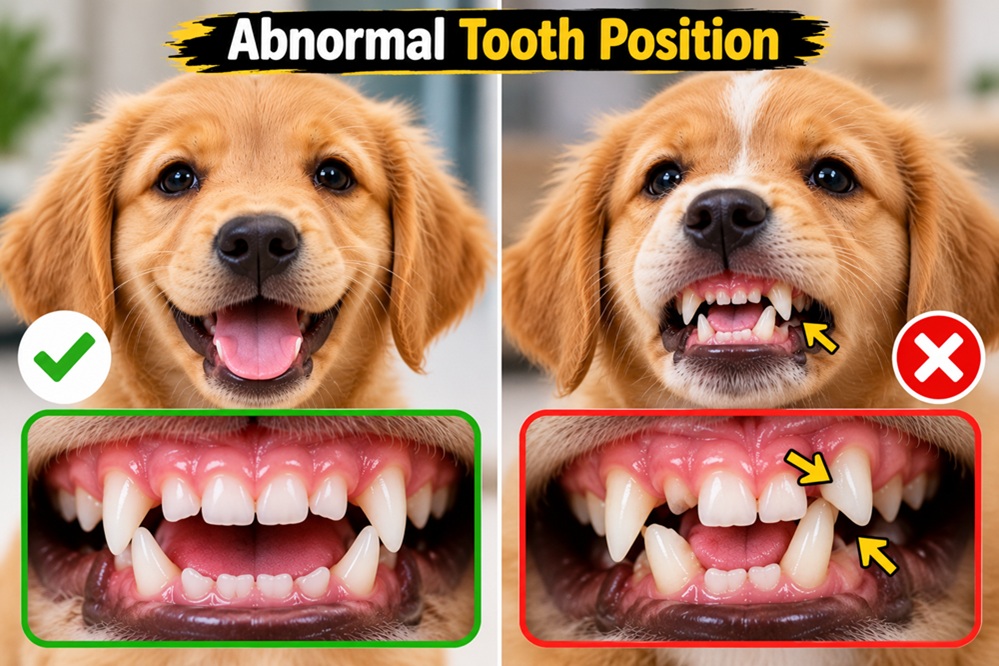
Sometimes a developing tooth does not come into the mouth in the expected position.
Crowded or poorly positioned teeth can rub against other teeth or soft tissues and may cause discomfort or injury.
Retained baby teeth can contribute to abnormal positioning of permanent teeth, particularly when both teeth occupy the same area.
A veterinarian can examine your puppy’s bite and determine whether the teeth are developing normally.
7. More Serious Oral Inflammation
Not every case of swollen gums is simple teething.
Inflammatory conditions affecting the mouth can involve the gums and other oral tissues. More serious inflammation may cause significant pain, bleeding, excessive drooling, bad breath, reduced appetite, or difficulty eating.
When these symptoms appear, professional examination is important.
How Can You Tell Normal Teething From a Problem?
This is one of the most important questions for a new puppy owner.
Signs That May Fit Normal Teething
- Puppy is within the usual teething age range
- Mild gum redness
- Increased chewing
- Mild mouth sensitivity
- Small amount of blood on a chew toy
- Puppy remains active
- Puppy continues eating and drinking
Signs That Need More Attention
- Severe gum swelling
- Persistent or heavy bleeding
- Pus or discharge
- Strong, persistent bad breath
- Severe mouth pain
- Difficulty eating
- Refusal to eat
- Significant drooling
- Facial swelling
- A broken tooth
- Two teeth occupying the same position
- Puppy becoming unusually quiet or unwell
These signs can indicate something beyond routine teething and warrant veterinary assessment.
What Can You Do at Home?
If your puppy has only mild irritation associated with teething, you can focus on supportive dental care.
Offer Safe Chew Toys
Give your puppy appropriately sized toys designed for puppy chewing.
Avoid extremely hard objects that can damage teeth. Veterinary guidance specifically cautions against very hard chews and objects such as bones, hard nylon items, and ice cubes because they can cause tooth damage.
Keep the Mouth Clean
Introduce gentle tooth brushing early so your puppy becomes comfortable with dental care.
Use products made for dogs and follow veterinary guidance on choosing an appropriate toothbrush and toothpaste.
Check the Mouth Regularly
A quick, gentle mouth check can help you notice changes early.
Look for:
- New adult teeth
- Loose baby teeth
- Teeth growing beside other teeth
- Unusual swelling
- Persistent bleeding
- Food stuck around the teeth
- Damaged teeth
Don’t force your puppy’s mouth open if they are uncomfortable.
When Should You Take Your Puppy to a Veterinarian?
Arrange a veterinary examination if the gums are very swollen, bleeding repeatedly, or appear painful.
You should also seek veterinary advice if your puppy has difficulty eating, develops facial swelling, has persistent bad breath, or you notice a retained baby tooth.
A veterinarian can determine whether the redness is related to normal teething, plaque-associated gingivitis, a retained tooth, trauma, abnormal tooth development, or another oral condition.
Early examination can be useful because some dental problems are easier to manage when identified while the puppy is still young.
How to Prevent Puppy Gum Problems
You don’t need to wait until your puppy becomes an adult to start dental care.
A simple routine can include:
- Check your puppy’s mouth regularly.
- Introduce tooth brushing gradually.
- Use puppy-appropriate dental products.
- Provide safe chew toys.
- Avoid extremely hard objects.
- Watch for retained baby teeth.
- Have unusual dental changes checked by a veterinarian.
Starting these habits early can make future dental care much easier.
Final Thoughts
Red or swollen puppy gums are not always a sign of disease. During the teething stage, mild redness and sensitivity can occur as baby teeth are replaced by permanent teeth.
However, severe swelling, persistent bleeding, significant pain, bad breath, difficulty eating, or teeth growing abnormally should not simply be dismissed as teething.
The safest approach is to understand what is normal for your puppy’s age, check the mouth regularly, and involve your veterinarian whenever something looks unusual.
A little attention during puppyhood can help establish healthier dental habits for the years ahead.