Finding loose hair around the house is normal when you have a puppy, but noticeable hair loss can sometimes be a sign of a skin problem. If your puppy develops bald patches, thinning fur, redness, scratching, or constant licking, allergies may be one possible cause.
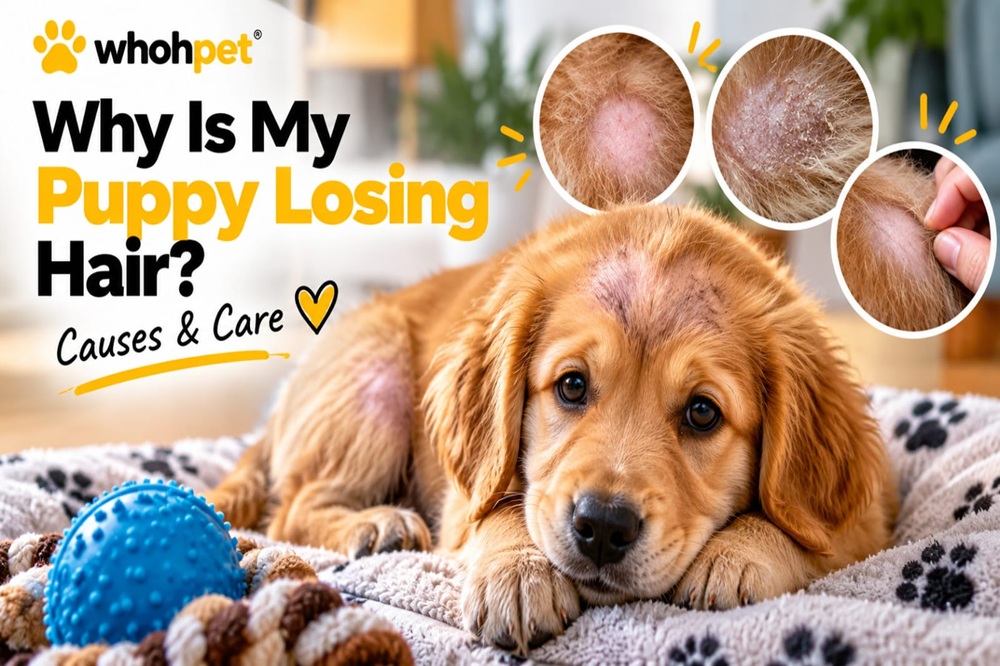
Allergy-related hair loss usually does not happen because the allergy directly makes the hair fall out. Instead, itching and skin inflammation often cause the puppy to scratch, lick, bite, or rub the affected areas. This repeated irritation can damage the skin and break or remove the hair.
However, allergies are not the only explanation for puppy hair loss. Parasites, infections, hormonal problems, nutritional issues, and normal puppy coat changes can also cause changes in the coat. Understanding the possible causes can help you know when professional veterinary care is needed.
What Does Allergy-Related Hair Loss Look Like?
Allergy-related hair loss can vary from one puppy to another.

Some puppies develop small areas of thinning hair, while others may lose fur around the paws, belly, ears, face, or other frequently irritated areas. The skin may appear red, inflamed, flaky, or darker than normal.
You may also notice your puppy scratching frequently, licking its paws, rubbing its face, or chewing certain parts of the body.
The pattern of hair loss can provide useful clues, but it cannot confirm an allergy by itself. Several different skin conditions can produce similar symptoms.
How Do Allergies Cause Hair Loss?
Allergies can trigger inflammation and itching in the skin. When a puppy feels itchy, it may repeatedly scratch or lick the affected area.
This creates a cycle:
Allergen exposure → skin inflammation → itching → scratching or licking → skin damage → hair loss
Continued scratching can also damage the skin’s protective barrier. Once the skin becomes damaged, secondary bacterial or yeast infections may develop, making the itching and hair loss worse.
Common Allergy-Related Causes
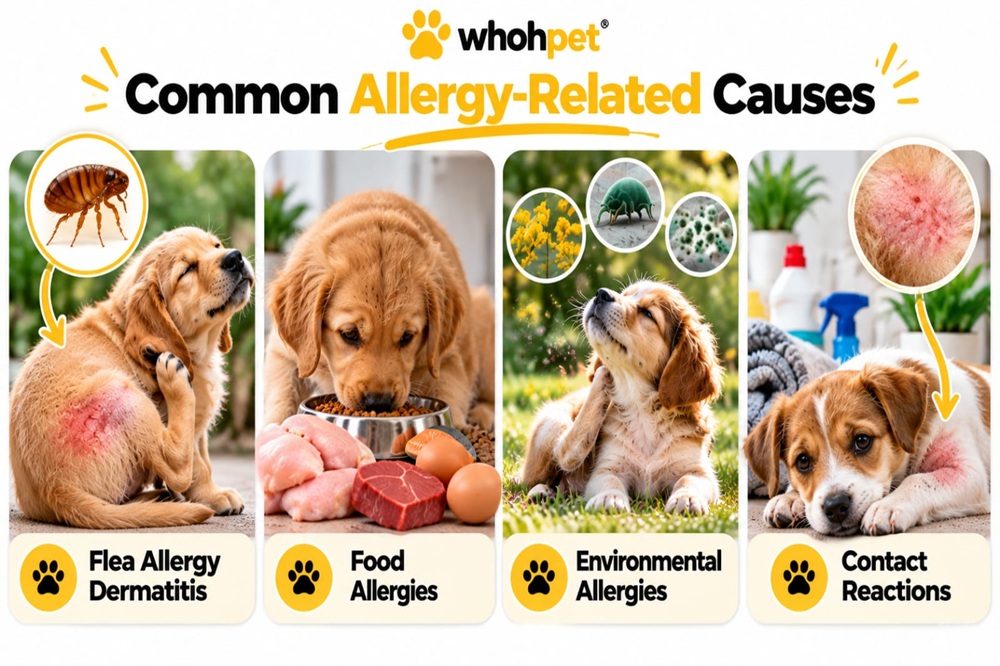
1. Flea Allergy Dermatitis
Flea allergy dermatitis is an allergic reaction to proteins in flea saliva. A sensitive puppy can develop intense itching after being bitten by fleas.
Hair loss may occur around the lower back, tail base, thighs, or other areas the puppy repeatedly scratches and bites.
You may not always see fleas on the puppy because they can be difficult to find, especially when the puppy is scratching frequently.
Effective flea control is therefore an important part of managing suspected flea-related skin problems.
2. Food Allergies
Some puppies can develop adverse reactions to particular food ingredients. Skin-related signs may include itching, recurrent ear problems, paw licking, redness, and sometimes hair loss caused by self-trauma.
Food allergies cannot be reliably diagnosed simply by looking at the skin. A veterinarian may recommend a carefully controlled elimination diet followed by a structured reintroduction process.
Do not repeatedly change your puppy’s food on your own, because frequent diet changes can make it harder to identify what is actually causing the problem.
3. Environmental Allergies
Environmental allergens may include substances such as pollen, dust mites, molds, or other environmental triggers.
A puppy with environmental allergies may experience recurring itching, particularly on the paws, face, ears, belly, or other areas.
Symptoms may become more noticeable during certain seasons, although some environmental allergies can occur throughout the year.
4. Contact Reactions
A puppy’s skin may become irritated after contact with certain substances. Possible triggers can include grooming products, cleaning products, plants, fabrics, or other materials.
Contact-related irritation often affects areas that have direct exposure to the substance.
If symptoms repeatedly appear after exposure to a particular product or environment, discuss the pattern with your veterinarian.
Other Causes of Puppy Hair Loss
Not every bald patch means your puppy has an allergy.
Fleas and other parasites, fungal infections such as ringworm, bacterial infections, nutritional deficiencies, and certain medical conditions can also affect the coat.
Puppies may also experience normal changes in their coat as they grow. This is different from abnormal hair loss accompanied by intense itching, inflammation, sores, or bald patches.
Because many conditions look similar, proper diagnosis is important.
Signs That May Occur With Allergy-Related Hair Loss
Look for combinations of symptoms such as:
- Frequent scratching
- Excessive paw licking
- Face rubbing
- Ear scratching
- Red or irritated skin
- Bald or thinning patches
- Repeated chewing of the skin
- Flaky skin
- Small scabs
- Recurrent skin or ear problems
- Changes in skin color
The more severe or persistent these symptoms become, the more important it is to have your puppy examined.
How Is the Cause Diagnosed?
A veterinarian will usually consider your puppy’s age, history, diet, environment, parasite prevention, symptoms, and pattern of hair loss.
The skin and coat may be examined closely for evidence of parasites, inflammation, infection, or other abnormalities.
Depending on the findings, additional testing may be recommended. This can help distinguish allergies from conditions such as fungal or bacterial infections and parasites.
There is no single visual sign that can prove a puppy’s hair loss is caused by an allergy.
Treatment for Allergy-Related Hair Loss
Treatment depends on the underlying cause.
For flea-related problems, your veterinarian may recommend an appropriate flea-control program for your puppy and household.
If a food allergy is suspected, a veterinarian may recommend a controlled dietary trial.
Environmental allergies may require a combination of strategies to reduce exposure and control skin inflammation and itching.
If a secondary infection is present, it may need specific treatment.
Avoid giving your puppy human anti-itch medicines or applying random creams without veterinary guidance. Puppies are small and can respond differently to medications, so the correct product and dose matter.
How Can You Help Prevent Hair Loss?
Good skin care can help reduce the risk of several common problems.
Keep your puppy on an appropriate parasite-prevention program recommended by your veterinarian. Groom the coat regularly and check the skin for unusual redness, flakes, parasites, or sores.
Feed a complete and balanced puppy diet and avoid unnecessary supplements unless recommended by a veterinary professional.
Keep bedding clean and avoid introducing multiple new grooming products at once. If your puppy develops a reaction, knowing which product was introduced can make identifying a trigger easier.
When to See a Veterinarian
Contact your veterinarian if your puppy develops sudden or significant hair loss, bald patches, severe itching, open sores, bleeding, crusting, swelling, an unpleasant odor, or persistent redness.
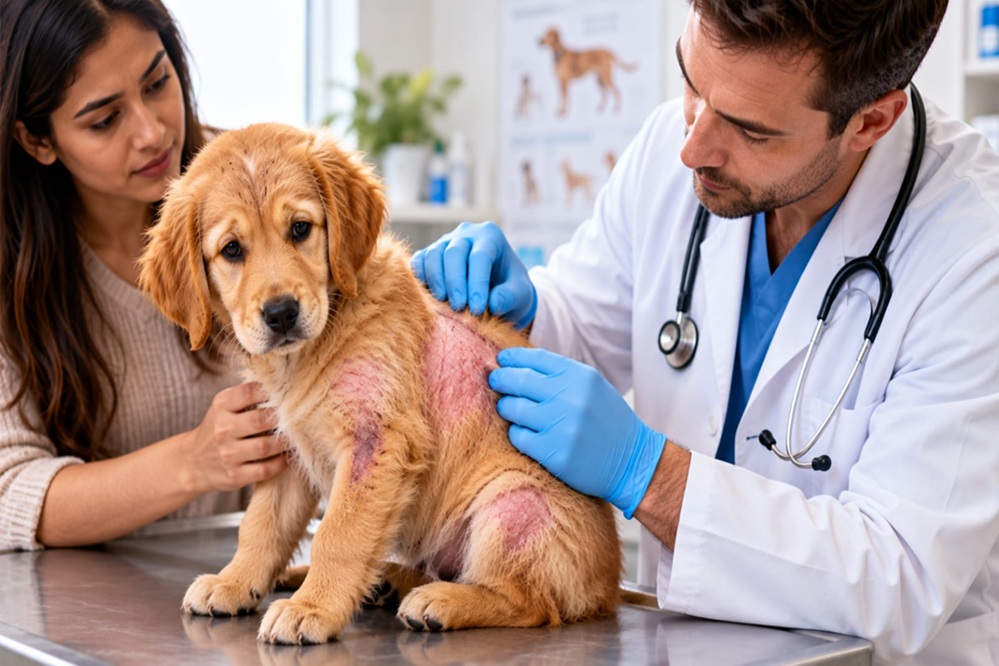
Veterinary attention is also important when hair loss keeps returning or does not improve with basic care.
Early diagnosis can help prevent a small skin problem from becoming a larger cycle of itching, scratching, skin damage, and infection.
Final Thoughts
Allergy-related hair loss in puppies is usually connected to itchy, inflamed skin rather than the allergy directly causing the hair to fall out. Flea allergies, food reactions, environmental allergies, and contact reactions can all contribute to skin irritation and self-trauma.
However, many other conditions can cause similar hair-loss patterns. If your puppy has persistent itching, bald patches, redness, or other skin changes, getting the underlying cause identified is more useful than simply treating the hair loss itself.
Healthy skin and a healthy coat go hand in hand. Regular grooming, parasite prevention, appropriate nutrition, and timely veterinary care can help your puppy maintain comfortable skin as it grows.