The Rottweiler is a powerful, intelligent, and confident dog breed known for its loyalty and strong protective nature. Although its muscular appearance can look intimidating, a well-socialized Rottweiler can be affectionate, calm, and deeply devoted to its family.
This breed is often associated with guarding and protection, but there is much more to the Rottweiler than its strength. It can be an excellent companion for the right owner when given proper training, exercise, socialization, and attention.

History of the Rottweiler
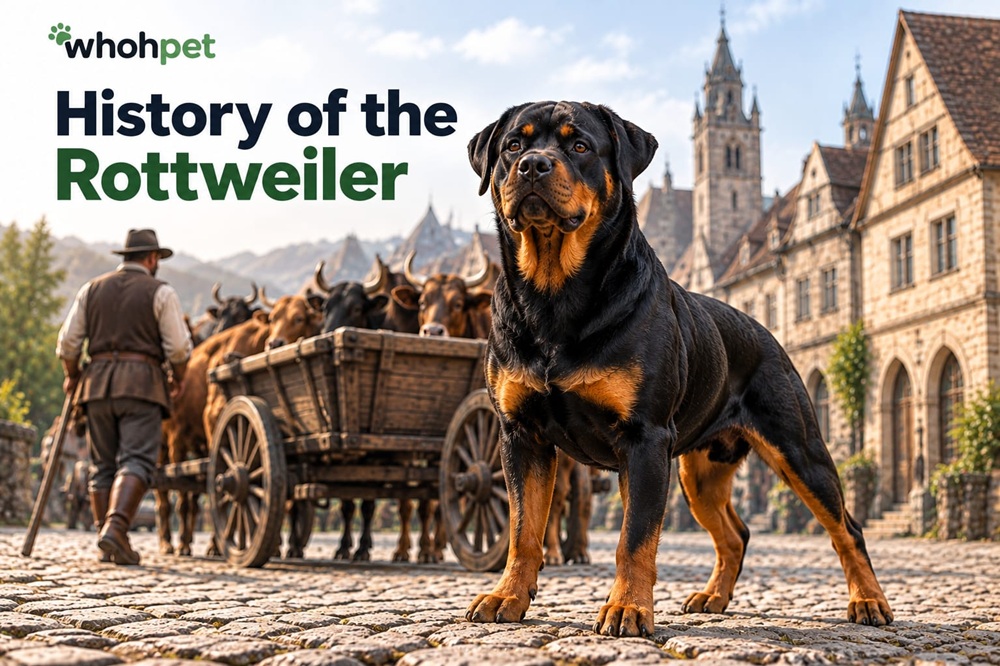
The Rottweiler has a long history connected with working dogs in Europe. The breed developed around the town of Rottweil in Germany, where dogs were used to help farmers and cattle traders.
These dogs had several important jobs. They could drive livestock, protect property, and accompany people while they traveled. Their strength and reliability made them useful working companions.
As transportation and farming methods changed, the Rottweiler’s role also evolved. The breed eventually became popular for jobs involving guarding, police work, search and rescue, and other demanding tasks.
Today, Rottweilers can still be working dogs, but many live primarily as family companions.
Appearance

A Rottweiler has a strong and athletic body. It has a broad head, powerful jaws, muscular shoulders, and a sturdy frame.
Its coat is generally black with clearly defined tan or rust–colored markings. These markings commonly appear around the muzzle, chest, legs, eyebrows, and other areas.
Despite being a large breed, a healthy Rottweiler should look athletic rather than excessively heavy. Good muscle condition and a healthy body weight are important for protecting its joints and overall health.
Rottweiler Personality and Temperament
Rottweilers are generally confident and devoted dogs. They often form a strong bond with their owners and may naturally want to stay close to their family.
Their protective instinct is one of their most noticeable characteristics. A Rottweiler may be cautious around unfamiliar people, particularly if it has not received enough socialization.
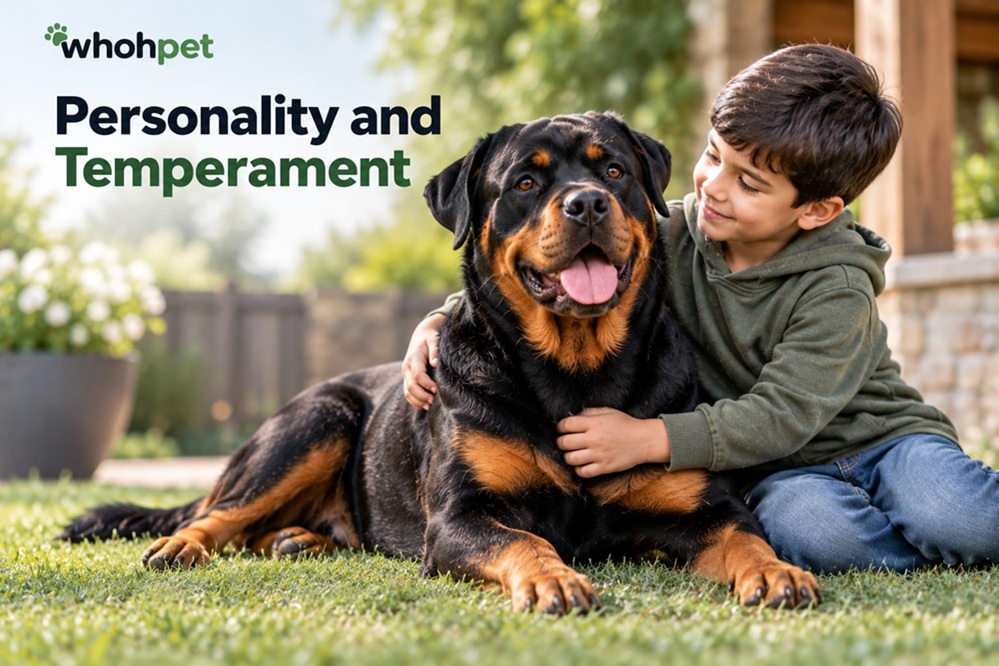
However, being protective does not mean a Rottweiler should be aggressive. Responsible breeding, early socialization, and consistent training play a major role in developing a stable temperament.
Many Rottweilers are playful and affectionate with people they trust. They can also be surprisingly gentle with their family members.
Training a Rottweiler
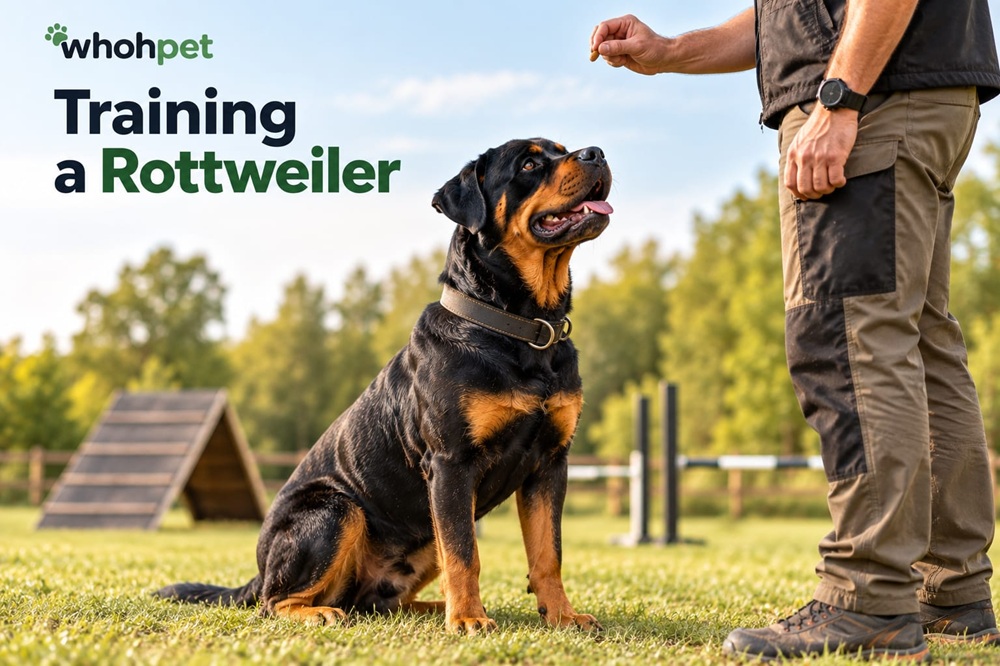
Training is especially important with a large and powerful breed such as the Rottweiler.
Rottweilers are intelligent and can learn commands quickly, but they need a clear and consistent approach. Training should begin when the dog is young and should focus on positive reinforcement, good manners, and controlled behavior.
Basic commands such as sit, stay, come, leave it, and walking politely on a leash are useful foundations.
Socialization is equally important. A young Rottweiler should gradually experience different people, environments, sounds, and appropriately managed interactions with other dogs.
The goal is to help the dog understand that unfamiliar situations do not automatically represent a threat.
Exercise Requirements

Rottweilers are energetic working dogs and generally need regular physical and mental activity.
Daily walks are useful, but simply walking around the neighborhood may not be enough for every Rottweiler. Games, obedience training, scent activities, and other mentally stimulating exercises can help prevent boredom.
A bored Rottweiler may look for its own entertainment, which can sometimes result in unwanted behaviors.
Exercise should also be appropriate for the dog’s age and physical condition. Puppies, for example, should not be pushed into excessive high-impact activity while their bodies are developing.
Feeding and Nutrition

A Rottweiler needs a balanced diet appropriate for its age, size, activity level, and health condition.
Because the breed can gain weight relatively easily, portion control is important. Extra weight can place additional stress on the joints and may contribute to other health problems.
Puppies have different nutritional requirements from adult dogs, so their diet should be designed for proper growth rather than simply maximizing calorie intake.
Fresh drinking water should always be available.
For specific dietary decisions, it is best to consult a veterinarian, particularly during puppyhood, pregnancy, or when the dog has a medical condition.
Grooming
One advantage of the Rottweiler’s short coat is that grooming is relatively straightforward.
Regular brushing can remove loose hair and help keep the coat clean. Rottweilers may shed more noticeably during certain periods of the year, so brushing frequency can be increased when necessary.
Other routine care includes:
- Nail trimming
- Dental care
- Ear checks
- Occasional bathing
- Regular skin and coat checks
Starting grooming routines early can make them much easier as the dog becomes an adult.
Common Health Concerns

Like many large dog breeds, Rottweilers can be susceptible to certain health conditions. Potential concerns can include hip and elbow problems, certain heart conditions, obesity, and some types of cancer.
This does not mean that every Rottweiler will develop these problems. Genetics, breeding practices, nutrition, exercise, weight management, and veterinary care can all influence a dog’s health.
Regular veterinary examinations can help detect potential problems earlier.
When choosing a Rottweiler puppy, prospective owners should also look for responsible breeders who prioritize health, temperament, and appropriate genetic screening.
Is a Rottweiler Good for Families?
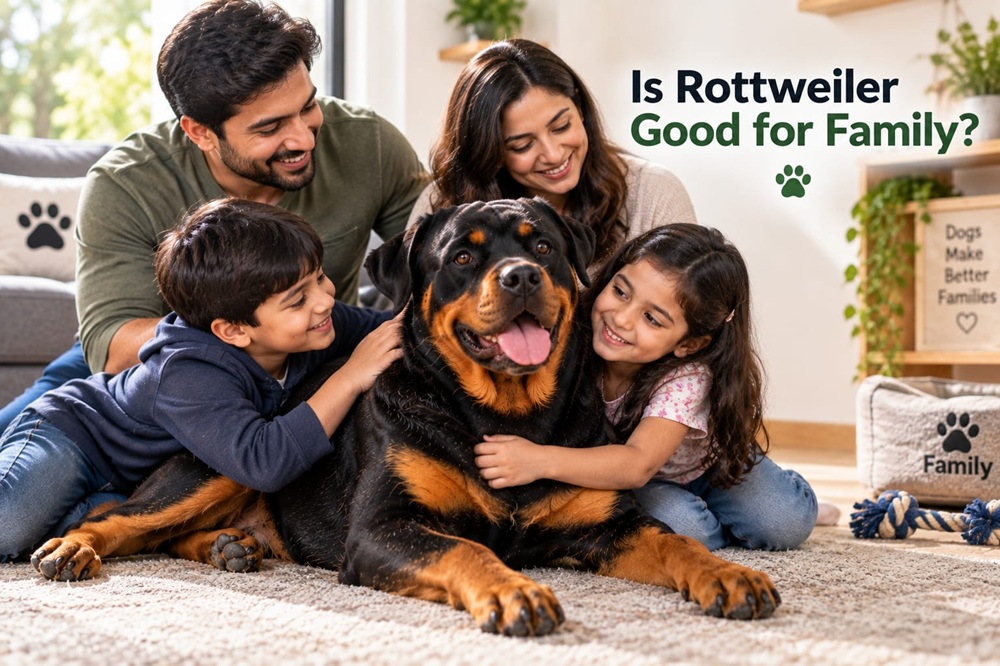
A Rottweiler can be a wonderful family dog in the right environment.
However, its size and strength mean that owners need to take training and supervision seriously. Families with children should teach both the dog and children how to interact safely and respectfully.
Young children should not be left unsupervised with any large dog.
A Rottweiler generally does best with owners who are prepared to provide structure, exercise, training, and social interaction rather than expecting the dog to simply stay at home and guard the house.
Rottweiler vs. Other Large Breeds
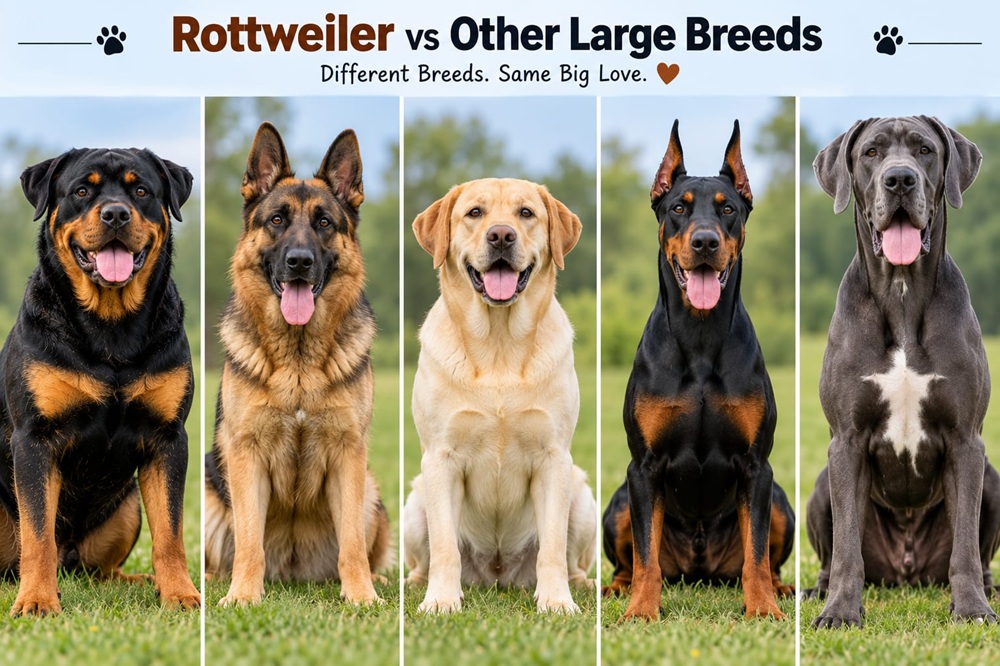
The Rottweiler stands out because it combines physical strength with intelligence and a strong connection to its family.
Compared with some highly energetic breeds, it can be relatively calm inside the home when its exercise needs are met. At the same time, its protective personality means it requires more responsible handling than many smaller companion breeds.
Its combination of loyalty, athletic ability, confidence, and working history makes it attractive to experienced dog owners.
Final Thoughts
The Rottweiler is much more than a strong-looking guard dog. It is an intelligent working breed that can become a loyal and affectionate companion when raised responsibly.
The key to living successfully with a Rottweiler is training, socialization, exercise, responsible feeding, and consistent care.

For an owner who understands the breed’s needs and is willing to invest time in training and companionship, the Rottweiler can become an extremely devoted member of the family.
Whohpet Tip:
Before choosing a Rottweiler, consider your available time, living environment, experience with large dogs, and ability to provide daily exercise and training. A powerful breed needs a responsible owner just as much as it needs a loving home.