
The Mastiff is a giant dog with an impressive presence and a surprisingly gentle side. At first glance, its massive body, broad head, powerful neck, and deep chest can make it look intimidating. Yet a well-raised Mastiff is often calm, affectionate, patient, and strongly attached to its family.
This breed is not about constant activity or nonstop excitement. A Mastiff usually prefers being close to its people, relaxing around the home, and keeping an eye on what is happening. Its enormous size, however, means that responsible ownership requires preparation, proper nutrition, training, space, and regular veterinary care.
History and Origin
The Mastiff belongs to one of the oldest groups of large working dogs. Dogs of this general type were historically valued for their strength, courage, and ability to guard people and property.

Over generations, Mastiffs were developed for different purposes, including guarding estates and accompanying people in demanding working environments. Their size and protective nature made them useful as guardians, while their close relationship with humans also helped shape their calmer temperament.
Modern Mastiffs are primarily companion and family dogs. Although their appearance still reflects their powerful heritage, today’s Mastiff generally does not need to live the working life that its ancestors experienced.
Physical Appearance
The Mastiff is a giant, heavy-boned dog with a broad body and muscular build. Its large head is one of its most recognizable features, with a short muzzle, expressive eyes, and a strong jaw.

The ears are relatively small compared with the size of the head, while the neck and shoulders are powerful. The body is deep and substantial, and the tail is long and carried naturally.
Despite its enormous size, a healthy Mastiff should not simply look overweight. A good body condition combines substantial bone and muscle with appropriate fat levels.
Because the breed grows into such a large adult, maintaining healthy growth during puppyhood is especially important.
Personality and Temperament
A Mastiff can have a calm and affectionate personality when properly socialized and raised. Many form strong bonds with their families and enjoy spending time near their owners.
They are often described as gentle companions, but their natural guarding instincts should not be ignored. A Mastiff may become alert when an unfamiliar person approaches its home.
Early socialization helps a young Mastiff learn how to respond appropriately to different people, animals, sounds, and situations. The goal is not to remove its natural protective nature but to help the dog develop confidence and good judgment.
Because of their size, even friendly behavior needs to be controlled. A giant dog jumping on visitors can accidentally cause injury, so manners should be taught from an early age.
Exercise Needs
Mastiffs need regular exercise, but they are generally not suited to extreme endurance activities. Moderate walks and controlled outdoor movement can help maintain fitness.
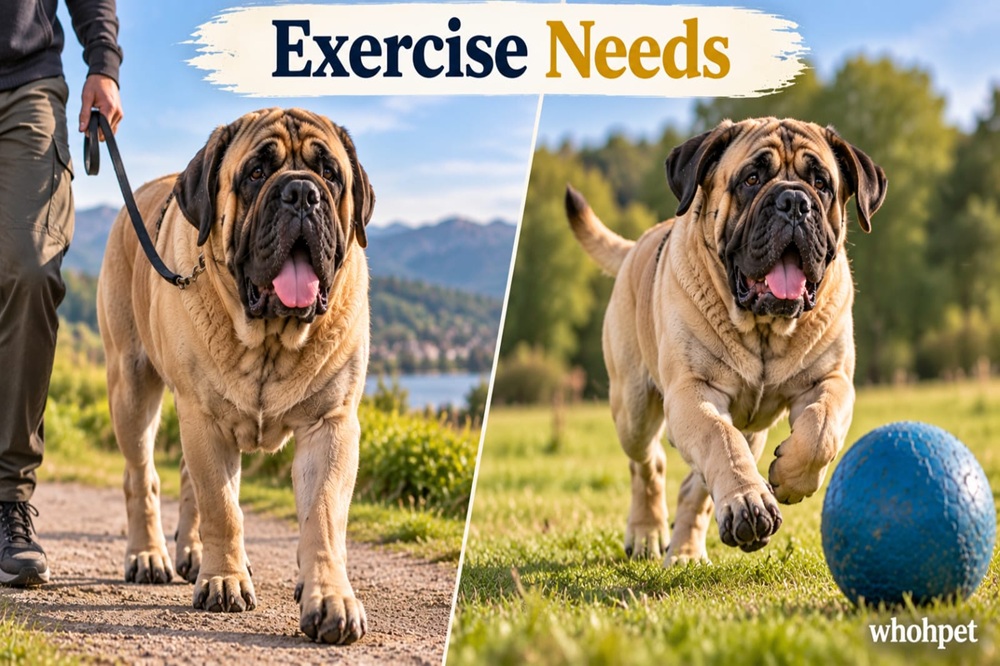
Puppies require additional care because their bones and joints are still developing. Excessive forced exercise during growth can place unnecessary stress on a giant breed’s developing body.
Mental stimulation is also useful. Simple obedience practice, supervised exploration, food puzzles, and calm games can provide enrichment without demanding excessive physical exertion.
During hot weather, exercise should be adjusted carefully. A large dog can become uncomfortable quickly in high temperatures, so cooler times of day and access to shade and water are important.
Training a Mastiff
Training should begin as soon as a Mastiff puppy arrives home. A tiny puppy may seem easy to control, but it can eventually become a very large and powerful adult.
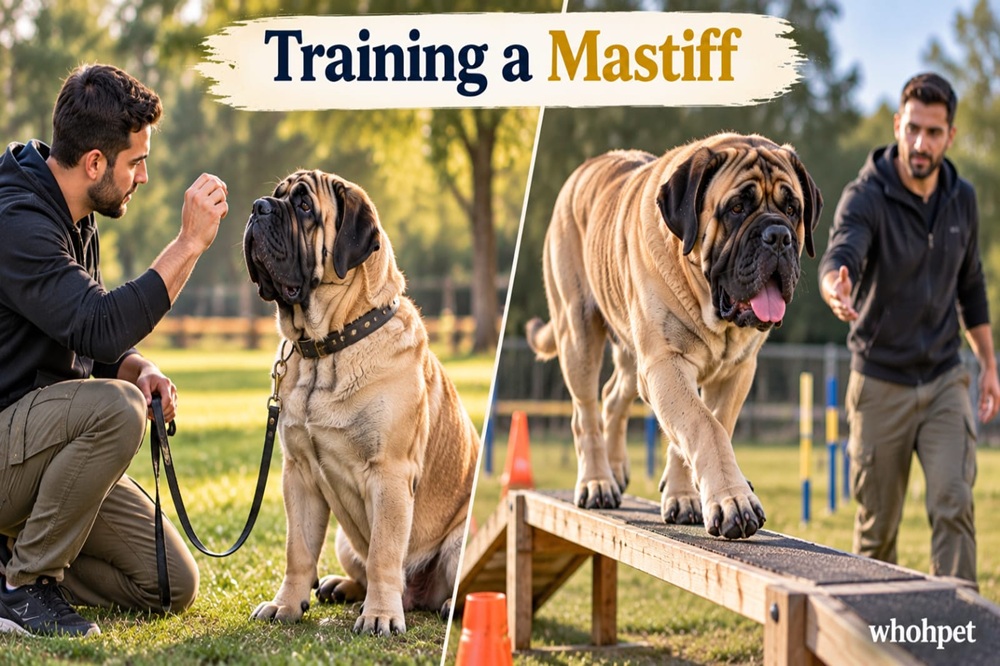
Basic commands such as sit, stay, come, leave it, and down are valuable for everyday safety. Loose-leash walking is particularly important because an adult Mastiff can be extremely difficult to physically control if it has never learned proper leash manners.
Positive reinforcement can make training more productive. Rewarding desired behavior with praise, food rewards, or play helps the dog understand what is expected.
Consistency matters. Family members should follow the same household rules so the dog receives clear signals.
Grooming and Coat Care
Mastiffs generally have a short coat that does not require complicated styling. However, regular brushing can remove loose hair and help keep the coat and home cleaner.

Some Mastiffs shed noticeably throughout the year, with heavier shedding during certain periods. A grooming routine can help manage this.
Their facial area should also be checked regularly, particularly if the individual dog has prominent skin folds or tends to drool heavily. Keeping the skin clean and dry can help prevent irritation.
Nails should be trimmed when necessary, ears should be checked regularly, and dental care should be part of the dog’s routine.
Feeding and Nutrition
Nutrition is one of the most important parts of raising a Mastiff. Giant breeds need carefully managed nutrition because they experience significant growth during puppyhood.
A puppy should receive a complete and balanced diet appropriate for large or giant-breed growth. Feeding too much simply because the puppy appears hungry can contribute to excessive growth and unwanted weight gain.

Adult Mastiffs also need portion control. Extra body weight puts additional pressure on already large joints and can make movement more difficult.
Instead of judging food requirements only by the size of the bowl, owners should consider the dog’s age, body condition, activity level, and advice from their veterinarian.
Fresh water should always be available.
Common Health Concerns
Like many giant breeds, Mastiffs can be affected by health problems involving their joints and overall body structure. Conditions affecting the hips and elbows can interfere with comfortable movement.

Their deep body shape also means owners should be aware of the possibility of serious digestive emergencies such as gastric dilatation-volvulus, commonly known as bloat.
Other concerns can include eye problems, skin issues, heart conditions, and weight-related problems. Not every Mastiff will develop these conditions, but responsible owners should understand the risks associated with giant breeds.
Routine veterinary examinations can help monitor growth, weight, mobility, dental health, and other aspects of wellbeing.
Living With a Mastiff
Living with a Mastiff is different from living with a small dog. Everything becomes bigger—the bed, food requirements, toys, transportation needs, and even the amount of space needed for comfortable movement.
A Mastiff can live happily in a suitable home without needing a huge backyard, provided it receives appropriate exercise and companionship. However, the home should have enough space for a giant dog to move around safely.
Owners should also consider practical matters such as vehicle size, sturdy walking equipment, large sleeping areas, and the dog’s ability to comfortably navigate stairs and slippery floors.
Mastiffs often enjoy relaxing indoors with their family. They may be perfectly content lying near their owner while the household goes about its normal routine.
Mastiff and Family Life
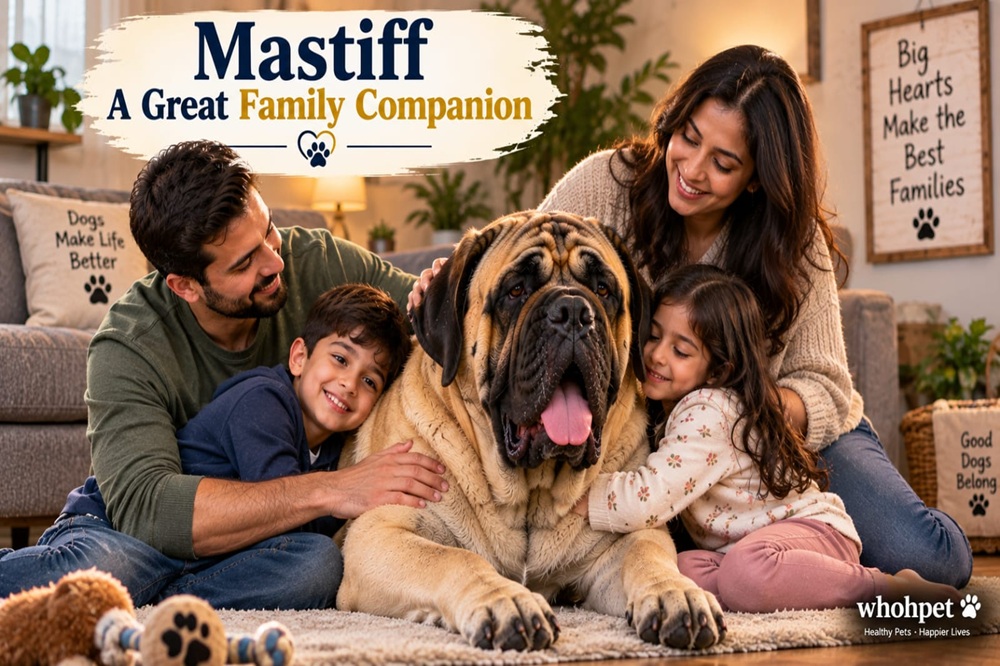
A properly socialized Mastiff can become a devoted family companion. Its calm nature may make it comfortable around familiar household members.
However, supervision is important when any giant dog interacts with young children. Even without aggressive intentions, a large dog can accidentally knock over a small child simply by turning around or moving quickly.
Children should be taught to respect the dog’s food, sleeping area, toys, and personal space. Adults should supervise interactions rather than expecting the dog and child to manage every situation themselves.
Other pets can also be introduced successfully when introductions are gradual and carefully managed.
Is a Mastiff Right for Your Family?
A Mastiff may suit people who appreciate a calm, large companion and are prepared for the responsibilities that come with a giant breed.
Before choosing one, consider the dog’s food expenses, veterinary costs, training requirements, exercise needs, grooming, transportation, and the amount of physical space available at home.
It is also important to think about the dog’s lifespan and long-term care. A giant breed can require significant commitment from puppyhood through old age.
The decision should be based on the individual dog’s needs and your family’s daily routine rather than appearance alone.
Final Thoughts by Whohpet
The Mastiff combines extraordinary size with a personality that can be remarkably gentle and affectionate. Behind its powerful appearance is often a dog that simply wants to stay close to its family and feel included in everyday life.

At Whohpet, we believe understanding a breed is an important part of responsible pet ownership. A Mastiff needs appropriate nutrition, controlled exercise, early training, socialization, regular grooming, veterinary care, and a family prepared for the realities of living with a giant dog.
With thoughtful care and responsible ownership, a Mastiff can become more than an impressive-looking dog—it can become a calm, loyal, and deeply valued member of the household. 🐾