
Food allergies can be confusing for puppy parents. When a puppy starts scratching, licking its paws, rubbing its face, or developing red and irritated skin, many people immediately think it is a flea problem. Fleas and environmental allergies can certainly cause itching, but food allergy can also affect a puppy’s skin.
A food allergy happens when the puppy’s immune system reacts abnormally to a component of its food, usually a protein. The reaction can lead to persistent itching and inflammation and may sometimes contribute to secondary skin or ear infections. However, itching alone does not prove that food is responsible, so proper veterinary evaluation is important.
What Is a Food Allergy in a Puppy?
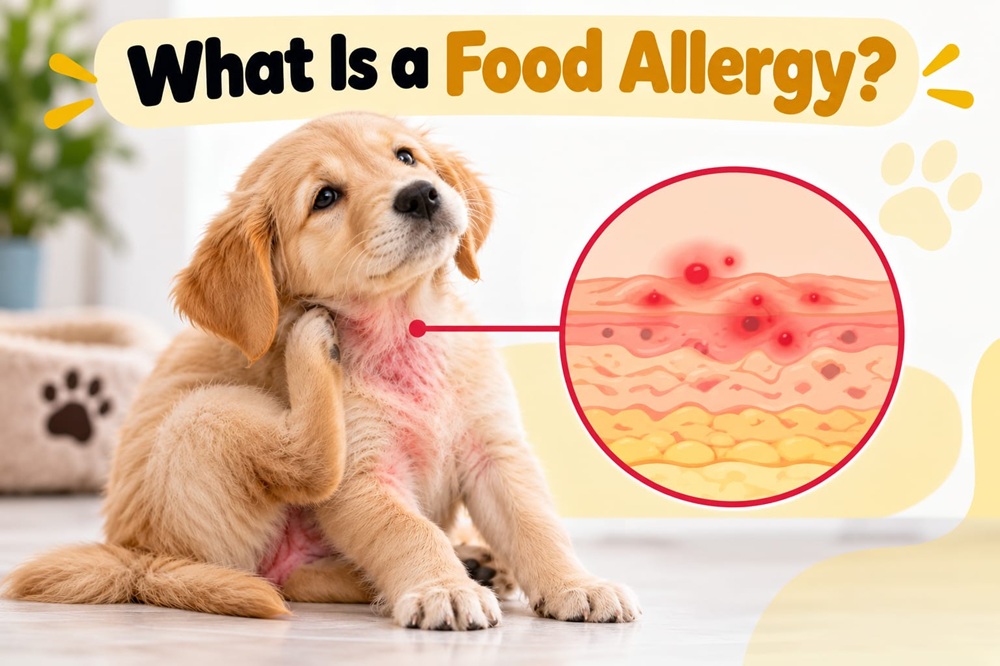
A puppy’s immune system normally protects the body from harmful substances. With a food allergy, however, the immune system mistakenly reacts to a food protein as though it were harmful.
The important point is that food allergy is different from food intolerance.
Food intolerance generally involves difficulty digesting or tolerating a food and does not involve the same immune mechanism. A food allergy, on the other hand, involves an immune response and can produce skin-related symptoms.
Although food allergies are not the most common reason puppies become itchy, they should be considered when itching continues or keeps returning despite appropriate flea control and investigation of other causes.
Which Foods Can Trigger Skin Allergies?

There is no single food that causes allergy in every puppy.
Potential triggers can include proteins from ingredients such as:
- Beef
- Chicken
- Dairy products
- Lamb
- Pork
- Soy
- Other dietary proteins
A puppy can potentially react to an ingredient it has eaten repeatedly. Therefore, simply choosing the food your puppy has eaten for a long time does not completely rule out a food allergy.
Also remember that treats, chews, table food and flavored supplements can contain additional ingredients.
How Does Food Allergy Affect a Puppy’s Skin?
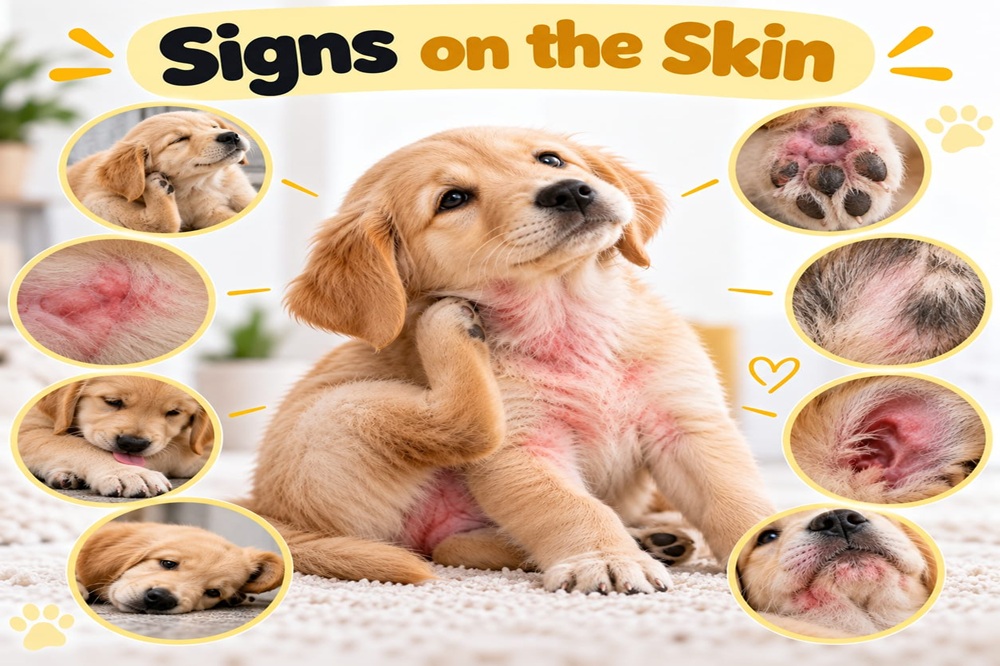
When a susceptible puppy reacts to a food ingredient, inflammation can contribute to itchiness and skin irritation.
The puppy may scratch or lick the affected areas repeatedly. Over time, this behavior can damage the skin barrier.
That can create a cycle:
Food trigger → immune reaction → itchy skin → scratching/licking → damaged skin → possible secondary infection
This is why a puppy with a food-related allergy may eventually have more than simple itching.
Common Skin Signs of Food Allergy in Puppies
Every puppy can show symptoms differently, but possible signs include:
- 1. Constant Itching
A puppy may scratch much more frequently than normal. You may notice it scratching the neck, ears, belly, legs or other areas.
- 2. Paw Licking
Some puppies repeatedly lick or chew their paws because of irritation.
- 3. Red Skin
Inflamed areas may appear pink or red, particularly where the puppy has been scratching or licking.
- 4. Face Rubbing
A puppy may rub its face against carpets, furniture or the floor because the skin around the face feels itchy.
- 5. Recurrent Ear Problems
Allergic skin disease can be associated with recurring ear inflammation and infections. Food allergy can be one possible contributor, although other allergies can cause similar problems.
- 6. Hair Loss or Broken Hair
Repeated scratching, chewing and licking can damage the hair coat and cause areas of thinning hair.
- 7. Secondary Skin Infection
Constant scratching can damage the protective skin barrier. Bacterial or yeast infections may develop afterward and can make the puppy even more uncomfortable.
Why Can It Be Difficult to Recognize?
The biggest problem is that food allergy can look like other puppy skin problems.
Flea allergy dermatitis, environmental allergies, parasites, bacterial infections and yeast infections can all produce itching and skin irritation.
For example, if a puppy is scratching because of fleas, changing its food will not solve the underlying problem.
This is why veterinarians generally investigate multiple possible causes rather than diagnosing food allergy simply from the appearance of the skin. AAHA’s allergy guidelines recommend a structured approach to allergic skin disease, including assessment for parasites and infections and, when appropriate, a properly conducted diet trial.
How Is Food Allergy Diagnosed in Puppies?
There is no single simple test that can independently confirm a food allergy.
One of the main approaches is a veterinary-supervised elimination diet trial.
The puppy is fed a carefully selected diet containing ingredients chosen to reduce the chance of an allergic reaction. This may involve a novel protein or a hydrolyzed protein diet.
The trial needs to be strict.
That means the puppy should not receive random treats, table scraps, flavored chews or other foods that could interfere with the trial.
Depending on the case, veterinary guidelines describe diet trials lasting several weeks, with many cases requiring around eight weeks or longer to properly assess the response.
Why Should Puppy Parents Avoid Random Food Changes?
When a puppy becomes itchy, it can be tempting to keep changing its food every few days.
That usually makes the situation more difficult to understand.
Instead, work with your veterinarian to choose an appropriate diet and follow the plan consistently. Puppies also have specific nutritional requirements for growth, so a diet should be complete and balanced for the puppy’s life stage.
A homemade elimination diet should not be improvised because an improperly balanced diet can be unsuitable for a growing puppy.
What Happens If the Puppy Improves?
If the puppy’s skin improves during a properly managed elimination diet, food may be playing a role.
However, improvement alone does not necessarily identify the exact ingredient responsible.
A veterinarian may recommend a controlled food challenge, where the previous diet or specific ingredients are reintroduced in a planned manner. If the characteristic symptoms return, this provides stronger evidence that the food is involved.
This process can take time, but it is more reliable than guessing which ingredient is responsible.
Treatment for Food-Related Skin Allergy
The most important long-term strategy is avoiding the ingredient that triggers the reaction.
Your veterinarian may recommend:
- A veterinary hydrolyzed-protein diet
- An appropriate novel-protein diet
- Treatment for secondary bacterial or yeast infections
- Appropriate treatment to control severe itching
- Regular skin and ear monitoring
If the puppy has damaged its skin by scratching, treating only the food issue may not be enough. Any secondary infection or inflammation may also need veterinary treatment.
Can a Puppy Outgrow a Food Allergy?
It is not safe to assume that a puppy will simply outgrow a suspected food allergy.
Some puppies may experience changing allergy patterns as they grow, but the appropriate approach is to identify the suspected trigger and manage the condition under veterinary guidance.
If your puppy has been stable for a long period, your veterinarian can advise whether and when dietary reassessment makes sense.
When Should You Visit the Veterinarian?

- Contact your veterinarian if your puppy has:
- Persistent or severe itching
- Red or inflamed skin
- Repeated paw licking
- Recurrent ear problems
- Hair loss
- Open scratches or wounds
- Bad skin odor
- Discharge from the ears or skin
Persistent symptoms despite flea prevention
A puppy with facial swelling, breathing difficulty, collapse or other signs of a severe allergic reaction requires urgent veterinary attention.
How Can Puppy Parents Help?
Start by observing patterns.
Keep track of:
Food → treats → symptoms → skin changes → treatment → improvement
This information can be useful when discussing your puppy’s condition with a veterinarian.
Also avoid giving your puppy multiple new treats or human foods while trying to determine whether its diet is contributing to a skin problem.
Most importantly, don’t assume every itchy puppy has a food allergy. Fleas, parasites, infections and environmental allergies can cause similar signs.
Final Thoughts
Food allergy can be one possible cause of persistent skin problems in puppies. The signs may include itching, paw licking, face rubbing, red skin, hair damage and recurring ear problems.
The challenge is determining whether food is actually responsible.
A proper veterinary examination, elimination diet when appropriate, and controlled food challenge can provide a much clearer answer than repeatedly changing your puppy’s food.
For a growing puppy, the goal is not simply to find a food that stops itching. The goal is to identify the underlying problem while providing complete, balanced nutrition for healthy growth and development.