A puppy’s skin is delicate and can sometimes develop red patches, bumps, dryness, or irritation. Seeing a rash on your puppy can be worrying, especially when the puppy starts scratching, licking, or rubbing the affected area. A skin rash is not a single disease—it is a visible sign that something is irritating or affecting the skin.

Puppy skin rashes can have many causes, including allergies, fleas, parasites, infections, environmental irritation, and excessive moisture. Finding the underlying cause is important because the right treatment depends on what is actually causing the rash.
What Is a Skin Rash in Puppies?
A skin rash is a change in the normal appearance or condition of a puppy’s skin. It may appear as redness, small bumps, pimples, scabs, dry patches, swelling, or irritated areas.
Some rashes are mild and temporary, while others can become worse when a puppy repeatedly scratches or bites the area. Scratching can damage the skin and create an opportunity for bacteria or yeast to cause a secondary infection.
Because several different conditions can look similar, it is not always possible to identify the cause simply by looking at the rash.
Common Causes of Puppy Skin Rash
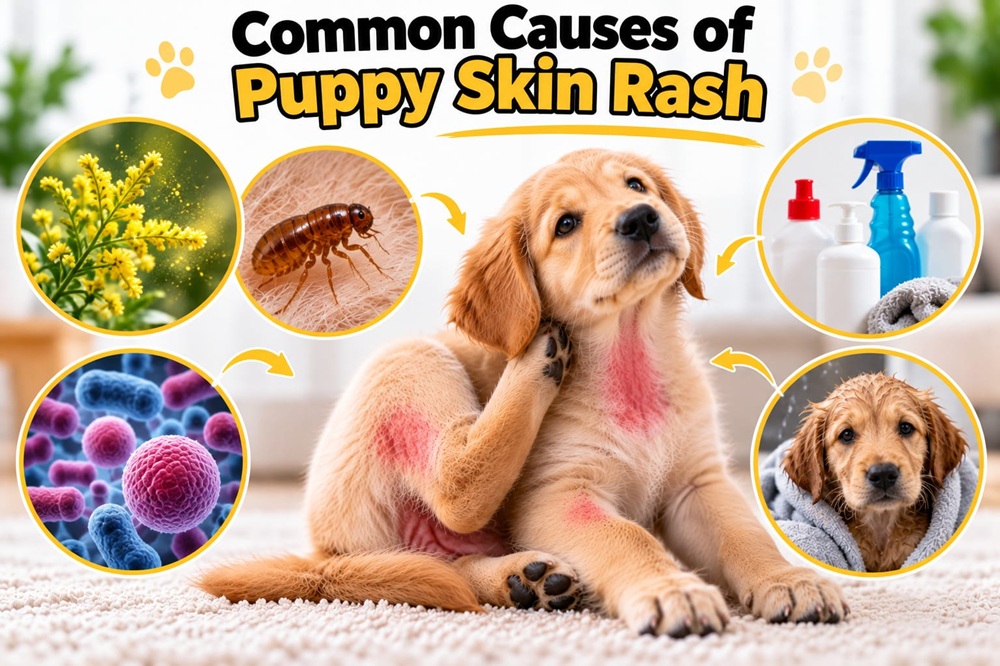
1. Allergies
Allergies are an important cause of itching and skin irritation in puppies. Environmental substances such as pollen, grass, dust mites, or mold may trigger allergic skin problems.
Some puppies can also develop reactions associated with food. Flea allergy is another important possibility, particularly when a puppy has intense itching.
2. Fleas and Other Parasites
Fleas can cause significant irritation. Some dogs are particularly sensitive to flea saliva, and even a small number of bites may cause considerable itching.
Other parasites can also affect a puppy’s skin. If your puppy is scratching frequently, a veterinarian can check for parasites and recommend appropriate treatment.
3. Bacterial or Yeast Infections
Damaged or irritated skin can sometimes develop a secondary infection. Signs may include redness, unpleasant odor, discharge, crusting, or worsening irritation.
Yeast and bacterial skin problems can require different treatments, so veterinary examination is important when infection is suspected.
4. Contact Irritation
A puppy may develop irritation after coming into contact with something that bothers its skin. Possible irritants include certain shampoos, cleaning products, chemicals, plants, or materials.
The rash may appear mainly on areas that have directly contacted the irritating substance.
5. Moisture and Poor Skin Hygiene
Moisture trapped around skin folds, paws, or other areas can contribute to irritation. Puppies that frequently get wet may also experience skin problems if their coat and skin are not properly dried.
However, excessive bathing or using harsh products can also irritate the skin.
What Does a Puppy Skin Rash Look Like?
A rash can look different depending on its cause.
You may notice:
- Red or pink skin
- Small bumps
- Pimples
- Dry or flaky skin
- Scabs or crusts
- Hair loss
- Swelling
- Excessive licking
- Scratching or biting
- Darker or thicker skin after prolonged irritation
Some puppies may have only one small affected area, while others may develop irritation across several parts of the body.
Common Areas Where Puppy Rashes Appear
Skin problems can occur almost anywhere, but some areas are commonly affected.
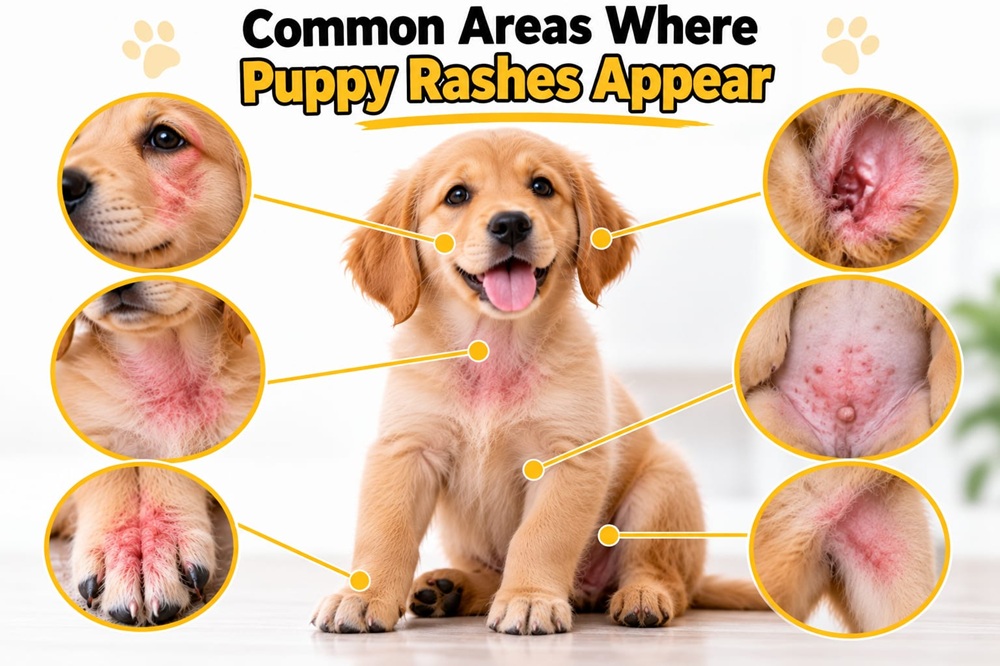
Belly: The belly may become irritated after contact with grass, dirt, or other environmental substances.
Paws: Puppies may lick or chew their paws when they are itchy or irritated.
Ears: Allergies and infections can contribute to recurring ear irritation.
Face: Rubbing the face or scratching around the muzzle can accompany allergic skin problems.
Armpits and groin: These areas have sensitive skin and may become irritated during allergic reactions or infections.
Skin Rash vs. Allergy vs. Infection
These terms are related but don’t mean the same thing.
A skin rash describes what you can see on the skin.
An allergy is an immune response to a substance that the puppy’s body reacts to.
An infection occurs when microorganisms such as bacteria or yeast multiply and cause a problem in the skin.
A puppy can even have more than one problem at the same time. For example, an allergy may cause intense itching, and repeated scratching can damage the skin and contribute to a secondary infection.
Signs and Symptoms to Watch For
Pay attention to your puppy’s behavior as well as its skin.
Important signs include:
- Frequent scratching
- Constant paw licking
- Biting or chewing the skin
- Rubbing against furniture or the floor
- Redness
- Hair loss
- Scabs or crusts
- Bad skin odor
- Oozing or discharge
- Increasing areas of irritation
A mild rash that quickly disappears may be less concerning than persistent or worsening irritation. If the puppy seems uncomfortable or the skin continues to deteriorate, veterinary advice is appropriate.
How Is a Puppy Skin Rash Diagnosed?
A veterinarian will usually consider the puppy’s age, symptoms, medical history, environment, diet, parasite prevention, and appearance of the skin.
Depending on the situation, the veterinarian may examine the skin for parasites and signs of infection. Additional tests may be recommended when the cause is unclear or when the rash keeps returning.
This process is important because different skin conditions can look very similar but require different treatments.
Treatment for Puppy Skin Rash
Treatment depends entirely on the underlying cause.
If fleas or other parasites are responsible, a veterinarian can recommend an appropriate parasite-control plan.
If the problem is an infection, specific veterinary treatment may be required depending on whether bacteria, yeast, or another organism is involved.
For allergic skin disease, treatment may focus on controlling itching, reducing exposure to triggers, protecting the skin, and managing any secondary infection.
If contact irritation is suspected, identifying and avoiding the irritating substance may help the skin recover.
Do not apply human creams, essential oils, or other home remedies to a puppy’s rash unless your veterinarian has specifically recommended them. Some products that are safe for people can be inappropriate or harmful to dogs.
How to Care for Your Puppy’s Skin at Home
Good everyday care can support healthy skin, but it should not replace veterinary treatment when a rash is persistent or severe.
Keep your puppy’s bedding clean and dry, regularly check the skin and paws, and follow the bathing routine recommended by your veterinarian. Use only products that are appropriate for puppies and avoid repeatedly bathing the puppy with harsh products.
Keeping up with veterinarian-recommended flea and parasite prevention is also an important part of skin care.
If you notice a new rash, take a clear photograph and keep track of when it appeared. This can be useful when discussing the problem with your veterinarian.
How to Prevent Future Skin Rashes
Not every puppy skin rash can be prevented, but several habits can reduce the risk of common problems.
- Follow a veterinarian-recommended parasite prevention plan.
- Keep bedding clean and dry.
- Avoid harsh shampoos and household chemicals around your puppy.
- Dry your puppy properly after bathing or getting wet.
- Check the skin regularly for changes.
- Maintain a balanced diet appropriate for your puppy.
- Avoid changing foods repeatedly without veterinary guidance.
- Address persistent itching early.
Early attention can prevent a small irritation from becoming a larger skin problem.
When to Contact a Veterinarian
Contact your veterinarian if the rash does not improve, keeps returning, or becomes more severe. Veterinary attention is particularly important when you notice open wounds, significant swelling, pus or discharge, strong odor, extensive hair loss, severe itching, or signs that your puppy is in pain.
A very young puppy with a rapidly worsening skin problem should also be evaluated promptly.
Final Thoughts
A puppy skin rash can have many different causes, from allergies and fleas to infections and simple environmental irritation. Because these conditions can look alike, treating the visible rash without finding its cause may not solve the problem.
The best approach is to observe your puppy carefully, avoid potentially irritating products, maintain good skin and parasite care, and seek veterinary advice when the rash persists or worsens. With the right diagnosis and treatment, most puppy skin problems can be managed much more effectively.