Puppies have soft, delicate skin that can sometimes become dry, flaky, or irritated. You may notice small white flakes on your puppy’s coat, rough skin, mild redness, or frequent scratching. While occasional dryness can be caused by something as simple as dry air or over-bathing, persistent dry skin can sometimes be linked to allergies, parasites, infections, nutritional problems, or another underlying skin condition.

Understanding why your puppy’s skin is dry is important because the right care depends on the cause. In this guide, we’ll explain the common causes of puppy dry skin, signs to watch for, home care options, prevention tips, and when veterinary attention may be needed.
What Does Dry Skin Look Like in Puppies?
Dry skin can appear in several ways. Some puppies develop fine white flakes that look similar to dandruff. Others may have rough or scaly patches, mild redness, or skin that feels less soft than usual.
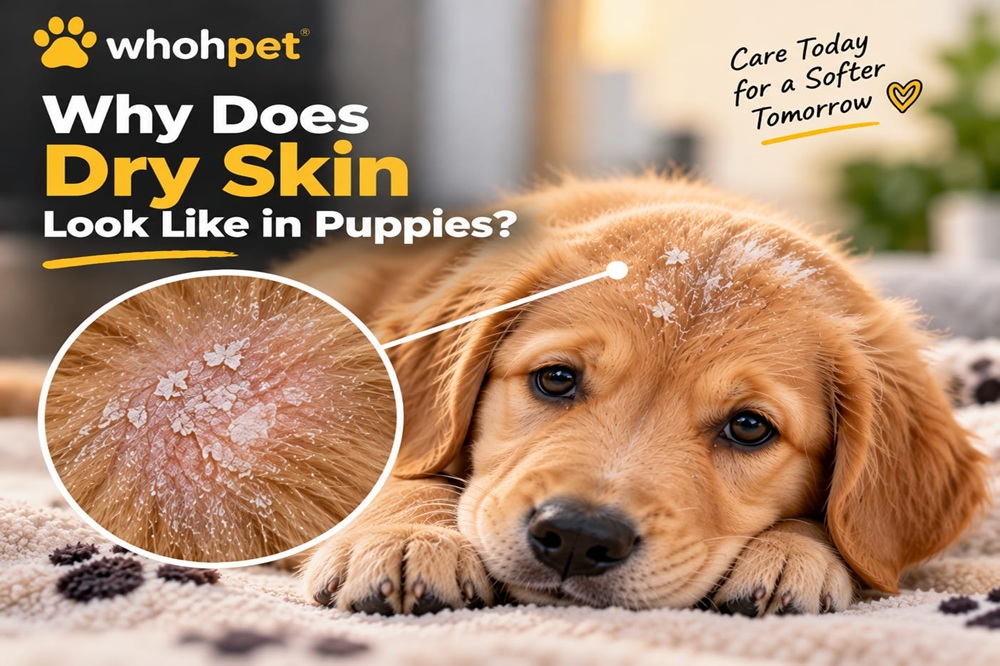
You may also notice your puppy scratching, licking, or rubbing certain areas of the body. In some cases, dryness affects the entire coat, while in others it is limited to areas such as the back, belly, paws, or around the ears.
Dry skin itself is not always a serious problem. However, repeated scratching can damage the skin and create small wounds, which may allow bacteria or yeast to cause a secondary infection.
Common Causes of Puppy Dry Skin
1. Dry Weather and Low Humidity
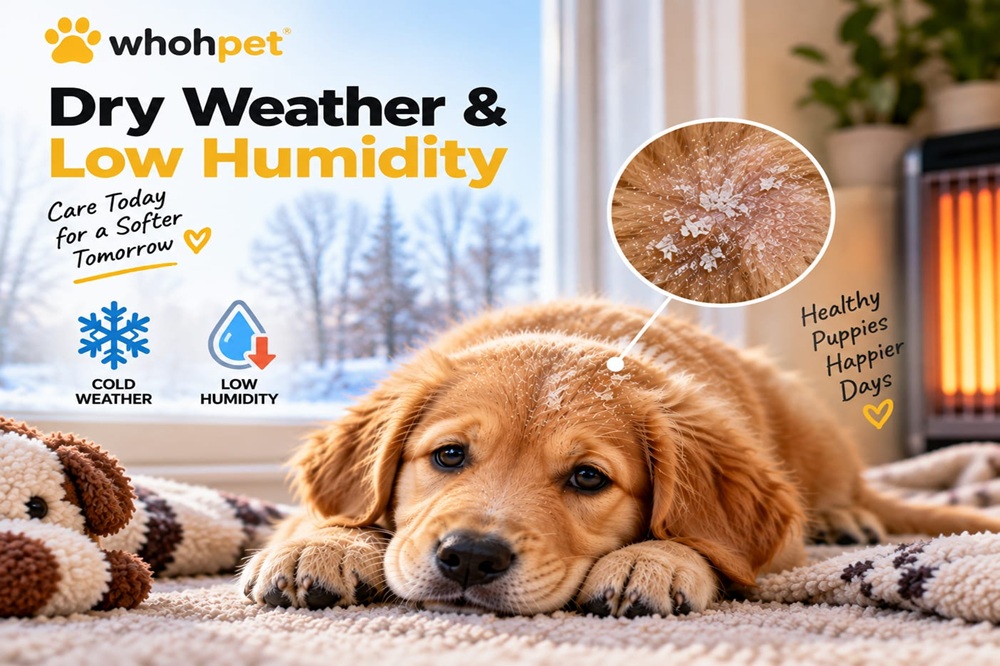
Cold weather and low humidity can remove moisture from the skin. Indoor heating can also make the air dry, which may contribute to flaky skin.
Some puppies are more sensitive to environmental changes than others. If your puppy’s dry skin appears mainly during colder or drier months, environmental dryness may be contributing to the problem.
2. Too-Frequent Bathing
Bathing is important for keeping a puppy clean, but bathing too often can remove natural oils from the skin.
Using human shampoo can be especially irritating because products designed for people may not have the appropriate formulation for a dog’s skin. Always use a puppy-safe or veterinarian-recommended dog shampoo.
3. Harsh Grooming Products
Some shampoos, fragrances, sprays, or grooming products may irritate sensitive puppy skin.

If dryness or itching started soon after introducing a new product, stop using it and discuss alternatives with your veterinarian if the symptoms continue.
4. Poor Nutrition
A puppy’s skin and coat need adequate nutrition for normal growth and maintenance. An unbalanced diet may contribute to a dull coat or poor skin condition.
Puppies should generally receive a complete and balanced diet formulated for their growth stage. Avoid making major dietary changes or adding supplements without veterinary advice.
5. Allergies
Allergies can cause itching, redness, inflammation, and sometimes dry or flaky skin.
Puppies can react to environmental allergens, certain ingredients in food, or substances that contact their skin. Allergy-related itching often leads to scratching and licking, which can make the skin look worse.
6. Parasites
Fleas and other external parasites can cause significant itching. A puppy that repeatedly scratches or bites its skin may develop irritation, scabs, and hair loss.
Even if you do not immediately see fleas, they should not be ruled out based only on visual inspection. A veterinarian can examine your puppy and recommend appropriate parasite control.
7. Skin Infections
Bacterial or yeast infections can sometimes cause scaling, redness, odor, itching, crusting, or changes in the coat.
Infections may develop on their own or occur after another problem, such as allergies, damages the skin barrier.
8. Underlying Health Problems
Persistent skin problems can occasionally be associated with other health conditions. If dry skin does not improve with basic care, keeps returning, or occurs with other symptoms, a veterinary examination can help identify the underlying cause.
Signs That May Occur With Dry Skin
Watch for:
- White flakes or dandruff-like skin
- Rough or scaly patches
- Mild redness
- Increased scratching
- Frequent licking or chewing
- Dull or dry-looking coat
- Small scabs
- Hair thinning
- Unusual skin odor
If several of these signs occur together, especially with intense itching or inflammation, your puppy may have more than simple dry skin.
How to Care for a Puppy With Dry Skin
The first step is to avoid making the irritation worse.
Use a gentle, puppy-safe shampoo when bathing and avoid unnecessary baths. Make sure the coat is thoroughly rinsed because leftover shampoo can irritate the skin.
Keep your puppy’s bedding clean and wash it regularly using a mild, fragrance-free detergent when possible. Vacuuming and cleaning the environment can also help reduce exposure to irritants and allergens.
Make sure your puppy has access to fresh drinking water and is eating a complete, balanced puppy diet appropriate for its age and size.
Do not apply human moisturizers, essential oils, medicated creams, or household remedies to your puppy’s skin unless your veterinarian specifically recommends them. Some ingredients that are safe for people may be inappropriate or harmful to dogs.
Can You Prevent Puppy Dry Skin?
You cannot prevent every cause of dry skin, but good routine care can reduce the risk.
Keep bathing to an appropriate frequency, use dog-specific grooming products, maintain good parasite prevention, provide balanced puppy nutrition, and keep your puppy’s living area clean.
Regularly check your puppy’s skin and coat. Early changes such as small flakes, redness, or increased scratching are easier to investigate before the skin becomes severely irritated.
When Should You Contact a Veterinarian?

Contact your veterinarian if your puppy has persistent or worsening dry skin, severe itching, open sores, bleeding, significant hair loss, crusting, swelling, an unpleasant skin odor, or signs of infection.
You should also seek veterinary advice if your puppy seems unwell, has a reduced appetite, or develops other unusual symptoms.
A veterinarian may examine the skin and coat and, depending on the findings, perform tests for parasites, infections, allergies, or other conditions.
Final Thoughts
Puppy dry skin can have many causes, ranging from environmental dryness and over-bathing to allergies, parasites, infections, or nutritional problems. Mild dryness may improve with gentle grooming and appropriate everyday care, but persistent or severe symptoms should not be ignored.
Your puppy’s skin is an important part of its overall health. Paying attention to changes in the coat, itching, redness, and skin texture can help you recognize problems early and get appropriate veterinary care when needed.