Puppies can develop occasional itching, redness, or small areas of irritated skin while they are growing and exploring their surroundings. Sometimes the problem is mild and temporary, but other times a skin change can be a sign of an allergy, parasite, infection, or another condition that needs proper treatment.
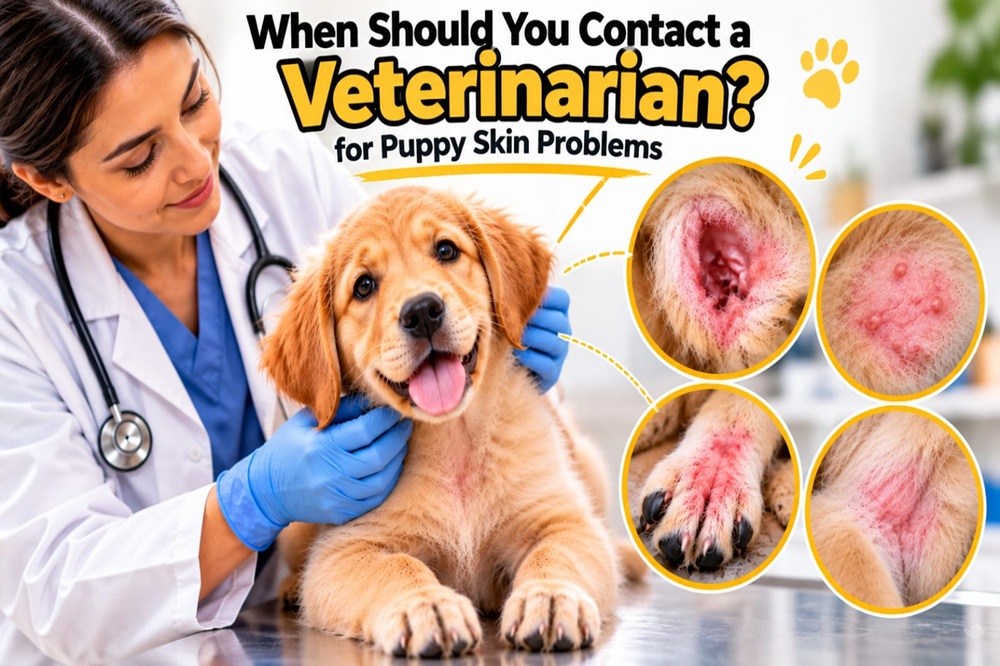
Knowing when to contact a veterinarian can help you avoid unnecessary delays and prevent a small skin problem from becoming more uncomfortable for your puppy. This guide explains the signs that deserve veterinary attention and what you can expect during a skin examination.
Mild Itching vs. Persistent Itching
Occasional scratching is not necessarily a sign of serious skin disease. Puppies may scratch after playing outside, getting wet, or coming into contact with something that temporarily irritates their skin.
The situation is different when your puppy is scratching repeatedly throughout the day or constantly licking, chewing, or rubbing the same areas.
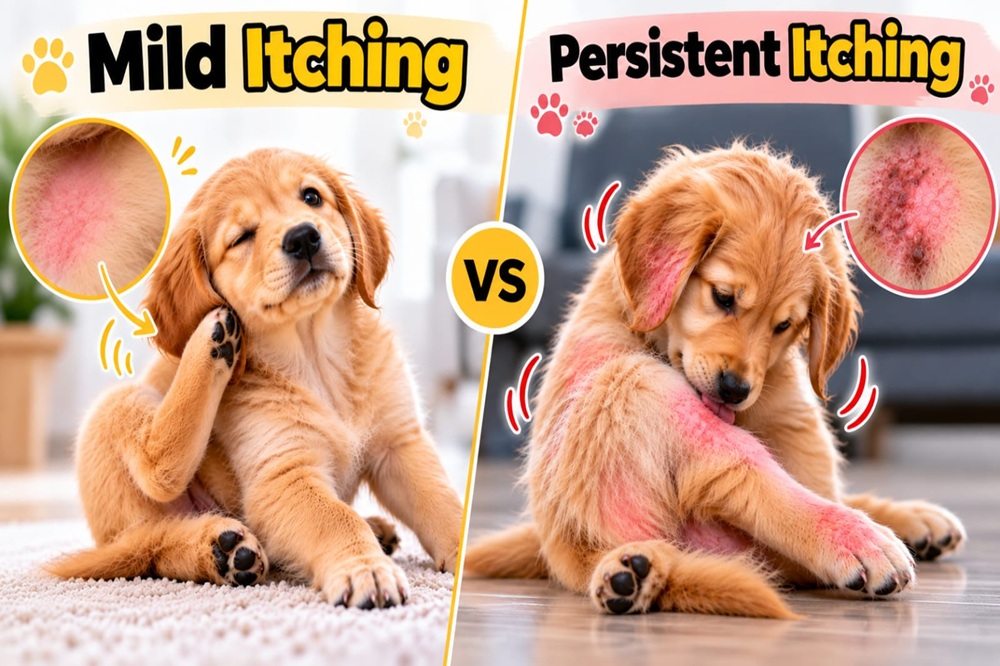
Persistent itching can damage the skin. Once the skin becomes irritated, your puppy may scratch even more, creating a cycle of itching and skin damage.
If the itching continues instead of settling down, contacting a veterinarian is a good idea.
When Redness Doesn’t Go Away
A small area of temporary redness may improve after an irritant is removed. However, redness that remains for several days, becomes more intense, or starts appearing in additional areas should not be ignored.
Red or inflamed skin can occur with allergies, insect bites, parasites, infections, or contact irritation. Because several conditions can look similar, the cause cannot always be determined simply by looking at the skin.
A veterinarian can examine the affected area and decide whether further investigation is needed.
When Your Puppy Has Open Sores
Repeated scratching, licking, and biting can eventually break the skin.
If you notice cuts, raw areas, bleeding, or open sores, contact your veterinarian. Damaged skin has less protection from the outside environment and may develop a secondary infection.
Try to prevent your puppy from continuously scratching or chewing the area while waiting for professional advice, but avoid applying random creams or household products to the wound.
Hair Loss Can Be a Warning Sign
A little loose fur is normal, but noticeable hair loss in a particular area can be associated with an underlying skin problem.
You may notice:
- Small bald patches
- Thinning fur
- Hair broken from chewing or scratching
- Red skin underneath the missing fur
- Crusts or flakes around the affected area
Hair loss can have different causes, including allergies, parasites, infections, and repeated self-trauma. A veterinarian can help determine which possibility needs to be investigated.
Watch for Scabs, Crusts, or Skin Discharge

Scabs and crusts can develop when irritated skin is repeatedly scratched or when another skin problem is present.
Pay particular attention if you see yellowish discharge, pus, wet or oozing areas, or a strong unpleasant smell.
These changes can indicate that the skin needs veterinary evaluation. Treatment depends on the underlying cause, so it is better to have the area examined rather than trying several products at home.
When Your Puppy Keeps Licking Its Paws
Paw licking is common in some puppies, but frequent or intense licking deserves attention.
A puppy may lick its paws because of allergies, irritation, parasites, injury, or other problems. Constant licking can make the skin between the toes red and sore.
Check the paws gently for visible irritation, foreign material, swelling, or damaged nails. If your puppy continues licking or chewing despite your efforts to stop it, speak with your veterinarian.
Repeated Ear Scratching May Need Attention
Skin allergies and ear problems can sometimes occur together.
Contact a veterinarian if your puppy repeatedly:
- Scratches its ears
- Shakes its head
- Rubs its ears on furniture
- Develops unusual ear odor
- Has visible discharge
- Seems painful when the ear is touched
Ear mites, allergies, yeast, bacteria, foreign objects, and other conditions can produce similar signs. A proper examination is important before choosing treatment.
When the Skin Problem Keeps Coming Back

A skin problem that disappears and then returns repeatedly deserves special attention.
For example, your puppy might develop itching every few weeks or experience recurring redness in the same areas. Repeated episodes may suggest an ongoing trigger rather than a one-time irritation.
Possible factors can include environmental allergies, flea exposure, food-related reactions, parasites, or recurring infections.
Keeping a simple record of when the symptoms appear, where they occur, recent foods, grooming products, outdoor activities, and parasite prevention can give your veterinarian useful information.
When Your Puppy Seems Uncomfortable
Your puppy’s behavior can tell you a lot about the severity of a skin problem.
Contact your veterinarian if your puppy:
- Cannot settle because of itching
- Frequently wakes up to scratch
- Avoids being touched
- Whines when the affected area is handled
- Stops playing normally
- Becomes unusually restless
- Constantly chews one area
A puppy that is clearly uncomfortable should not have to live with persistent itching while you wait for the problem to disappear on its own.
Signs That Need Prompt Veterinary Attention
Some symptoms deserve faster attention than a mild rash.
Contact a veterinarian promptly if you notice:
- Rapidly spreading skin irritation
- Significant swelling
- Severe pain
- Heavy bleeding
- Large open wounds
- Extensive hair loss
- Pus or substantial discharge
- Severe facial swelling
- Sudden weakness or unusual behavior
Difficulty breathing or severe facial swelling can be an emergency. In such situations, seek immediate veterinary care rather than waiting to see whether the symptoms improve.
What Will the Veterinarian Check?
During a skin appointment, the veterinarian may ask about your puppy’s age, diet, environment, grooming routine, parasite prevention, and previous skin problems.
They may carefully examine the skin, coat, paws, ears, and other affected areas.
Depending on what they find, they may recommend additional tests to look for parasites, bacteria, yeast, or other possible causes.
The goal is not simply to make the rash disappear temporarily. Identifying the underlying cause can help create a more appropriate treatment and prevention plan.
Avoid Random Home Treatments
It can be tempting to use a human anti-itch cream, essential oil, leftover medication, or a product recommended for another dog.
However, puppies have different needs, and some products can irritate damaged skin or be unsafe if swallowed. Applying the wrong product may also make it harder for a veterinarian to determine what caused the original irritation.
For this reason, ask your veterinarian before using medication or specialized treatments on a persistent puppy skin problem.
How to Prepare for the Veterinary Visit
You can make the appointment more useful by noting:
- When the skin problem first appeared
- How quickly it changed
- Where the problem started
- How often your puppy scratches or licks
- Any recent food changes
- New shampoos or grooming products
- Recent outdoor exposure
- Flea or parasite prevention used
- Whether similar problems happened before
Taking clear photographs as the skin changes can also help document its progression.
Final Thoughts
Not every small patch of irritated skin requires an emergency visit, but persistent, worsening, painful, or recurring skin problems deserve professional attention.
If your puppy is constantly scratching, developing sores, losing hair, producing discharge, or showing signs of significant discomfort, don’t rely on trial-and-error home treatments. A veterinarian can examine the skin and help determine whether allergies, parasites, infection, irritation, or another condition is responsible.
The earlier an ongoing skin problem is properly identified, the easier it can be to create a suitable care plan and keep your puppy comfortable, active, and happy.