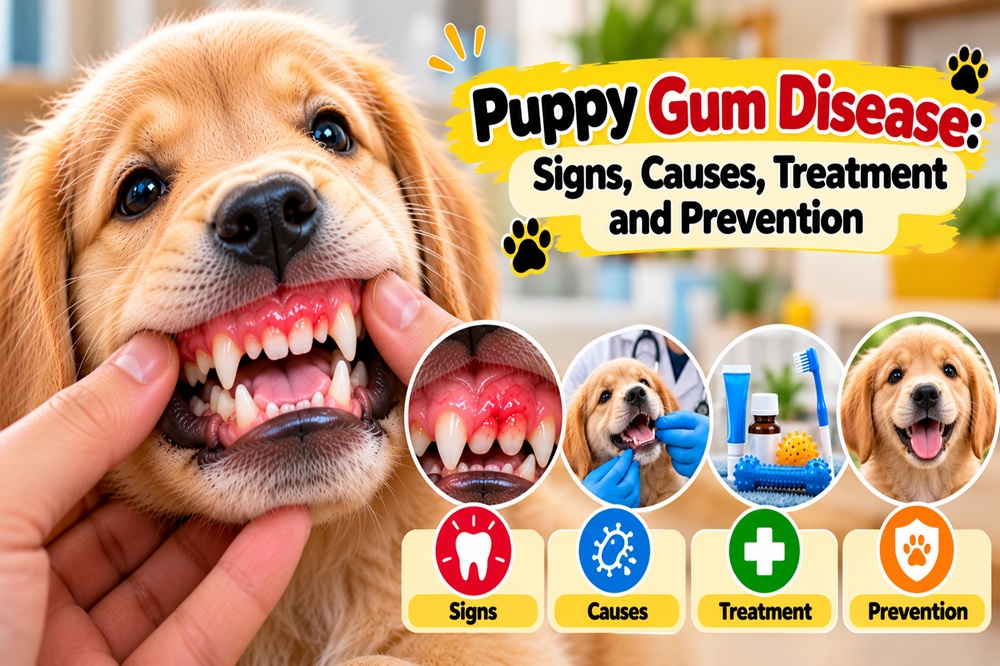
A puppy’s tiny teeth may look perfectly healthy, but their gums are just as important as the teeth themselves. During the first year of life, a puppy goes through major changes in the mouth as baby teeth appear, loosen, fall out, and are replaced by permanent teeth.
Because of all these changes, puppies can sometimes develop gum irritation or other oral problems. Redness, swelling, bleeding, bad breath, or difficulty eating should not always be dismissed as “just teething.”
Understanding the early signs of gum disease can help puppy owners recognize a problem before it becomes more serious.
What Is Puppy Gum Disease?
Puppy gum disease refers to inflammation or other problems affecting the gum tissue around the teeth.
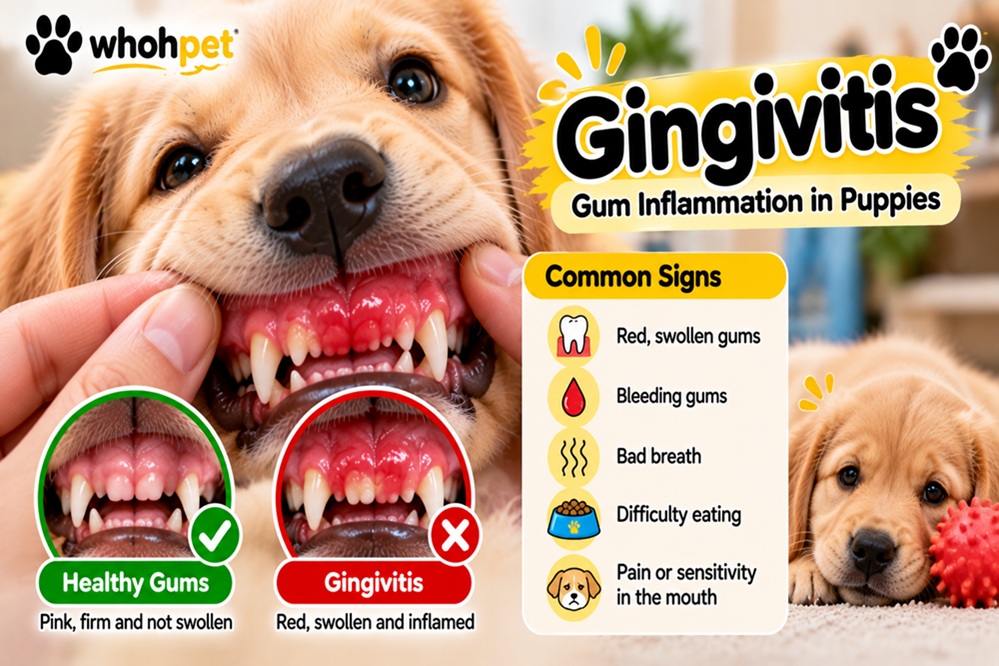
One of the earliest forms of gum inflammation is gingivitis. It can develop when plaque and bacteria accumulate around the teeth and irritate the gums.
Teething can also temporarily make the gums look slightly red or sensitive. The important difference is that normal teething should not cause severe or persistent oral problems.
If gum inflammation continues, becomes more severe, or is accompanied by other symptoms, a veterinary examination may be needed.
What Should Healthy Puppy Gums Look Like?
Healthy puppy gums are generally moist and pink, although some dogs naturally have darker pigmentation in parts of their mouth.
Healthy gums should not normally appear severely swollen, excessively red, or continuously bleeding.
When checking your puppy’s mouth, look for:
- Pink or normally pigmented gums
- Clean-looking teeth
- No significant swelling
- No persistent bleeding
- No pus or unusual discharge
- No strong foul odor
- No obvious mouth pain
Getting your puppy used to gentle mouth checks can make it easier to notice changes later.
Common Signs of Gum Disease in Puppies
Gum problems can develop gradually, so early signs may be easy to miss.
1. Red or Swollen Gums
Redness around the gumline can be an early indication of inflammation.
Mild redness may occur during teething, but gums that remain very red or become increasingly swollen deserve attention.
2. Bleeding Gums
A tiny amount of blood can occasionally appear while a puppy is losing a baby tooth.
However, repeated bleeding, heavy bleeding, or bleeding that occurs without an obvious reason should not simply be blamed on teething.
3. Persistent Bad Breath
Puppies don’t always have perfectly fresh breath, but persistent strong or unpleasant breath can be associated with plaque, gum inflammation, trapped food, infection, or another oral problem.
A noticeable change in your puppy’s breath is worth discussing with a veterinarian if it continues.
4. Excessive Drooling
Some drooling can occur during teething.
But excessive drooling, particularly when combined with mouth pain, swelling, bad breath, or difficulty eating, may indicate an oral problem.
5. Difficulty Eating
A puppy with painful gums or teeth may chew differently, drop food, eat more slowly, or avoid certain foods.
A complete refusal to eat is more concerning and should be taken seriously.
6. Pawing at the Mouth
A puppy that repeatedly rubs its face or paws at its mouth may be experiencing discomfort.
This behavior isn’t specific to gum disease, but when it appears together with swollen gums or bad breath, it deserves attention.
7. Changes in Chewing
A puppy may suddenly stop chewing normally or become unusually cautious with toys.
Since chewing is a normal puppy behavior, a noticeable change in chewing habits can sometimes be an early clue that the mouth is uncomfortable.
What Causes Gum Disease in Puppies?
Several factors can contribute to gum inflammation or other oral problems.
Plaque Buildup
Plaque is a soft layer that can accumulate on teeth.
When plaque isn’t regularly removed, bacteria within it can irritate the surrounding gums.
Teething
The process of losing baby teeth and developing permanent teeth can temporarily irritate the gums.
This doesn’t automatically mean that a puppy has gum disease, but it can make the mouth more sensitive during this stage.
Retained Baby Teeth
Sometimes a baby tooth remains in place after its permanent replacement starts coming in.
This can create crowding and make it easier for food and plaque to collect around the teeth.
If you notice a baby tooth sitting directly beside an adult tooth, have your veterinarian examine it rather than trying to remove it yourself.
Food or Debris
Small pieces of food or foreign material can occasionally become trapped around teeth.
Repeated irritation in one area may lead to redness or swelling.
Poor Dental Care
If a puppy never becomes accustomed to dental care, plaque can accumulate as the puppy grows.
Starting a gentle dental routine early can make long-term oral care easier.
Mouth Injury
Puppies explore the world with their mouths. Chewing inappropriate objects can sometimes injure the gums or teeth.
A damaged tooth or injured gum may become painful and inflamed.
Can Teething Be Confused With Gum Disease?
Yes.
This is one of the most common sources of confusion for new puppy owners.
During normal teething, a puppy may:
- Chew more frequently
- Have mildly sensitive gums
- Drool slightly more
- Lose baby teeth
- Show mild gum redness
- Occasionally leave a tiny spot of blood on a toy
These changes can be part of normal development.
However, severe swelling, persistent bleeding, pus, significant pain, facial swelling, strong persistent bad breath, or difficulty eating should not automatically be considered normal teething.
Is Puppy Gum Disease Serious?
The seriousness depends on the cause and how advanced the problem is.
Early gum inflammation may be manageable with improved dental care and professional guidance.
However, untreated dental problems can become more complicated over time. Inflammation can progress and affect structures supporting the teeth.
That is why recognizing changes early is important.
A puppy with obvious oral pain or significant inflammation should be examined rather than waiting for the problem to disappear on its own.
How Is Gum Disease Diagnosed?
A veterinarian will usually begin by examining the puppy’s mouth and looking at the teeth and gums.
The examination may help identify:
- Plaque accumulation
- Gum inflammation
- Retained baby teeth
- Damaged teeth
- Abnormal tooth positioning
- Signs of infection
- Other oral abnormalities
In some situations, additional dental evaluation may be recommended to determine what is happening below the visible gumline.
How Is Puppy Gum Disease Treated?
Treatment depends on what is causing the problem.
For mild inflammation, a veterinarian may recommend improving the puppy’s dental-care routine and monitoring the gums.
If a retained baby tooth is causing crowding or other problems, veterinary treatment may be necessary.
If there is a damaged tooth, infection, or another significant oral condition, treatment will be selected according to the specific problem.
Do not give your puppy human painkillers or attempt dental treatment at home without veterinary advice.
How Can You Prevent Gum Problems?
Good dental habits are easiest to establish when a puppy is young.
Start Tooth Brushing Gradually
Introduce your puppy to tooth brushing slowly.
First allow your puppy to become comfortable with you touching around the mouth. Then introduce a dog-specific toothbrush and toothpaste.
Keep early sessions short and positive.
Choose Appropriate Chew Toys
Chewing is natural for puppies, especially during teething.
Provide toys designed for puppies and avoid extremely hard objects that may damage teeth.
Always inspect toys for damage and remove anything that could become a choking or swallowing hazard.
Check the Mouth Regularly
A quick visual check can help you notice changes early.
Look for unusual redness, swelling, bleeding, retained baby teeth, damaged teeth, or anything stuck around the gums.
Keep Veterinary Checkups Regular
Routine veterinary visits provide an opportunity to monitor your puppy’s teeth and mouth as the permanent teeth develop.
A professional can identify problems that may be difficult for an owner to notice.
When Should You Contact a Veterinarian?
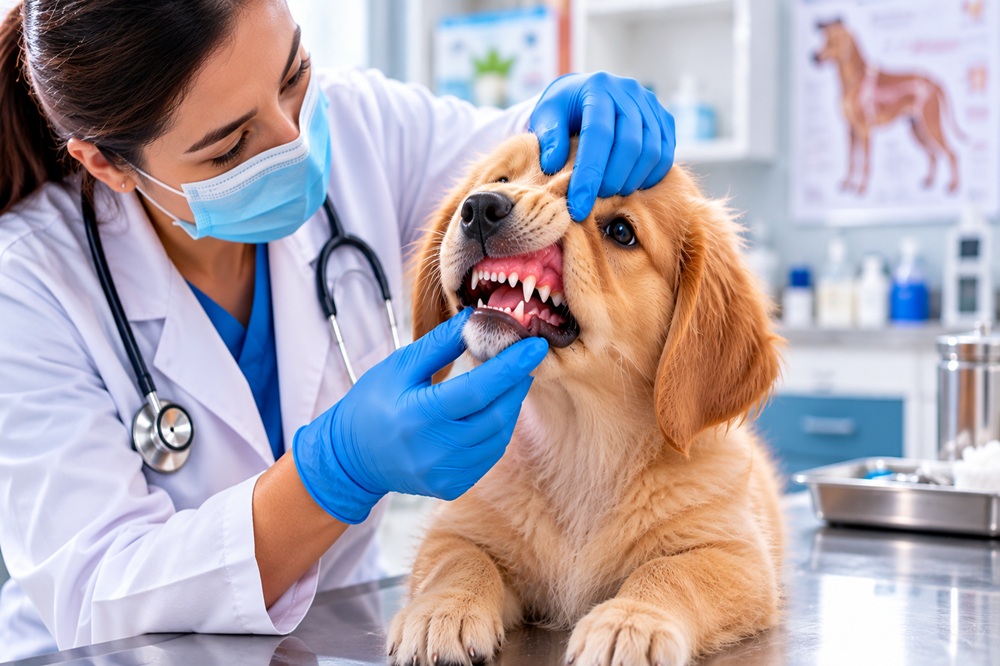
Contact your veterinarian if your puppy develops:
- Severe or persistent gum swelling
- Repeated or significant bleeding
- Pus or unusual discharge
- Strong persistent bad breath
- Difficulty eating
- Refusal to eat
- Significant mouth pain
- Facial swelling
- A broken or damaged tooth
- A retained baby tooth
- Teeth growing in an unusual position
- A sudden change in normal chewing behavior
If your puppy appears seriously unwell or has significant facial swelling or difficulty breathing, seek urgent veterinary care.
Puppy Gum Disease vs Normal Teething
A simple way to think about it is:
Normal teething:
Temporary changes while baby teeth are being replaced, with the puppy otherwise behaving normally.
Possible gum problem:
Persistent or worsening redness, swelling, bleeding, pain, bad breath, or difficulty eating.
This isn’t a diagnosis. If you’re unsure about what you’re seeing, a veterinarian can make the distinction by examining your puppy’s mouth.
Building a Healthy Dental Routine
Dental care shouldn’t begin only after a problem appears.
Make mouth care part of your puppy’s normal routine. A few calm seconds of brushing or checking the mouth can gradually become something your puppy accepts.
Reward calm behavior and avoid forcing your puppy through a stressful dental session.
The goal is to create a positive association with mouth handling so dental care becomes easier throughout adulthood.
Final Thoughts
Puppy gum disease can be difficult to recognize because the mouth naturally changes during teething.
Some mild gum sensitivity and redness can occur as baby teeth are replaced. But persistent swelling, repeated bleeding, bad breath, pain, or difficulty eating can indicate that something more than normal teething is happening.
Regular mouth checks, appropriate chew toys, early tooth-brushing habits, and routine veterinary care can all help support your puppy’s oral health.
Your puppy may have a tiny smile today, but the dental habits you establish now can make a big difference to their long-term oral health.