Have you noticed your dog constantly scratching, licking its paws, or rubbing its face against furniture? Occasional scratching is normal, but frequent itching may be a sign of an underlying skin problem. One possible cause is canine atopic dermatitis, a long-term allergic condition triggered by things in the environment.
What Is Atopic Allergy in Dogs?
Atopic dermatitis is an allergic skin condition in which a dog becomes sensitive to environmental substances such as pollen, dust mites, mold, or grass. When exposed to these allergens, the dog’s skin may become itchy, irritated, and inflamed.
It can affect dogs of different breeds and ages. Some dogs experience symptoms during particular seasons, while others may have itching throughout the year.
Common Symptoms of Atopic Allergies
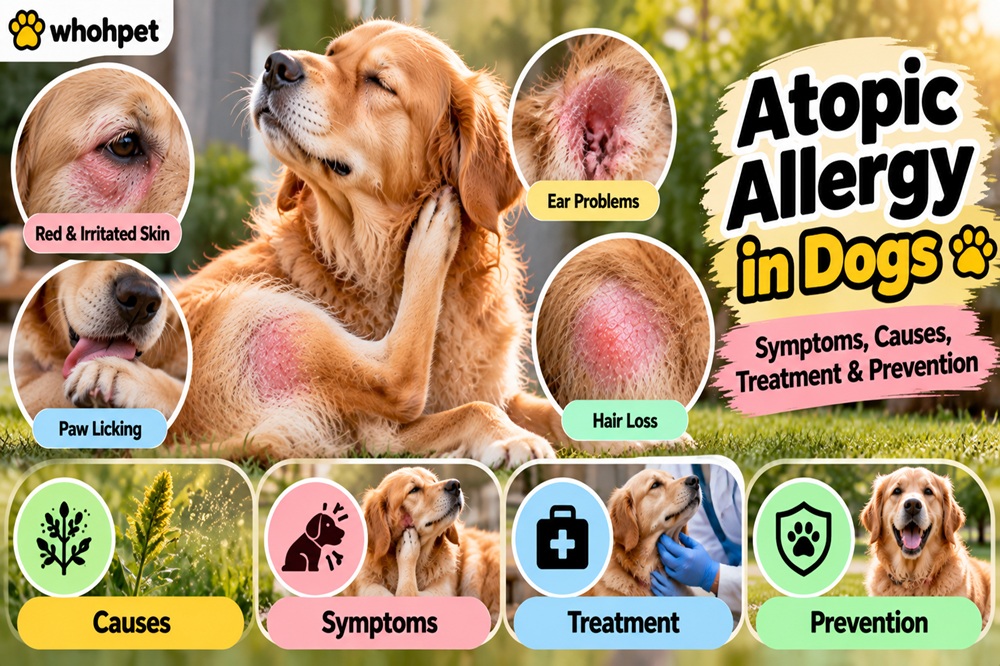
The most noticeable sign of atopic dermatitis is persistent itching. You may observe your dog:
- Licking or chewing its paws frequently
- Scratching its ears, face, belly, or legs
- Rubbing its face against carpets or furniture
- Developing red, irritated, or dry skin
- Losing hair in areas it repeatedly scratches
- Shaking its head or having recurring ear problems
Constant scratching can damage the skin and may lead to sores or secondary bacterial and yeast infections.
What Causes Atopic Allergies?
Atopic allergies are usually linked to environmental allergens. Common triggers include:
- Pollen: From trees, weeds, and grasses
- Dust mites: Commonly found in bedding, carpets, and household dust
- Mold: Often present in damp areas
- Grass and other outdoor allergens: Which may come into contact with a dog’s skin during walks or play
Not every itchy dog has an environmental allergy. Fleas, food allergies, parasites, and skin infections can cause similar symptoms, so the cause needs to be identified.
How Are Atopic Allergies Diagnosed?
A veterinarian will examine your dog’s skin, ask about its symptoms, and check for other possible causes of itching. Depending on the situation, they may recommend tests for parasites or skin infections.
Allergy testing may help identify environmental triggers after atopic dermatitis is diagnosed. It is not usually enough on its own to confirm the condition.
Treatment for Atopic Allergies
Atopic dermatitis is generally a long-term condition, but treatment can help control itching and keep your dog comfortable. A veterinarian may recommend:
- Itch-control medication: To reduce scratching and inflammation.
- Treatment for infections: If repeated scratching has caused bacterial or yeast infections.
- Medicated shampoos and skin care: To soothe irritated skin and support the skin barrier.
- Flea prevention: Since flea bites can make itching worse.
- Allergen management: Reducing contact with known triggers where practical.
Treatment depends on your dog’s symptoms and overall health. Never give human allergy medicines or apply medicated products without veterinary advice.
How to Care for an Allergic Dog at Home
Simple steps may help reduce irritation and support your dog’s skin:
- Keep your dog’s bedding clean and wash it regularly.
- Wipe its paws after outdoor walks, especially during high-pollen periods.
- Keep the skin clean and dry, and follow your vet’s bathing instructions.
- Use year-round flea prevention as advised by your veterinarian.
- Watch for changes in itching, redness, or ear discomfort.
These steps can support treatment, but they do not replace veterinary care.
Atopic Allergy vs. Food Allergy
Atopic dermatitis is commonly associated with environmental allergens, while food allergies are reactions to ingredients in a dog’s diet. Both can cause itching, ear problems, and skin irritation, so their symptoms can look very similar.
A veterinarian may recommend a supervised elimination diet if a food allergy is suspected. Avoid changing your dog’s food repeatedly without guidance, as this can make it harder to identify the cause.
When Should You Take Your Dog to the Veterinarian?
Consult a veterinarian if your dog has persistent itching, repeated ear problems, hair loss, red or damaged skin, or sores that are not healing. Seek prompt care if the skin becomes swollen, painful, has discharge, or your dog seems unusually unwell.
Early treatment can help prevent itching from turning into more serious skin problems.
Can Atopic Dermatitis Be Cured?
Atopic dermatitis is usually a chronic condition, which means it may not disappear permanently. However, many dogs can live comfortably with the right treatment and ongoing care. Symptoms may change over time, so your dog’s treatment plan may need to be adjusted by a veterinarian.
Final Thoughts by whohpet
Atopic allergies can make everyday life uncomfortable for dogs, especially when itching becomes persistent. Paying attention to changes in your dog’s skin, paws, and ears can help you recognize a problem early.
With proper veterinary diagnosis, suitable treatment, and consistent home care, many dogs with atopic dermatitis can stay comfortable and enjoy an active life.