5 Non-Veg Foods for Adult Dogs to Gain Weight Safely
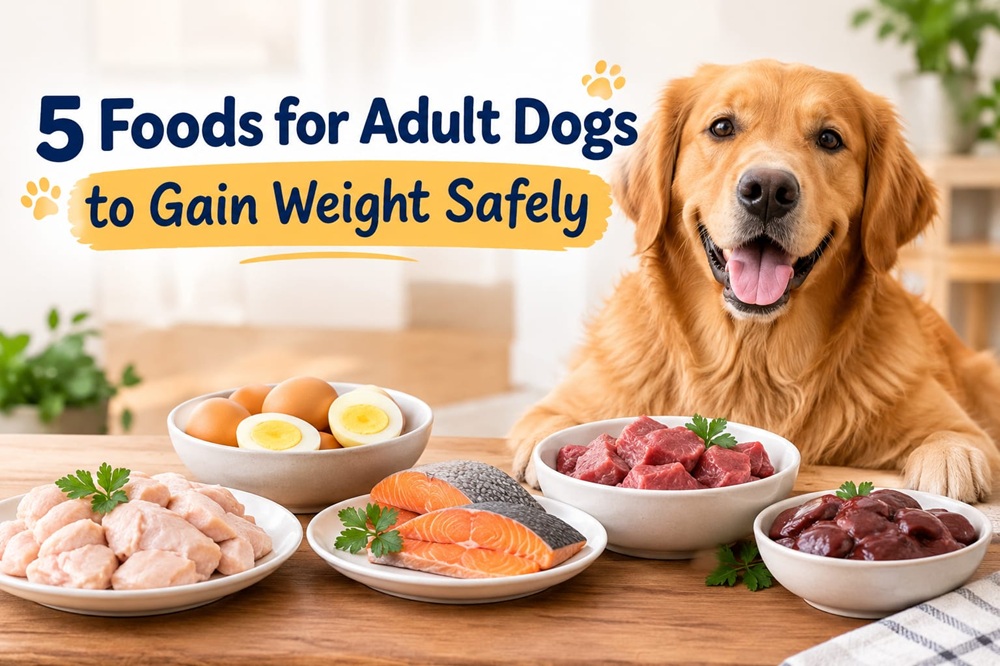
Is your adult dog looking too thin or struggling to maintain a healthy weight? Adding nutritious, protein-rich foods to their regular diet can help support healthy weight gain.
But remember, the goal is not simply to make your dog gain fat. Healthy weight gain should come with good-quality protein, enough calories, and a balanced diet.
Here are five non-veg foods that can be useful additions to an adult dog’s meals.
1.Cooked Chicken
Plain cooked chicken is one of the easiest foods to add to a dog’s meal. It provides high-quality protein and can make food more appealing to dogs with a poor appetite.
Serve chicken fully cooked, boneless, and unseasoned. Avoid fried chicken, spicy preparations, and cooked bones.
2.Cooked Eggs
Eggs provide protein, fats, and other nutrients that can support your dog’s overall diet. A fully cooked egg can be added to your dog’s regular food in a suitable portion.
Do not add salt, butter, spices, or oil. Start with a small amount if your dog has never eaten eggs before.
3.Fish
Cooked fish can provide protein and healthy fats. Fatty fish such as salmon can also provide omega-3 fatty acids, which support skin and coat health.
Always cook the fish thoroughly and remove all bones before feeding. Avoid salted, smoked, fried, or heavily seasoned fish.
4.Lean Meat
Plain cooked meats such as lean beef or lamb can provide protein and additional calories. They can be mixed with your dog’s regular food as a topper.
Choose plain meat and remove excess fat. Never feed meat prepared with onion, garlic, spicy seasonings, or sauces.
5.Cooked Liver and Other Organ Meat
Liver and other organ meats are nutrient-rich and contain protein, vitamins, and minerals. They can be offered in small amounts as part of a balanced diet.
Liver should not make up a large portion of your dog’s meals because excessive amounts can provide too much vitamin A and other nutrients.
How to Feed These Foods for Weight Gain
These foods should generally be used as additions to your dog’s regular complete and balanced diet rather than replacing it completely.
Introduce one new food at a time and start with a small portion. Watch for vomiting, diarrhea, itching, or other signs of intolerance.
Avoid giving cooked bones, raw meat or eggs unless your veterinarian has specifically advised a suitable feeding plan. Also avoid spicy, fried, salty, or heavily seasoned meat.
When Should You See a Veterinarian?
If your dog is losing weight despite eating normally, has a poor appetite, vomiting, diarrhea, excessive thirst, or unusual tiredness, don’t rely only on extra food.
Unexpected weight loss can sometimes be related to dental problems, parasites, digestive disorders, or other health conditions. A veterinarian can help determine the reason and recommend the right diet.
Final Thoughts by whohpet
Chicken, eggs, fish, lean meat, and small amounts of organ meat can provide valuable protein and nutrients for adult dogs.
However, healthy weight gain is about the right amount of calories and balanced nutrition, not simply feeding more meat. Monitor your dog’s weight and body condition, and get veterinary advice if your dog remains underweight or is losing weight without a clear reason.