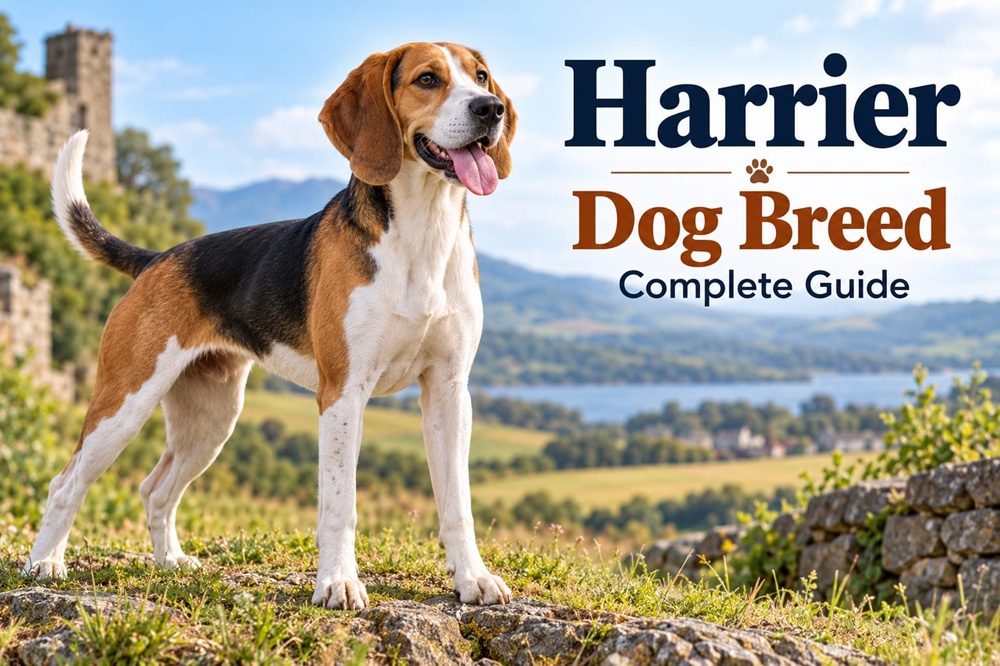
The Harrier is a friendly and active dog breed from England. It is a medium-sized hound that was originally bred to hunt hare. Harriers are known for their strong sense of smell, good energy, and love for outdoor activities. They enjoy running, walking, playing, and spending time with their family.
Today, the Harrier can also be a good family dog for people who have enough time for exercise and training. It is a social dog that usually enjoys being around people and other dogs. However, its strong hunting instinct means that owners need to be careful when taking it outside.
History and Origin

The Harrier comes from England and has a long history as a hunting dog. It was mainly bred to help hunters find and follow the smell of hare. Harriers could run for long periods while following a scent, which made them useful hunting dogs.
The exact history of the breed is not fully known. It is believed that different English hounds played a part in its development. Breeders wanted a dog that had a good sense of smell, strong legs, and enough energy to keep running for a long time.
Harriers were often used in groups because they worked well with other dogs. This is one reason why many Harriers today are comfortable living with other dogs when they are introduced to them properly.
Appearance
The Harrier has a strong and athletic body. It has a medium-sized frame, strong legs, a deep chest, and a short coat. Its body is made for running and staying active for long periods.
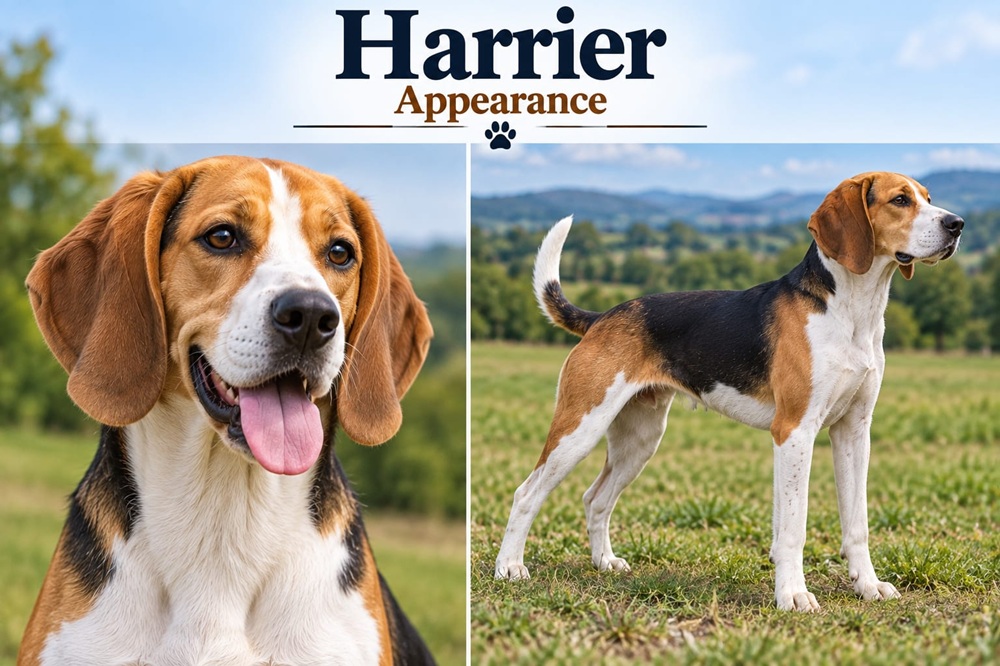
The head is well-shaped, and the ears are long and hang down beside the face. Its eyes usually have a gentle and friendly look. The tail is carried proudly and gives the dog the typical look of a hound.
The Harrier has a short and thick coat that is easy to care for. Common coat colors include white with black and tan markings. Its simple coat is useful for an active dog that spends a lot of time outdoors.
Size and Weight
The Harrier is a medium-sized dog. Most adult Harriers are around 19 to 21 inches tall at the shoulder. Their weight can be different depending on their age, sex, body shape, diet, and activity level.
A healthy Harrier should look strong but not overweight. Keeping the dog at a healthy weight is important because extra weight can make running and other activities harder for the dog.
Since Harriers are active dogs, they need regular exercise to stay fit. A healthy diet and enough daily activity can help them maintain a good body shape.
Personality and Temperament
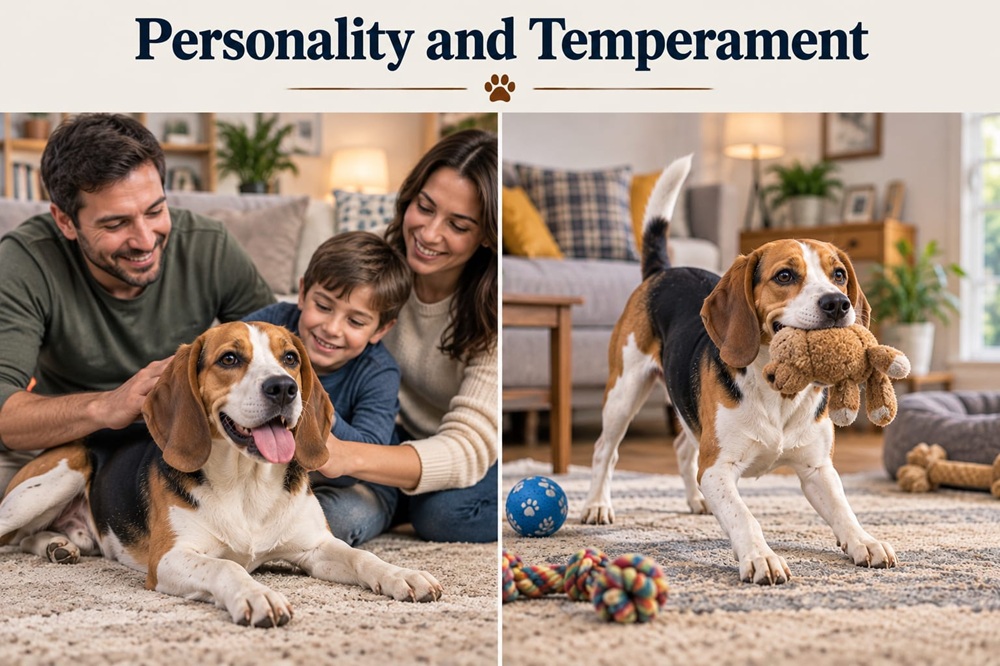
Harriers are usually friendly, happy, and social dogs. They enjoy being with their owners and often like taking part in family activities.
They are curious dogs and love to explore their surroundings. Their strong sense of smell can sometimes make them forget about everything else when they find an interesting scent. They may want to follow the smell instead of coming back when called.
Harriers can also be independent. This means they may not always do what their owner asks immediately. This is not because they are bad dogs. They simply have a strong natural instinct to explore and follow scents.
They usually do well with other dogs because they were bred to work in groups. Early socialization can help them become comfortable around different people, animals, and places.
Exercise Needs
Exercise is very important for a Harrier. This breed was made to run and hunt for long periods, so it has plenty of energy.

A short walk may not be enough for an adult Harrier. It needs regular walks, playtime, running, and other activities. Giving the dog enough exercise can help prevent boredom and unwanted behavior at home.
Harriers also enjoy games that use their sense of smell. You can hide treats or toys and let your dog search for them. This gives the dog both physical exercise and something interesting to think about.
Because Harriers like to follow smells, they should be kept on a leash in open areas unless the area is completely safe and enclosed. A secure yard can also give them a safe place to run and play.
Training
Training a Harrier should start when it is young. They are smart dogs, but they can also be independent. Their strong interest in smells can make training a little challenging.
Use simple commands and reward good behavior with treats, praise, or play. Keep training sessions short and fun. Repeating the same exercise for too long may make the dog lose interest.
Teaching the Harrier to come when called is especially important. Practice this command in a safe place before trying it in an open area. A Harrier may hear a new smell and run after it, so good recall training can help keep the dog safe.
Socialization is also important. Introduce your puppy to different people, friendly dogs, sounds, and places from a young age. This can help it grow into a confident and well-behaved adult dog.
Grooming
The Harrier has a short coat, so grooming is not very difficult. Brushing the coat once or twice a week can help remove loose hair and keep the coat clean.
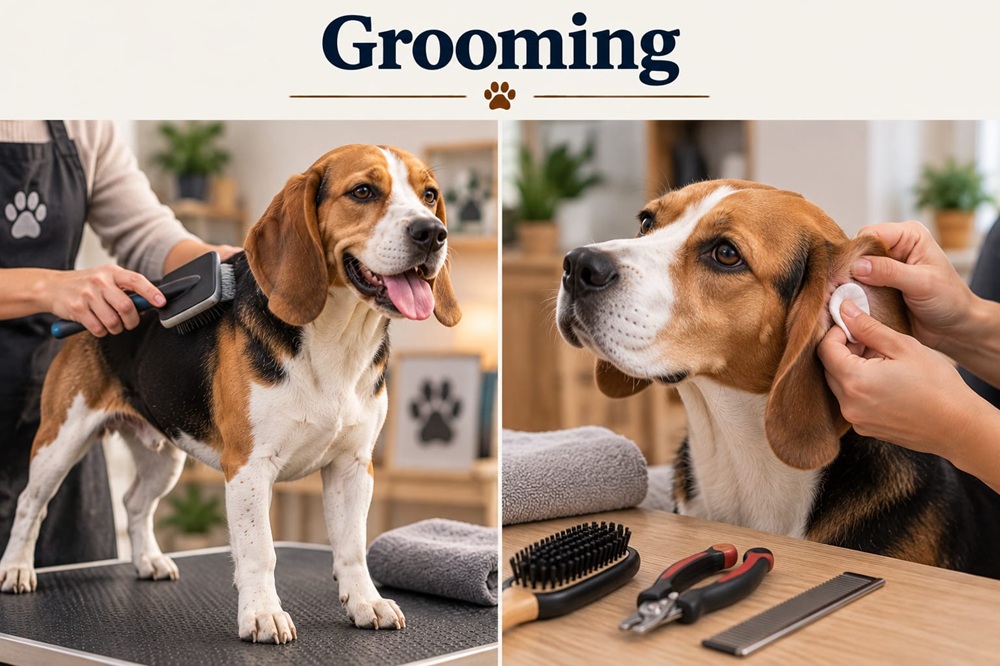
You do not need to bathe a Harrier too often. A bath is usually needed when the dog gets very dirty or starts to smell. Using a dog-safe shampoo can help protect the skin.
The ears should be checked regularly. Harriers have long, hanging ears, so dirt and moisture can sometimes stay inside them. Clean them as recommended by your veterinarian and look for redness, bad smell, or other changes.
The nails should be trimmed when they become too long. Regular teeth cleaning is also a good part of the dog’s daily care.
Feeding
A Harrier needs good-quality dog food that provides the nutrients it needs. The right amount of food depends on the dog’s age, size, activity level, and overall health.

Because Harriers are active, they may need enough food to support their daily activities. However, giving too much food can cause weight gain. Always follow proper feeding amounts and avoid giving too many treats.
Fresh water should be available throughout the day. Puppies, adult dogs, and older Harriers may have different food needs, so their diet should be changed as they grow.
If you are not sure what food or amount is right for your dog, ask a veterinarian for advice.
Common Health Concerns
Like all dog breeds, Harriers can have some health problems. This does not mean that every Harrier will become sick, but owners should still watch their dog’s health carefully.

Some Harriers may have problems related to their joints, ears, eyes, or weight. Ear problems can happen because of their long ears. Being overweight can also put extra pressure on their joints and make exercise more difficult.
Regular visits to the veterinarian can help find health problems early. A healthy diet, regular exercise, good dental care, and proper vaccinations can also help support the dog’s health.
If you notice a change in your Harrier’s eating, walking, energy, behavior, or general health, it is best to speak with a veterinarian.
Harrier in Hot Weather
Harriers enjoy being active, but hot weather can be difficult for them. This is especially important in places with very warm summers.
Try to take your Harrier for walks during the cooler parts of the day, such as early morning or evening. Avoid long runs or heavy exercise during the hottest part of the day.
Always keep fresh water available and give your dog a cool and shaded place to rest. On very hot days, you can also play simple indoor games that use the dog’s sense of smell.
Watch for signs that your dog may be getting too hot. Heavy panting, weakness, too much drooling, confusion, or collapsing can be signs of a serious problem. If this happens, contact a veterinarian immediately.
Is Harrier Right for Your Family?
A Harrier can be a great choice for an active family. It is friendly, playful, and enjoys spending time with people. Families who enjoy walking, outdoor activities, and playing with their dog may really enjoy having a Harrier.

However, this breed needs more exercise than many less active dogs. It may not be the best choice for someone who wants a dog that needs very little exercise.
A safe yard is helpful because Harriers love to explore and follow smells. Owners also need to spend time on training and should be careful when the dog is outside without a fence.
If you can give a Harrier enough exercise, training, attention, and love, it can become a wonderful family companion.
Final Thoughts by Whohpet
The Harrier is a friendly, active, and loving dog. It enjoys spending time with its family and loves to run, play, and explore. This breed needs daily exercise, good food, proper training, and regular care to stay happy and healthy.

Before bringing a Harrier home, make sure you have enough time to give it exercise, attention, and care. A safe place to play is also important because Harriers love to follow interesting smells. With the right care and love, a Harrier can become a happy and loyal part of your family.
— Whohpet