The Maltese Poodle, popularly known as the Maltipoo, is a charming crossbreed between a Maltese and a Poodle. Loved for its adorable teddy-bear appearance, soft coat, intelligence, and affectionate nature, the Maltipoo is a popular companion dog.

Behind its cute appearance, however, lies a personality that is both delightful and occasionally challenging. While Maltipoos are generally loving, playful, and intelligent, they can also be sensitive, anxious, vocal, and overly dependent on their owners.
Understanding both sides of their temperament is important before bringing one home.
1. Positive Personality Traits
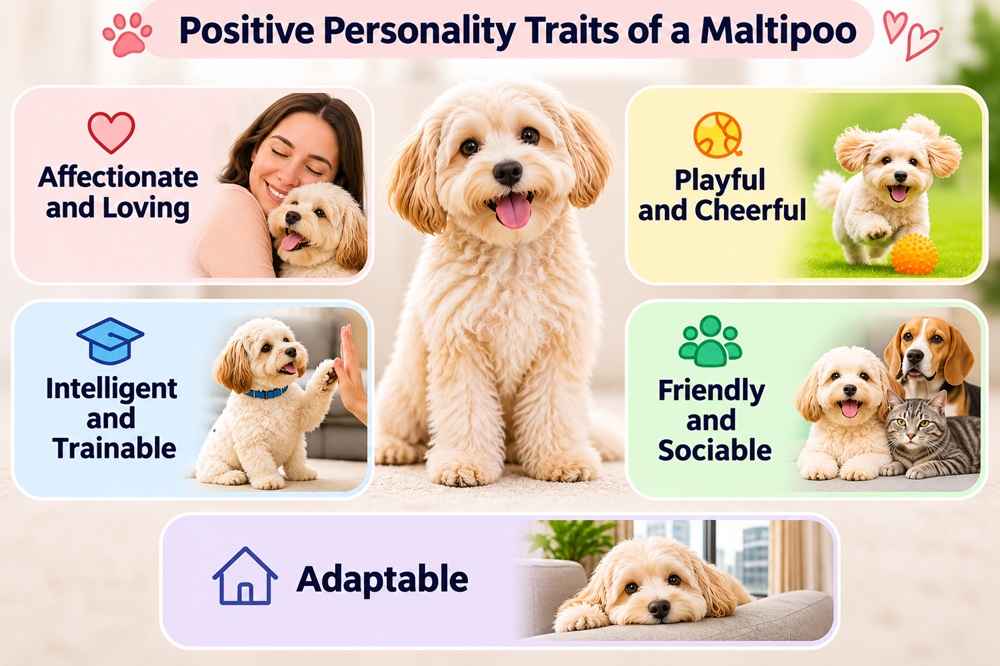
Affectionate and Loving
Maltipoos are naturally people-oriented dogs. They enjoy cuddling, sitting on their owner’s lap, following family members around, and being involved in everyday activities. They often form very strong emotional bonds with their families.
Playful and Cheerful
Despite their small size, they have a lively and entertaining personality. They enjoy toys, games, short walks, and interactive activities. Their playful nature often makes them the centre of attention at home.
Intelligent and Trainable
Their Poodle heritage gives them a reputation for intelligence and quick learning. They can learn commands and routines relatively quickly, particularly when training involves treats, praise, and positive reinforcement.
Friendly and Sociable
Most Maltipoos enjoy meeting people and can get along well with other pets when properly socialised. They generally make friendly household companions.
Adaptable
Their small size and moderate exercise requirements make them suitable for apartment living, provided they receive adequate exercise, stimulation, and companionship.
2. Negative Temperament Traits and Behavioural Challenges
Although Maltipoos are wonderful companions, they can develop certain behavioural challenges. These are not inevitable, and good training, socialisation, and responsible breeding can make a significant difference.
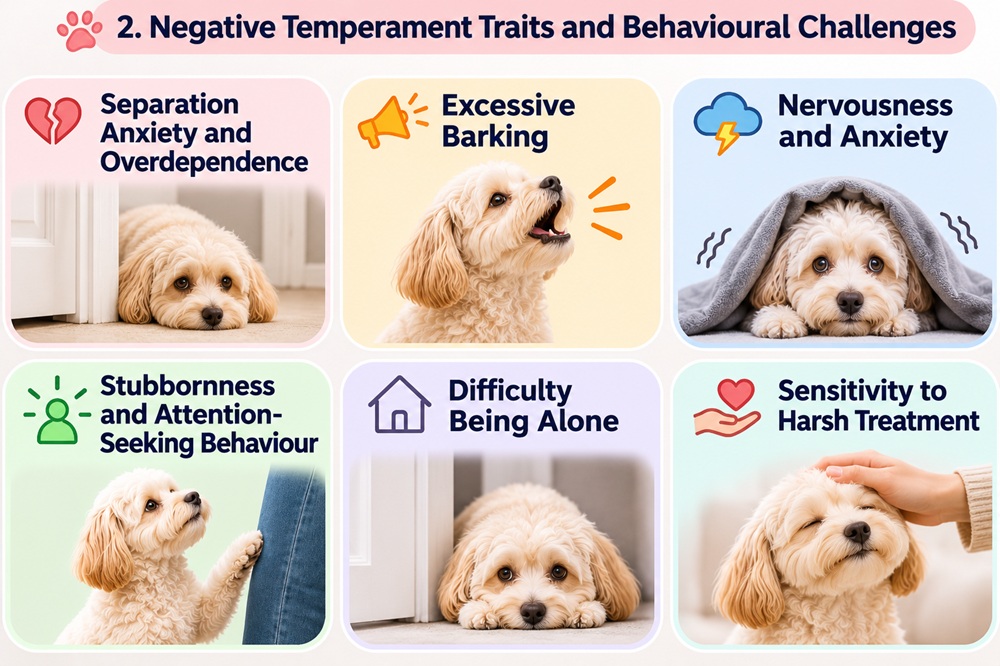
Separation Anxiety and Overdependence
One of the most common challenges associated with Maltipoos is their strong attachment to their owners.
They often love being around people and may become distressed when left alone for extended periods.
Signs of separation-related distress can include:
- Whining or crying when the owner leaves.
- Excessive barking or howling.
- Scratching doors or attempting to escape.
- Destructive chewing.
- Restlessness and difficulty settling down.
- Following the owner constantly around the house.
Maltipoos should gradually learn to spend time independently. Teaching them that being alone is safe and temporary can help reduce separation-related problems.
Excessive Barking
Maltipoos can be quite vocal, particularly when they hear unfamiliar noises or notice people approaching the house.
Common reasons for barking include:
- Alerting their owners to visitors or unfamiliar sounds.
- Seeking attention.
- Excitement during playtime.
- Fear or insecurity.
- Boredom or frustration.
- Anxiety when left alone.
Some Maltipoos may bark at passing people, other dogs, doorbells, or even small movements outside a window.
Consistent training, adequate exercise, mental stimulation, and rewarding quiet behaviour can help manage excessive barking.
Nervousness and Anxiety
Maltipoos can be emotionally sensitive. Some may become nervous in unfamiliar environments, around strangers, or when exposed to loud noises.
They may respond to stressful situations by hiding, trembling, whining, barking, or seeking constant reassurance from their owners.
Early socialisation and gentle exposure to different environments, people, sounds, and experiences can help develop confidence.
Stubbornness and Attention-Seeking Behaviour
Despite their intelligence, Maltipoos are not always perfectly obedient.
They may sometimes ignore commands, demand attention, or become mischievous when bored. Some learn that barking, whining, or jumping gets them the attention they want.
Consistent boundaries and reward-based training are important to prevent these behaviours from becoming habits.
Difficulty Being Alone
Some Maltipoos struggle to entertain themselves. They may constantly follow their owners from room to room and become unsettled when separated.
This behaviour can be endearing initially, but excessive dependence can become problematic.
Encouraging independent play, providing enrichment toys, and establishing a predictable daily routine can help.
Sensitivity to Harsh Treatment
Maltipoos generally respond better to gentle, positive training than to shouting or punishment.
Harsh handling can increase fear, nervousness, and unwanted defensive behaviours. Patience and consistency are particularly important with this sensitive companion breed.
3. Balanced Temperament Overview
| Personality trait | General tendency |
|---|---|
| Affection | Very high |
| Playfulness | High |
| Intelligence | High |
| Friendliness | Generally high |
| Energy level | Moderate |
| Alertness | High |
| Barking tendency | Moderate to high |
| Independence | Often low |
| Separation tolerance | Can be low |
| Sensitivity | Moderate to high |
| Trainability | Generally high |
| Adaptability | Generally high |
These are general breed tendencies, not guaranteed characteristics. Individual Maltipoos can differ considerably.
4. How to Maintain a Healthy Temperament
A well-adjusted Maltipoo needs more than food, grooming, and a comfortable place to sleep. Its emotional and mental well-being are equally important.
Some important practices include:
- Early socialisation: Introduce your puppy gradually to different people, animals, sounds, and environments.
- Independence training: Teach your dog to feel comfortable spending short periods alone.
- Barking control: Reward calm behaviour instead of unintentionally encouraging attention-seeking barking.
- Daily exercise: Provide regular walks and play sessions.
- Mental stimulation: Use puzzle toys, interactive games, and basic obedience training.
- Consistent routines: Maintain predictable feeding, walking, sleeping, and play schedules.
- Positive reinforcement: Reward desirable behaviour with praise, affection, and treats.
If anxiety or excessive barking becomes severe, professional behavioural advice may be helpful. Sudden behavioural changes should also be discussed with a veterinarian.
5. Is a Maltese Poodle the Right Dog for You?
A Maltipoo can be an excellent companion for someone who enjoys having an affectionate, interactive, and playful dog.
However, it may not be the best choice for someone who:
- Is away from home for most of the day.
- Wants a very independent dog.
- Prefers a naturally quiet breed.
- Has little time for grooming, training, and interaction.
- Cannot manage a dog that may need additional emotional support.
Potential owners should understand that a Maltipoo’s loving nature comes with a need for companionship, attention, and consistent guidance.
Final Thoughts by Wholpet
At Wholpet, we believe that understanding a dog’s personality is just as important as falling in love with its appearance. The Maltese Poodle, with its adorable looks, affectionate nature, and playful personality, can bring immense joy to a household.
However, prospective owners should look beyond its cute teddy-bear appearance and understand its emotional needs. Maltipoos can be sensitive, vocal, and prone to separation-related anxiety. They need companionship, patience, consistent training, and early socialisation to develop into confident and well-adjusted dogs.
A Maltipoo may be small, but its emotional needs and personality are anything but small. It is best suited to a home where it receives plenty of love, attention, interaction, and guidance.
Our Wholpet Verdict: The Maltipoo is a wonderful choice for those seeking an affectionate, intelligent, and playful companion. However, it may not be ideal for people who prefer a quiet, highly independent dog or spend long hours away from home.
At Wholpet, we believe that the best pet is not simply the cutest one, but the one whose temperament, needs, and lifestyle are the right match for your family.
Love their personality, understand their needs, and give them a home where they can truly thrive.
— Team Wholpet