Watching a puppy lose its tiny teeth can be an exciting part of growing up. One day you may notice a loose tooth, and a few days later there may be a small gap where the tooth used to be.
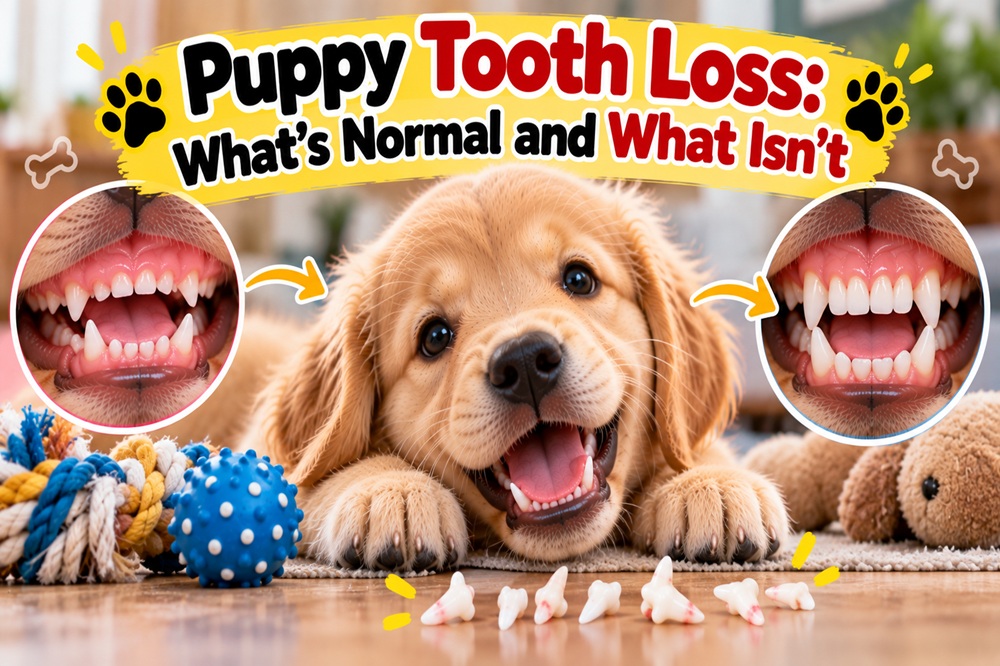
For most puppies, losing baby teeth is a normal part of development. Their temporary teeth gradually make way for stronger permanent teeth as the jaw and mouth mature.
However, not every missing, loose, or damaged tooth is normal. Knowing what usually happens during puppy teething can help you understand when you can simply monitor your puppy and when a dental problem may need veterinary attention.
When Do Puppy Baby Teeth Fall Out?
Puppies are born without visible teeth. Their baby teeth begin appearing during the first few weeks of life.
As the puppy grows, these temporary teeth eventually become loose and fall out. The process generally starts at around 3–4 months of age and continues for several months.
During this period, the developing adult teeth gradually replace the baby teeth.
Most puppies have their permanent adult teeth by approximately 6–7 months of age, although individual development can vary.
You may notice that the front teeth disappear first, followed by other baby teeth as the permanent teeth continue to develop.
Why Do Puppy Teeth Fall Out?
Baby teeth are not designed to stay in the mouth permanently.
As permanent teeth develop underneath or near them, the roots of the baby teeth gradually break down. This allows the baby teeth to become loose.
Eventually, the puppy tooth falls out and the permanent tooth takes its place.
This natural process is one reason puppies may seem to have a constantly changing smile during their teething months.
What Does Normal Puppy Tooth Loss Look Like?
Normal tooth loss can happen without much drama.
You may notice:
- A baby tooth becoming loose
- A small gap appearing in the gum
- A permanent tooth beginning to appear
- Mild gum sensitivity
- Increased interest in chewing
- A tiny spot of blood on a toy
- A tooth falling out while your puppy is chewing or eating
Your puppy may also behave normally during the process, although some puppies become more interested in chewing because their gums feel uncomfortable.
Will You Find Your Puppy’s Lost Tooth?
Maybe—but don’t expect to find every tooth.
Some puppies lose a baby tooth while playing or chewing, and the tooth may end up on the floor, in their bedding, or attached to a toy.
If you find one, there is no need to worry. It is simply part of the normal teething process.
But many puppy owners never find their puppy’s baby teeth.
What Happens If a Puppy Swallows a Baby Tooth?
Puppies frequently swallow their baby teeth while eating or chewing.
Because these teeth are very small, the puppy may swallow one without the owner ever noticing.
In most situations, swallowing a small baby tooth during normal teething is not something that requires special treatment.
So, if you suddenly notice that one of your puppy’s teeth is missing but you cannot find it anywhere, your puppy may simply have swallowed it.
There is generally no reason to try to make your puppy vomit because of a swallowed baby tooth.
Does Losing a Baby Tooth Hurt?
Teething can cause temporary mouth discomfort.
A puppy may become more interested in chewing, drool a little more, or seem slightly uncomfortable when eating.
You may also notice that your puppy prefers softer toys or food for a short period.
Mild discomfort can be part of normal teething. However, severe or persistent pain should not automatically be blamed on tooth loss.
If your puppy seems to be in significant pain, refuses food, or has obvious swelling, a veterinarian should examine the mouth.
Why Do Puppies Chew So Much During Tooth Loss?

Chewing is a normal puppy behavior, and teething can make the urge even stronger.
As baby teeth loosen and permanent teeth emerge, the gums can feel irritated. Chewing can provide stimulation and may temporarily make the mouth feel more comfortable.
This is why puppies may suddenly start chewing toys, furniture, shoes, or other objects.
Instead of allowing access to unsafe objects, provide appropriate puppy-safe chew toys and supervise your puppy while they use them.
What Is Abnormal Tooth Loss in Puppies?
Abnormal tooth loss means a tooth is missing, loose, damaged, or falling out for a reason that doesn’t fit the normal teething process.
For example, a puppy may damage a tooth after chewing something extremely hard or after an accident.
A tooth that becomes loose unexpectedly, particularly after the normal teething period, should not simply be assumed to be a baby tooth.
Similarly, a permanent tooth should not normally become loose just because a puppy is growing.
Signs That a Missing Tooth May Be a Problem
Contact your veterinarian if you notice:
- Heavy or repeated bleeding
- Significant gum swelling
- Severe mouth pain
- Facial swelling
- Pus or unusual discharge
- Difficulty chewing
- Refusal to eat
- A broken tooth
- A permanent tooth becoming loose
- A tooth disappearing after an injury
- Persistent bad breath along with other mouth problems
These signs can point to an injury or another dental problem rather than ordinary teething.
What Are Retained Baby Teeth?
Sometimes a baby tooth does not fall out even though the permanent tooth has started to appear.
This is called a retained baby tooth.
Instead of the baby tooth disappearing before the adult tooth takes its place, both teeth may remain in the mouth at the same time.
You might see two teeth very close together, particularly around the canine teeth.
Retained baby teeth can create crowding and make it easier for food and plaque to collect around the teeth.
If you see a baby tooth sitting next to an adult tooth, don’t pull it out yourself. Ask your veterinarian to check it.
Can a Puppy Lose a Tooth Too Early?
A puppy can lose a baby tooth because of an accident or injury before it would normally fall out.
For example, a tooth could be damaged while chewing a very hard object or following trauma to the mouth.
If the tooth was lost after an injury, it is worth having the mouth examined even if your puppy seems fine.
The veterinarian can check the surrounding teeth and gums and determine whether there is any additional damage.
What If a Puppy Loses a Permanent Tooth?
Permanent teeth are meant to remain throughout the dog’s life.
If an adult tooth becomes loose or falls out, it should not be treated as normal puppy teething.
Possible reasons can include trauma or dental disease.
A missing or damaged permanent tooth should therefore be evaluated by a veterinarian, especially if there is bleeding, swelling, pain, or difficulty eating.
Should You Pull Out a Loose Puppy Tooth?
It is best not to pull a puppy tooth yourself.
Even when a baby tooth appears very loose, the natural process should usually be allowed to take place.
Trying to pull a tooth can cause unnecessary injury to the gums or surrounding tissues.
If a tooth appears stuck, is causing discomfort, or remains in place while an adult tooth is growing beside it, let a veterinarian decide what needs to be done.
How Can You Help Your Puppy During Teething?
You can make the teething period easier by providing safe chewing options.
Choose toys that are specifically designed for puppies and are appropriate for your puppy’s size.
Avoid extremely hard objects that could damage developing teeth.
You should also regularly check your puppy’s mouth. You don’t need to perform a complicated examination—simply lifting the lips gently can help you notice obvious changes.
How to Check Your Puppy’s Teeth
Choose a calm moment when your puppy is relaxed.
Gently lift the lips and look at the teeth and gums.
Look for:
- New adult teeth
- Loose baby teeth
- Missing baby teeth
- Two teeth occupying the same area
- Swollen gums
- Unusual bleeding
- Broken teeth
- Teeth growing in an unusual direction
Don’t force your puppy’s mouth open if they are uncomfortable. The goal is simply to become familiar with what your puppy’s mouth normally looks like.
Puppy Tooth Loss: What Is Normal?
Normal puppy tooth loss generally happens during the teething period.
You may see:
Normal changes:
- Baby teeth becoming loose
- Baby teeth falling out
- Small temporary gaps
- Permanent teeth appearing
- Increased chewing
- Mild gum sensitivity
- Occasionally swallowing a baby tooth
These changes are usually part of normal dental development.
Puppy Tooth Loss: What Isn’t Normal?
Some changes deserve veterinary attention.
Potential warning signs include:
- A permanent tooth becoming loose
- Severe bleeding
- Significant swelling
- Severe pain
- Facial swelling
- Broken teeth
- Difficulty eating
- Refusal to eat
- A retained baby tooth
- Abnormal tooth positioning
- Tooth loss following an injury
The age of your puppy and the appearance of the surrounding teeth can help determine whether a missing tooth is part of normal development.
When Should You Contact a Veterinarian?
You don’t need to contact a veterinarian every time your puppy loses a baby tooth.
However, professional advice is important if something doesn’t look like normal teething.
Contact your veterinarian if your puppy has significant pain, persistent bleeding, swelling, a broken tooth, trouble eating, or a baby tooth that remains beside an adult tooth.
If your puppy has facial swelling, severe pain, or appears seriously unwell, seek veterinary care promptly.
Final Thoughts
Losing baby teeth is an important milestone in a puppy’s development. Most puppies begin losing their temporary teeth around 3–4 months of age and gradually develop their permanent adult teeth over the following few months.
You may find a tiny tooth around your home, but it is equally normal never to find one. Many puppies swallow their baby teeth while eating or chewing, and this usually isn’t a cause for concern.
The important thing is to distinguish normal teething from abnormal tooth loss. A loose baby tooth during the expected teething period is usually normal, while a loose permanent tooth, broken tooth, significant bleeding, swelling, or a retained baby tooth needs closer attention.
Regularly checking your puppy’s mouth and providing safe chewing options can help you follow their dental development and notice potential problems early.