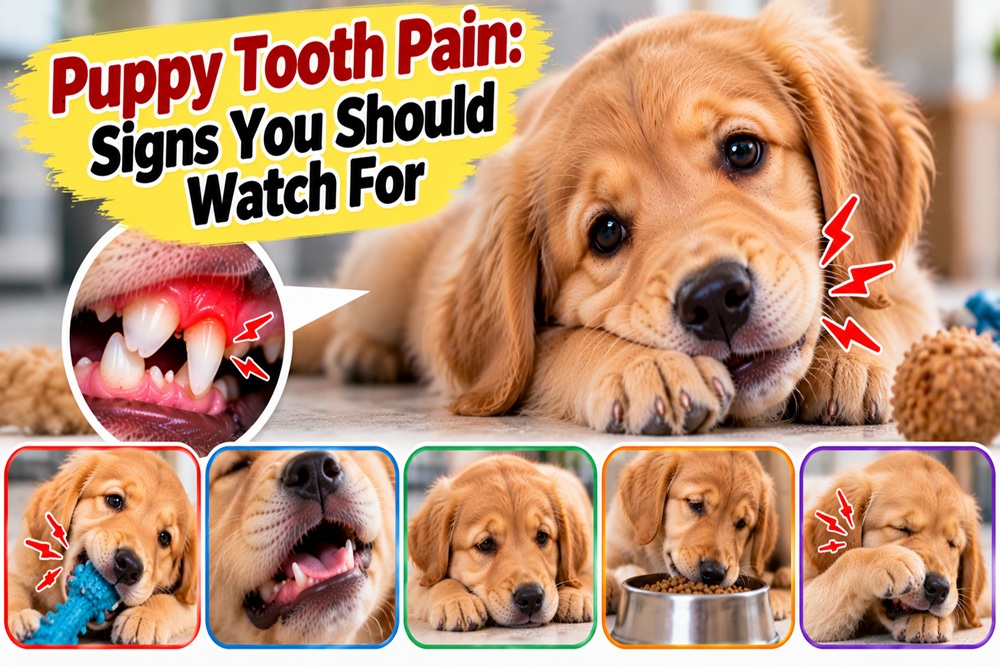
Puppies spend a large part of their early life exploring the world with their mouths. They chew toys, food, furniture, and almost anything they can reach. During this stage, puppies also go through an important period of dental development as their baby teeth are replaced by permanent adult teeth.
Some chewing and mild gum sensitivity can be a normal part of teething. However, significant or persistent mouth pain is not something that should simply be blamed on teething.
A puppy with dental pain may not cry or make an obvious sound. Dogs can sometimes hide oral discomfort, so changes in eating, chewing, drooling, or behavior may be the first clues an owner notices.
Can Puppies Really Have Tooth Pain?
Yes. Puppies can experience pain from several dental problems.
Normal teething can cause temporary mouth discomfort as baby teeth loosen and permanent teeth emerge. During this period, increased chewing is common, and a tiny amount of blood may occasionally be visible on a chew toy when a baby tooth is being replaced.
But pain can also result from problems such as:
- Retained baby teeth
- Inflamed gums
- A broken or fractured tooth
- Abnormal tooth positioning
- A painful bite
- Infection around a tooth
- Other oral inflammation or dental disease
The important thing is to recognize when your puppy’s behavior looks different from normal teething.
What Does Normal Teething Look Like?
Teething is a normal developmental process.
Puppies begin developing their baby teeth during their first weeks of life. At around 3–4 months, baby teeth generally start falling out as permanent teeth begin to appear. By roughly 6 months, most puppies have their permanent teeth. Individual timing can vary.
During normal teething, you may notice:
- Increased chewing
- Greater interest in chew toys
- Mild gum sensitivity
- Slight redness around an emerging tooth
- A tiny spot of blood on a toy
- Finding an occasional baby tooth
These signs are generally temporary.
However, severe pain, persistent bleeding, facial swelling, difficulty eating, or significant behavioral changes deserve veterinary attention.
Signs Your Puppy May Have Tooth Pain
1. Difficulty Eating
One of the most useful signs is a change in the way your puppy eats.
A puppy with mouth pain may hesitate before eating, chew differently, or have trouble picking up food. Some dogs may show less interest in dry food or hard treats because chewing them is uncomfortable.
A puppy that suddenly struggles with food should not automatically be assumed to be a picky eater.
2. Dropping Food While Chewing
Does your puppy pick up food and then let it fall out of the mouth?
Repeatedly dropping food can be a sign that chewing is uncomfortable. Dental pain can make it difficult for a puppy to properly grip or chew food.
Pay particular attention if this behavior is new.
3. Chewing More Slowly
A puppy that normally eats quickly may suddenly begin chewing very carefully.
They may take longer to finish meals, chew only on one side, or repeatedly stop while eating.
These changes can indicate oral discomfort rather than simply a change in appetite.
4. Pawing at the Mouth
Some puppies respond to mouth discomfort by repeatedly rubbing or pawing at their face.
Occasional face rubbing can have many causes, but repeated pawing—especially when combined with drooling, difficulty eating, or visible gum changes—can point toward an oral problem.
5. Excessive Drooling
A little drooling can be normal for some puppies.
However, sudden or excessive drooling can occur when something inside the mouth is painful or irritating. Dental problems are one possible cause.
If the saliva contains blood or your puppy appears uncomfortable, contact your veterinarian.
6. Red or Swollen Gums
Mild gum irritation can occur during teething.
But gums that are intensely red, significantly swollen, repeatedly bleeding, or painful may indicate gingivitis or another oral problem.
Gingivitis involves inflammation of the gum tissue around the teeth and can cause redness, swelling, bleeding, and bad breath.
7. Bad Breath That Seems Unusual
Puppies can have a characteristic “puppy breath” during teething.
However, a new or persistent unpleasant odor from the mouth should not simply be ignored.
Bad breath can accompany gum inflammation and other dental conditions.
8. Reluctance to Chew Toys
Chewing is usually an important part of puppy life.
If a puppy that normally loves chewing suddenly avoids toys, drops them, or appears uncomfortable when chewing, dental pain could be one explanation.
This is particularly important if the change occurs suddenly.
9. Resistance to Having the Face or Mouth Touched
A puppy that normally enjoys having its face handled may suddenly pull away when you touch the muzzle.
Dental pain can make dogs more sensitive to having the mouth or face handled.
Never force your puppy’s mouth open to investigate if they are resisting strongly.
10. Changes in Behavior
Pain does not always look like crying.
A puppy experiencing dental discomfort may become quieter, less playful, or more irritable than usual.
Some dogs show very subtle changes, which is why knowing your puppy’s normal behavior is useful.
What Dental Problems Can Cause Puppy Tooth Pain?
Retained Baby Teeth
Sometimes a baby tooth remains in place after the permanent tooth begins to erupt.
This can result in two teeth occupying the same area. Retained baby teeth can cause crowding, abnormal tooth positioning, food trapping, and discomfort.
If you see a small baby tooth sitting beside a larger adult tooth, have your veterinarian examine it.
Broken or Fractured Teeth
Puppies can damage teeth by chewing inappropriate hard objects or through trauma.
A fractured tooth can be painful, especially when the fracture exposes the sensitive inner part of the tooth.
A broken tooth should therefore be checked by a veterinarian rather than simply watched at home.
Gum Inflammation
Inflamed gums can be uncomfortable.
Redness and swelling around the gumline may be associated with gingivitis or other oral inflammation. More severe oral inflammation can make eating particularly painful.
Abnormal Tooth Position
A tooth that grows in an unusual position can rub against another tooth, the gums, or other soft tissues.
In puppies, retained baby teeth can contribute to abnormal positioning of permanent teeth and bite problems. In some cases, an incorrectly positioned tooth can cause direct trauma inside the mouth.
Dental Infection
Infection around a damaged or diseased tooth can cause significant discomfort.
Possible clues include swelling, bad breath, reluctance to chew, reduced appetite, drooling, or sensitivity around the affected area.
Puppy Teething Pain vs. Dental Problem
It can be difficult for a new puppy owner to know whether a behavior is normal.
Signs More Consistent With Normal Teething
- Increased chewing
- Mild gum sensitivity
- Mild redness around an emerging tooth
- Small amount of blood on a chew toy
- Puppy remains active and playful
- Puppy continues eating and drinking normally
Signs That Need Veterinary Attention
- Refusing food
- Difficulty eating
- Repeatedly dropping food
- Excessive drooling
- Persistent bleeding
- Severe gum swelling
- Facial swelling
- Strong or persistent bad breath
- A broken tooth
- Severe mouth sensitivity
- A retained baby tooth
- Significant change in behavior
These signs can have different causes, so a veterinarian needs to examine the puppy to determine the underlying problem.
What Should You Do If Your Puppy Seems to Have Tooth Pain?
First, don’t try to diagnose the exact cause by forcefully examining the mouth.
Instead, observe your puppy carefully.
Check whether they are eating and drinking normally. Look for obvious swelling, bleeding, a broken tooth, or two teeth occupying the same position if your puppy calmly allows a gentle mouth check.
You can also remove extremely hard chew objects from the puppy’s environment. Hard objects can fracture teeth, so puppies should be given appropriately sized, puppy-safe chew options instead.
Most importantly, do not give human pain medication unless your veterinarian specifically tells you to do so.
When Should You Contact a Veterinarian?
Contact your veterinarian if your puppy has persistent or significant signs of oral pain.
A prompt examination is particularly important if your puppy:
- Refuses to eat
- Has difficulty eating
- Has facial swelling
- Has significant bleeding
- Has a broken tooth
- Has severe drooling
- Shows obvious mouth pain
- Has persistent bad breath
- Has a retained baby tooth
- Becomes unusually quiet or unwell
Some dental problems may look minor from the outside while the painful part of the tooth or tissues is hidden below the gumline. Veterinary examination and, when appropriate, dental X-rays can help identify problems that cannot be seen simply by looking at the tooth.
How Can You Help Prevent Dental Problems?
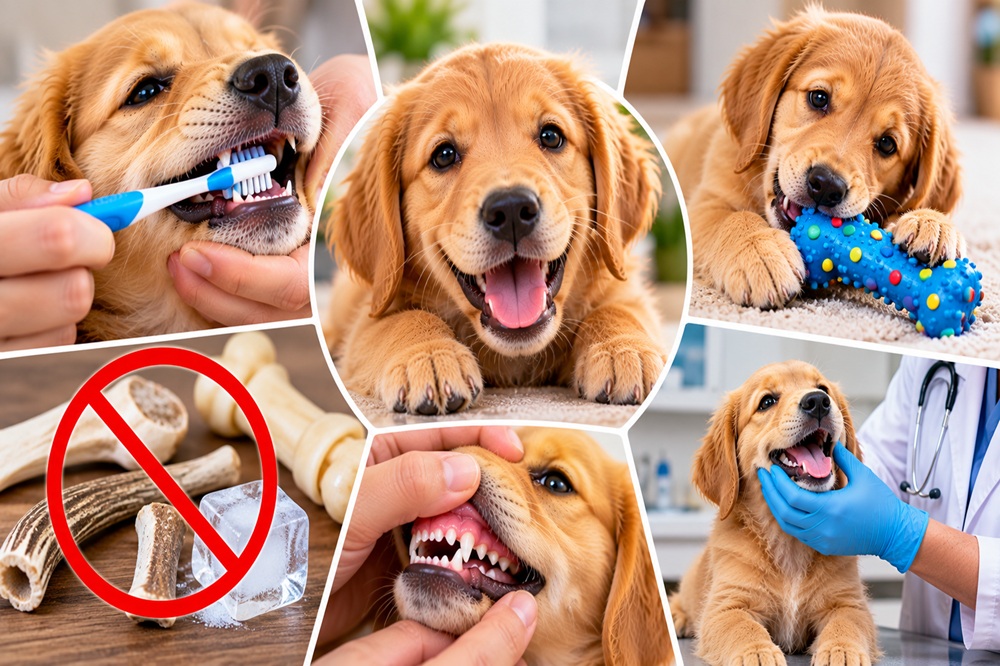
Good dental habits should begin during puppyhood.
Start Gentle Tooth Brushing
Gradually teach your puppy to accept a toothbrush and dog-specific toothpaste.
The goal is to make dental care a normal part of daily life rather than something that suddenly appears when a dental problem develops.
Provide Safe Chew Toys
Choose chew toys designed specifically for puppies.
Avoid extremely hard objects such as bones, antlers, hard nylon items, and ice cubes, which can damage teeth.
Check the Mouth Regularly
During the teething period, gently look at your puppy’s mouth from time to time.
Watch for:
- Retained baby teeth
- Abnormal tooth positions
- Red or swollen gums
- Broken teeth
- Persistent bleeding
- Unusual swelling
Keep Veterinary Dental Checks
Regular puppy examinations give your veterinarian an opportunity to monitor how the teeth are developing.
Early identification of retained teeth or abnormal bite development can be especially useful because some problems are easier to manage while the puppy is still growing.
Final Thoughts
Puppy tooth pain can be easy to miss because dogs do not always show obvious signs of discomfort.
Mild chewing and gum sensitivity can be part of normal teething, but difficulty eating, dropping food, excessive drooling, pawing at the mouth, swollen gums, bad breath, broken teeth, or major behavior changes should not automatically be dismissed as teething.
Pay attention to changes in your puppy’s normal eating and chewing habits. If something seems painful, unusual, or persistent, a veterinary examination is the safest way to find the cause.
Good dental care during puppyhood can also make it easier to identify problems early and establish healthy oral-care habits for the future.