Have you noticed that your adult dog is slowly gaining weight even though you haven’t changed their food very much?
Weight gain in dogs can happen gradually, so it is easy to overlook. A few extra treats, less daily activity, larger food portions, or even an underlying health problem can contribute to weight gain over time.
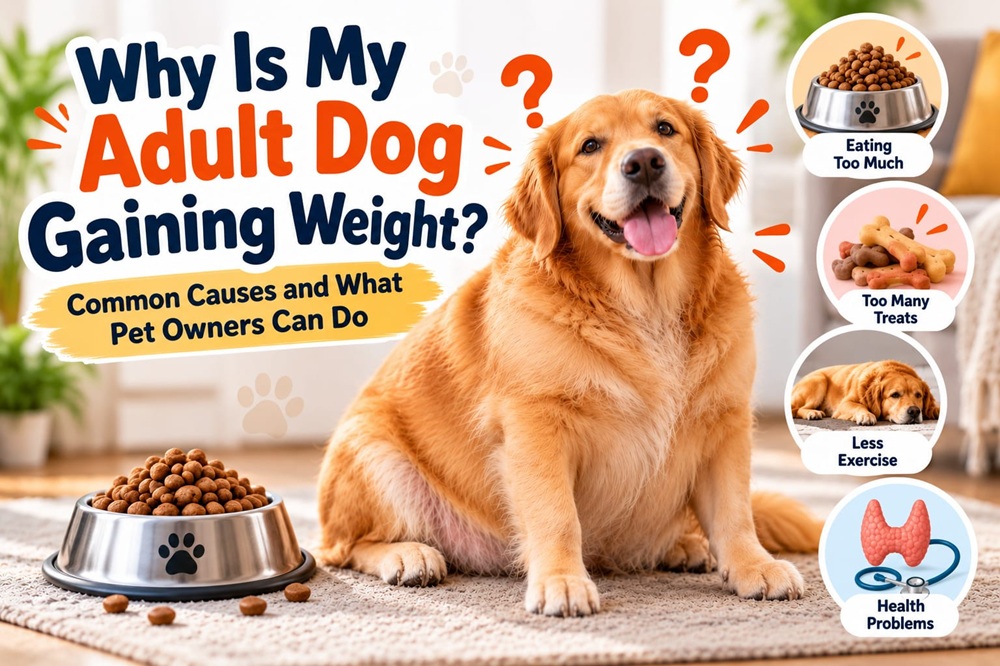
Maintaining a healthy weight is important because excess body weight can put additional stress on your dog’s joints and may be associated with several health problems. If your dog is gaining weight unexpectedly, it is worth finding out why.
How Do I Know If My Dog Is Overweight?
The number on a weighing scale is only part of the picture. Dogs come in different breeds, sizes, and body types, so a healthy weight can vary considerably.
One useful way to assess your dog’s body condition is to look at their body shape.
In a dog at a healthy body condition:
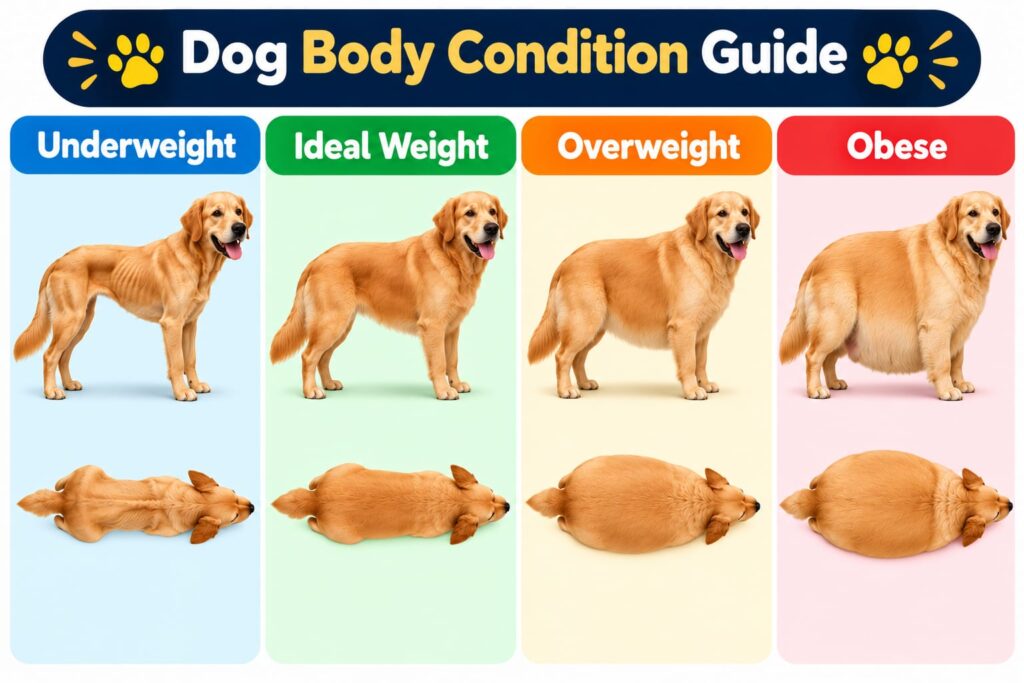
– You should be able to feel the ribs without pressing very hard.
– There should be a visible waist when looking from above.
– The abdomen should generally tuck upward behind the rib cage when viewed from the side.
– There should not be a thick layer of fat covering the ribs.
If you are unsure whether your dog is at a healthy weight, ask your veterinarian to assess their body condition and ideal weight.
Why Is My Adult Dog Gaining Weight?
There are several possible reasons for weight gain in adult dogs. Sometimes it is simply a matter of calories and activity, while in other cases there may be an underlying medical issue.
1. Your Dog May Be Eating Too Much
One of the most common reasons for weight gain is consuming more calories than the body needs.
Food portions can gradually increase without owners realizing it. Measuring food rather than estimating portions can make it easier to control how much your dog eats each day.
Your dog’s calorie needs can also change with age, activity level, size, and health status.
2. Too Many Treats and Table Scraps
Treats are often a major source of extra calories.
A few treats throughout the day may not seem like much, but they can add up over time—especially when combined with regular meals, chews, dental treats, or food from the family table.
Treats should be considered part of your dog’s overall daily calorie intake rather than an addition with no nutritional impact.
3. Your Dog May Not Be Getting Enough Exercise
If your dog’s daily activity has decreased, their calorie needs may also be lower.
Changes in weather, routine, lifestyle, or the amount of time available for walks can reduce activity. Some dogs may also become less active because of discomfort or other health issues.
The appropriate amount of exercise depends on your dog’s breed, age, fitness level, and health, so avoid suddenly increasing exercise in an overweight or unfit dog.
4. Food Portions May Not Match Your Dog’s Needs
Feeding guidelines on dog food packaging are useful starting points, but they do not necessarily represent the exact amount every dog needs.
Two dogs of the same size can have different energy requirements depending on their activity level and individual metabolism.
If your dog is gaining weight despite apparently appropriate portions, discuss their diet with your veterinarian.
5. Neutering or Spaying Can Affect Energy Needs
After spaying or neutering, some dogs may have lower energy requirements and may be more prone to weight gain if their food intake and activity are not adjusted accordingly.
This does not mean every neutered or spayed dog will become overweight. It simply means their calorie needs may change, so monitoring body condition becomes especially important.
6. Reduced Activity Due to Pain or Health Problems
Sometimes weight gain is not simply caused by overeating.
A dog may become less active because of joint discomfort, injury, or another health problem. If activity decreases while food intake remains the same, weight gain can follow.
If your dog has suddenly become less interested in walks, is reluctant to climb stairs, or seems uncomfortable while moving, speak with a veterinarian rather than simply increasing exercise.
7. Certain Medical Conditions Can Cause Weight Changes
In some cases, unexpected weight gain can be associated with an underlying medical condition or medication.
If your dog is gaining weight despite appropriate feeding and activity, particularly if there are other changes such as increased thirst, changes in appetite, lethargy, changes in urination, or changes in their coat or skin, a veterinary examination is appropriate.
A veterinarian can determine whether further testing is needed.
How Can I Help My Adult Dog Maintain a Healthy Weight?
The goal should not be rapid weight loss. A safe weight-management plan should be based on your dog’s individual needs.
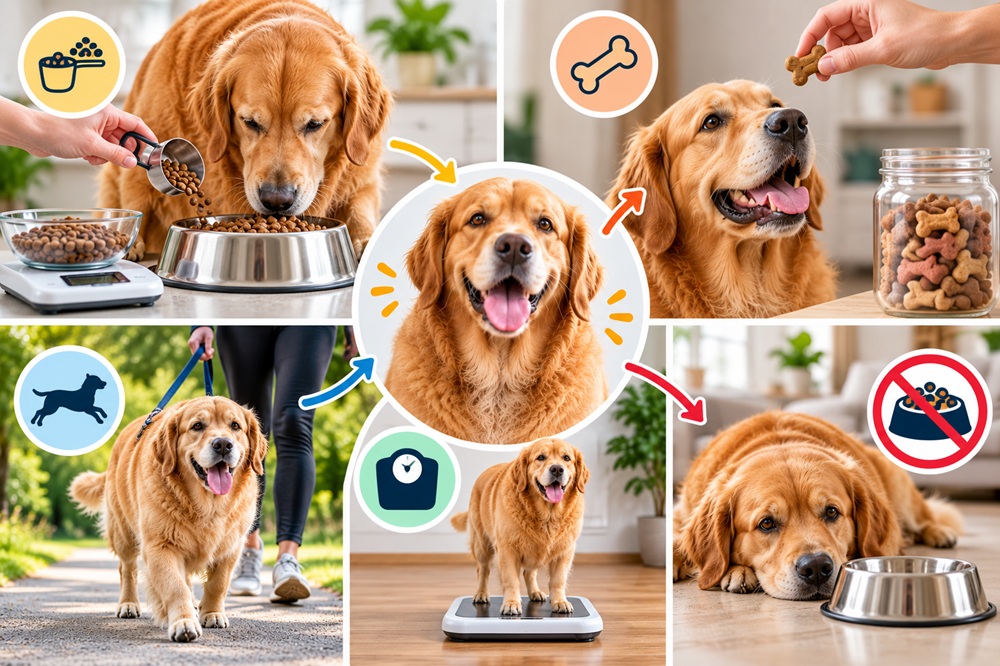
Here are some practical steps:
- Measure Food Portions
Use a measuring cup or, even better, a kitchen scale to measure your dog’s food accurately.
- Keep Track of Treats
Remember to include treats, chews, dental treats, and table food when considering your dog’s daily calorie intake.
- Encourage Appropriate Exercise
Regular walks, play, and other age- and health-appropriate activities can help your dog stay active.
- Monitor Weight Regularly
Regular weighing can help you notice gradual changes before they become significant. Your veterinarian can also monitor your dog’s body condition during routine visits.
- Avoid Crash Diets
Do not drastically reduce your dog’s food without veterinary guidance. Dogs need adequate nutrition, and weight-loss plans should be designed around their individual requirements.
When Should You Contact a Veterinarian?
Talk to your veterinarian if your dog is gaining weight unexpectedly or if you are unsure what their ideal weight should be.
Veterinary advice is particularly important if weight gain happens quickly or is accompanied by other changes in behavior, appetite, thirst, activity, urination, or overall health.
Your veterinarian can assess your dog’s body condition, review their diet and lifestyle, and determine whether an underlying medical problem needs to be considered.
Conclusion
Adult dog weight gain can happen for many reasons, from oversized portions and extra treats to reduced activity or an underlying health issue.
The important thing is to notice gradual changes early. Regularly monitoring your dog’s body condition, measuring food portions, keeping treats under control, and providing appropriate exercise can all support healthy weight management.
If your adult dog continues to gain weight despite reasonable diet and activity habits, don’t simply put them on a strict diet. Talk to your veterinarian to find out what may be causing the weight gain and what approach is appropriate for your dog.
Final Thought by WhohPet
At WhohPet, we believe that healthy weight is about more than appearance. Maintaining an appropriate weight can support your dog’s comfort, mobility, and overall well-being.
Small changes in food, activity, and daily habits can make a meaningful difference over time.
Notice the changes, understand the cause, and help your dog stay healthy at every stage of life.
— Team WhohPet