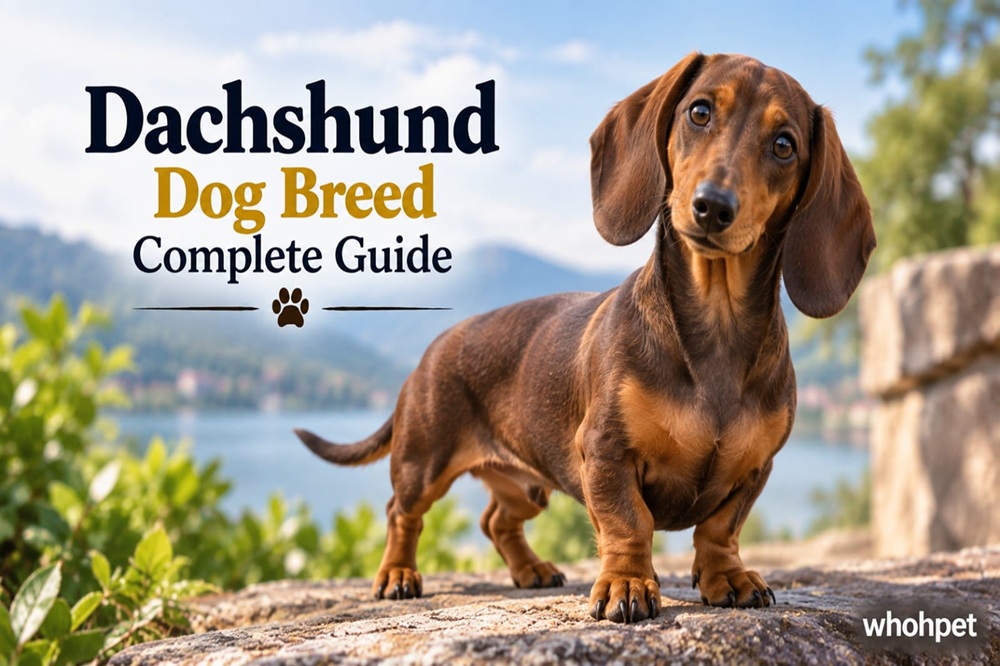
The Dachshund is a small dog with a very unique body shape. It has a long body, short legs, a long nose, and a confident personality. Because of its unusual shape, many people lovingly call it a “sausage dog” or “wiener dog.”
But the Dachshund is much more than its cute appearance. It was originally developed as a hunting dog and has a strong, brave, and active nature. Today, many Dachshunds live as family pets and enjoy spending time with their owners.
Dachshunds can be loving, playful, curious, and very entertaining. At the same time, they can be stubborn and independent. Good training, proper exercise, healthy food, and careful handling are important for keeping a Dachshund happy and healthy.
History and Origin
The Dachshund comes from Germany. Its name comes from German words that are connected with badgers and dogs. The breed was developed to help hunters search for animals that lived in underground burrows.

Its long body and short legs were useful for moving through narrow spaces. The Dachshund also had a strong sense of smell and a brave attitude.
Over time, different sizes and coat types were developed. Some Dachshunds have smooth coats, while others have long or wire-haired coats.
Although the breed was originally used for hunting, modern Dachshunds are mostly companion dogs. Their funny appearance and strong personality have made them popular in many countries.
Physical Appearance
The Dachshund is easy to recognize because of its long body and short legs. Its body is usually low to the ground, while its chest can be fairly deep.

There are different Dachshund sizes, including standard and miniature types. Their coat can be smooth, long-haired, or wire-haired.
They can have many coat colors and patterns, including red, black and tan, chocolate, cream, and combinations of different colors.
Their ears are usually long and soft, and their tail is fairly long. Their small legs may look delicate, but the Dachshund is a strong and active little dog.
Because of its long back, owners should take special care when the dog jumps from high furniture or uses stairs frequently.
Personality and Temperament
Dachshunds are often confident and curious dogs. They like to explore their surroundings and may become very interested in new smells and sounds.
They can form a strong bond with their owners and often enjoy staying close to their family. Some Dachshunds can be very playful and love toys and games.
However, they can also be stubborn. If they do not understand why they should follow a command, they may decide to do something else.
They may bark when they see strangers, hear unusual sounds, or become excited. Early training can help control unwanted barking.
Socialization is also important. Introducing a Dachshund to different people, friendly dogs, sounds, and places from a young age can help it become more comfortable in different situations.
Exercise Needs

The Dachshund is small, but it still needs regular exercise. Daily walks and playtime can help keep its body and mind active.
Short walks are usually a good choice. Indoor games can also provide useful activity, especially when the weather is too hot or rainy.
Dachshunds enjoy activities that allow them to use their nose. Simple scent games, finding toys, and searching for small treats can give them mental stimulation.
However, exercise should be balanced. Because of their long backs, Dachshunds should not be encouraged to make repeated high jumps or take part in activities that put too much stress on the spine.
Training
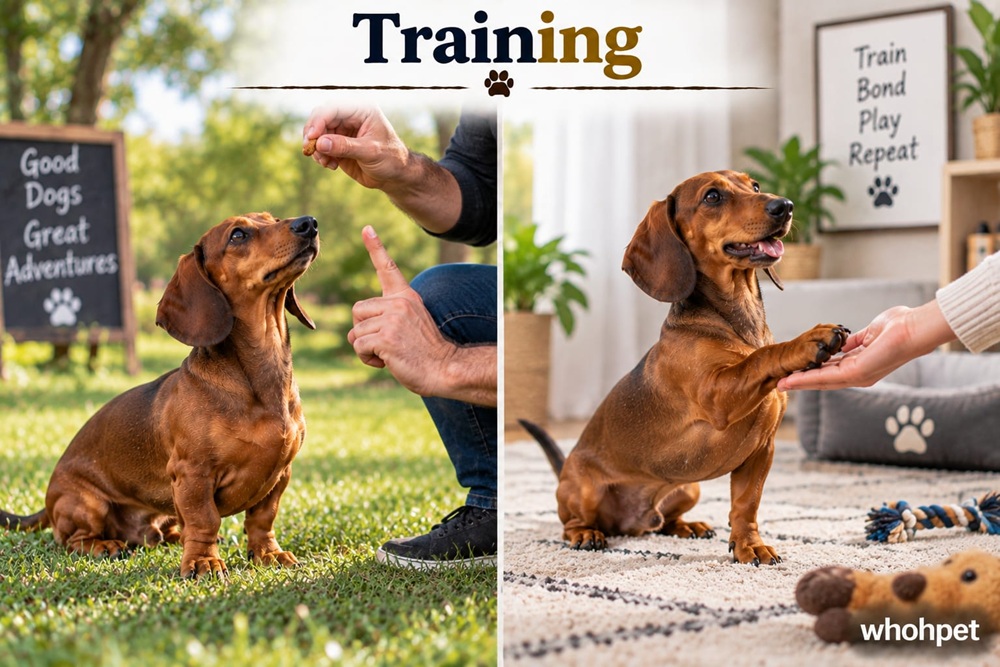
Training a Dachshund requires patience and consistency. They are intelligent dogs, but their independent nature can sometimes make training challenging.
Start with simple commands such as “sit,” “stay,” “come,” and “leave it.” Keep training sessions short and positive.
Small treats, praise, and play can encourage good behavior. Avoid harsh training methods because they can make the dog scared or less willing to learn.
House training may also require patience. Taking the dog outside on a regular schedule can help it learn the correct routine.
Because Dachshunds can be vocal, teaching a quiet command can also be useful. Early training is usually easier than trying to change unwanted habits later.
Grooming
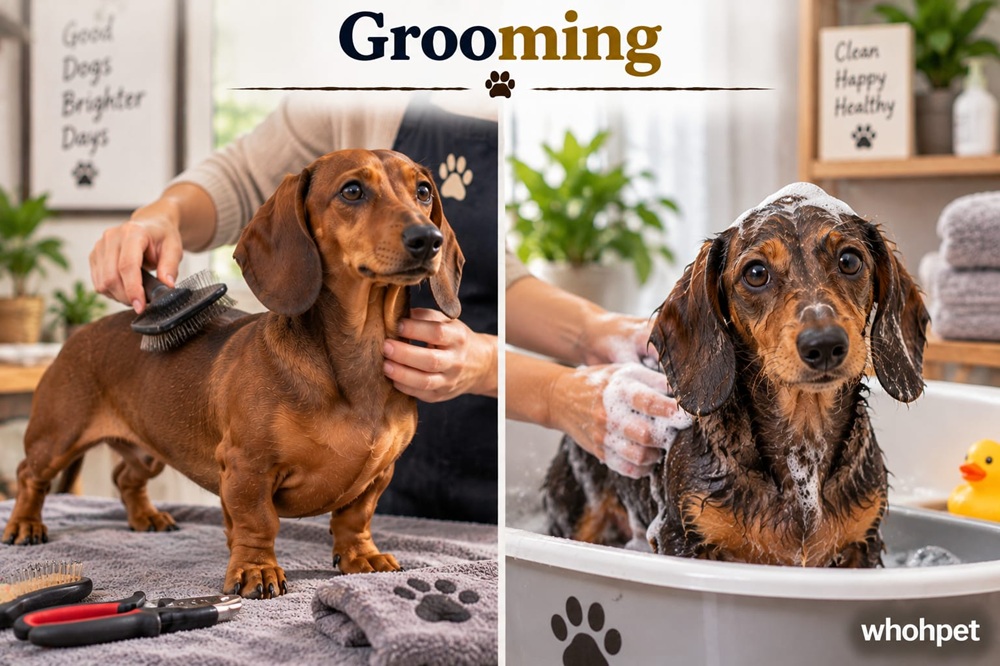
Dachshund grooming depends on its coat type.
Smooth-haired Dachshunds usually need simple grooming. Regular brushing can remove loose hair and keep the coat clean.
Long-haired Dachshunds need more brushing because their longer coat can develop tangles, especially around the ears, legs, and tail.
Wire-haired Dachshunds have a rougher coat and may need regular brushing and occasional coat care.
All Dachshunds need basic care such as nail trimming, ear cleaning, and dental care.
Their long ears should be checked regularly because dirt and moisture can sometimes collect inside them.
Feeding

A Dachshund needs a balanced diet that matches its age, size, and activity level.
Puppies need food that supports growth, while adult dogs need a diet that helps maintain healthy weight and muscles. Older Dachshunds may have different nutritional needs.
Portion control is very important. Dachshunds can gain weight easily if they eat too much or do not get enough activity.
Extra weight can put additional stress on their long back and joints. Treats should therefore be given in moderation.
Always provide clean drinking water. Avoid giving dogs foods that are dangerous for them, such as chocolate, grapes, raisins, onions, garlic, and foods containing xylitol.
Common Health Concerns
One of the biggest health concerns associated with Dachshunds is back problems. Their long body and short legs can make their spine more vulnerable to injury.
Owners should try to reduce situations where the dog repeatedly jumps from beds, sofas, or other high places.
Some Dachshunds may also develop joint problems, dental issues, obesity, or certain eye conditions.
Regular veterinary checkups are important because early detection can help with many health problems.
Keeping the Dachshund at a healthy weight, providing suitable exercise, and handling it carefully can support its overall health.
If a Dachshund suddenly has trouble walking, appears painful, or shows unusual weakness, veterinary attention should be sought promptly.
Dachshund and Children
Dachshunds can become loving family pets, but children should learn how to handle them gently.
Because of their long backs, rough play, pulling, lifting incorrectly, or dropping the dog can cause injury.
Young children should always be supervised when playing with a Dachshund. They should learn not to pull its ears or tail and should give the dog space when it is eating or sleeping.
With proper socialization and gentle handling, many Dachshunds can enjoy being part of a family with children.
Is Dachshund Right for Your Family?
A Dachshund can be a great companion for people who want a small dog with a big personality.
It can live comfortably in many homes, including apartments, as long as it receives daily exercise and mental stimulation.
However, it is not a completely low-maintenance dog. Owners need to provide training, grooming, proper food, and careful handling.
People who want a very quiet dog may find the Dachshund challenging because some individuals bark frequently. Its independent nature can also require extra patience during training.
If you enjoy a playful, curious, affectionate, and sometimes funny companion, a Dachshund can be a wonderful addition to the family.
Final Thought by Whohpet
The Dachshund may have short legs, but it has a big heart and a strong personality. Its history as a hunting dog has given it courage, curiosity, and determination.

With healthy food, regular exercise, gentle handling, proper training, and lots of love, a Dachshund can become a happy and loyal family companion.
Remember that every Dachshund is an individual. Understanding its needs and giving it the right care can help your little friend enjoy a healthy and comfortable life.
— Final Thought by Whohpet