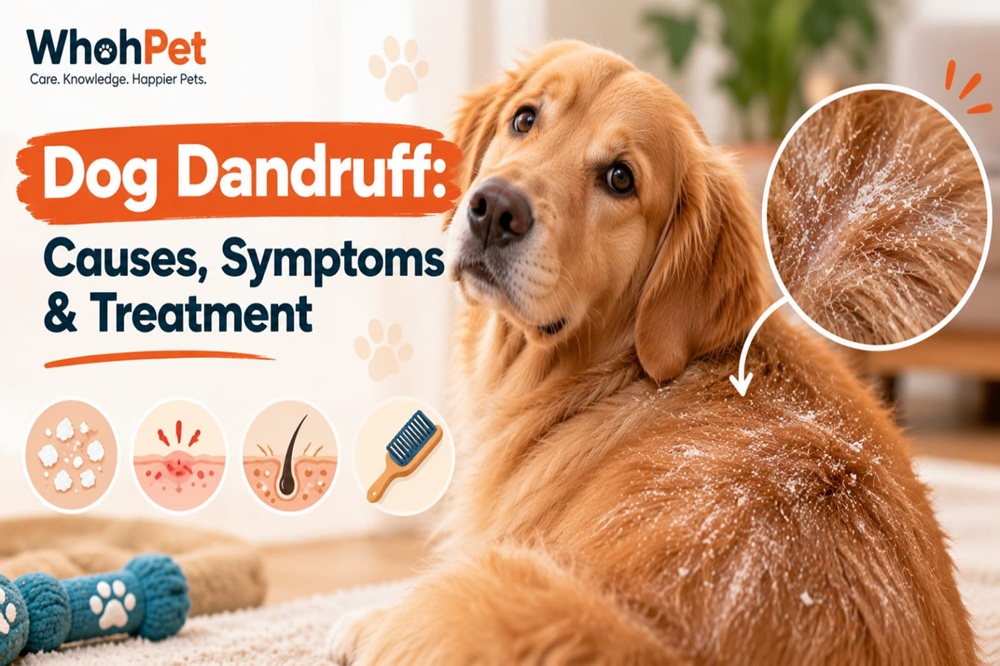
Have you noticed white flakes on your dog’s coat, dry skin, or small flakes around their bedding? You may be dealing with dog dandruff.
Just like humans, dogs can develop flaky skin. But dandruff in dogs is not always caused by simple dryness. It can sometimes be connected to allergies, parasites, skin infections, grooming problems, or an underlying health condition.
The good news is that once you understand what may be causing the flakes, you can take the right steps to help your dog feel more comfortable and keep their skin healthy.
What Is Dog Dandruff?
Dog dandruff happens when dead skin cells build up and shed from your dog’s skin. You may notice small white or grey flakes in the fur, particularly along the back, neck, or other areas of the body.
Some dogs may have dandruff without much discomfort, while others may also experience itching, redness, dry skin, hair loss, or an unpleasant skin odor.
This is why it is important not to assume that every case of dandruff is simply dry skin.
Why Does My Dog Have White Flakes and Dry Skin?
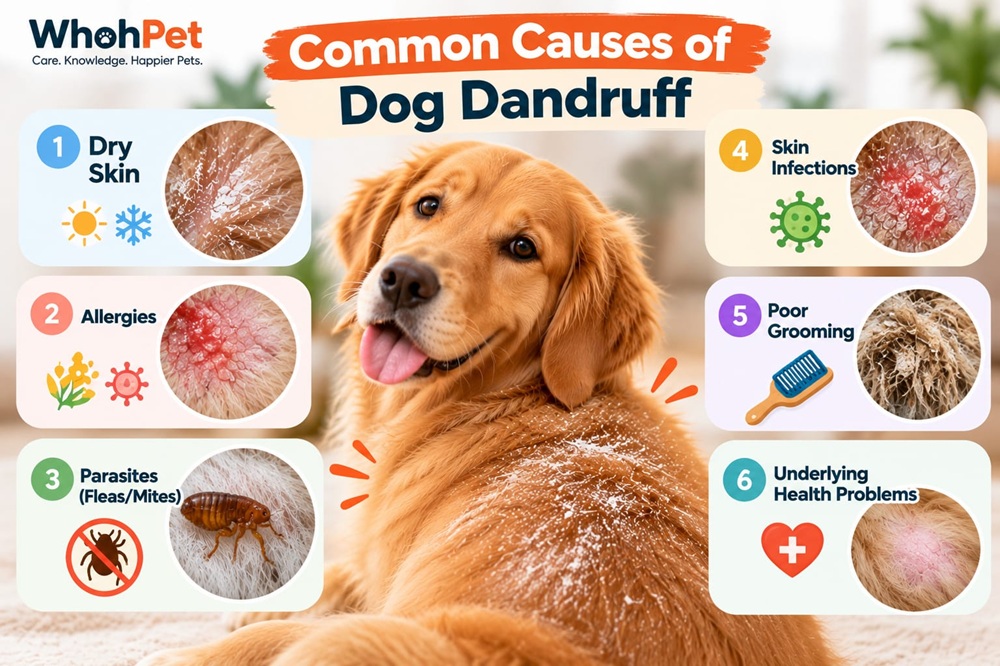
There are several possible reasons your dog may develop dandruff.
- Dry Skin
Dry air, changes in weather, frequent bathing, or using unsuitable grooming products can sometimes contribute to dry, flaky skin.
If your dog’s skin is dry, you may notice white flakes without severe redness or other major skin changes.
- Allergies
Allergies can cause itching and skin irritation in dogs. When a dog repeatedly scratches or licks their skin, the skin can become irritated and flaky.
Allergies may be related to environmental triggers, food, or other substances.
If your dog has both dandruff and constant itching, redness, licking, or recurrent skin problems, an allergy could be contributing to the problem.
- Parasites
Fleas, mites, and other parasites can irritate your dog’s skin and cause excessive scratching.
Some types of mites can cause significant scaling and itching. Therefore, sudden or severe dandruff should not automatically be treated as ordinary dry skin.
- Skin Infections
Certain bacterial or yeast-related skin problems can cause scaling, flakes, redness, itching, and changes in the smell of your dog’s skin.
If dandruff is accompanied by odor, redness, greasy skin, sores, or hair loss, your dog may need a veterinary examination.
- Poor Grooming or Matted Fur
A coat that is not regularly brushed can accumulate dead skin cells, dirt, and debris. Mats can also trap moisture and irritate the skin underneath.
Regular grooming helps you remove loose hair and flakes while giving you an opportunity to notice skin problems early.
- Underlying Skin or Health Problems
In some dogs, persistent dandruff can be associated with an underlying skin or health condition.
If the problem keeps returning despite appropriate grooming and basic skin care, it is worth discussing it with your veterinarian rather than repeatedly treating the flakes themselves.
How Can I Tell If My Dog’s Dandruff Is a Problem?
A few small flakes may not always indicate a serious problem. However, you should pay closer attention if you notice other symptoms along with dandruff.
Look for:
- Excessive scratching
- Frequent licking or biting of the skin
- Red or inflamed skin
- Hair loss
- Scabs or crusting
- Greasy or unusually oily skin
- Bad odor
- Sores or irritated areas
- Changes in your dog’s coat
- Persistent or worsening dandruff
The combination of dandruff + itching + skin irritation is particularly important because it may indicate that something more than simple dry skin is happening.
What Can a Pet Owner Do About Dog Dandruff?
The first step is to look at your dog’s overall skin and coat rather than focusing only on the flakes.
Keep Your Dog’s Coat Clean and Groomed
Regular brushing can help remove loose hair, dead skin cells, and debris from the coat. It also allows you to spot redness, parasites, unusual lumps, or irritated areas earlier.
Avoid Over-Bathing
Bathing too frequently or using unsuitable shampoos may contribute to skin dryness and irritation.
Use grooming products that are appropriate for dogs and follow veterinary advice if your dog has an ongoing skin condition.
Make Sure Your Dog Is Properly Dried
After bathing or swimming, dry your dog’s coat thoroughly. Excess moisture trapped against the skin can contribute to irritation and may create conditions that allow some skin problems to develop.
Follow Parasite Prevention
Fleas and mites can cause significant skin irritation. Follow a veterinarian-recommended flea and tick prevention routine appropriate for your dog.
Don’t Start Random Treatments
It can be tempting to use human dandruff shampoo, oils, creams, or home remedies when you see white flakes.
However, products designed for humans may not be appropriate for dogs, and treating the wrong cause may make the skin problem worse.
If your dog’s dandruff is persistent or accompanied by other symptoms, veterinary advice is a better approach.
When Should You Take Your Dog to the Vet?
Dandruff deserves veterinary attention when it is persistent, severe, or accompanied by other skin problems.
Contact your veterinarian if your dog has:
- Severe or constant itching
- Significant hair loss
- Red or painful skin
- Open sores or wounds
- Scabs or crusting
- A strong or unusual odor
- Greasy or very irritated skin
- Repeated skin infections
- Dandruff that keeps coming back
- Symptoms that are getting worse
A veterinarian can examine your dog’s skin and coat and determine whether allergies, parasites, infection, or another condition may be responsible.
How Can You Prevent Dog Dandruff?
You may not be able to prevent every case of dandruff, but good routine care can help support healthy skin.
Try to:
- Brush your dog regularly
- Use appropriate dog grooming products
- Avoid unnecessary or overly frequent bathing
- Keep your dog properly dried after bathing or swimming
- Maintain veterinarian-recommended parasite prevention
- Check your dog’s skin regularly
- Pay attention to changes in scratching, licking, or grooming behavior
- Address recurring skin problems instead of repeatedly treating only the visible flakes
The Bottom Line
Seeing white flakes on your dog’s coat can be concerning, but dandruff does not always mean something serious is wrong.
However, persistent dandruff, especially when combined with itching, redness, hair loss, odor, or sores, should not be ignored. These signs can point to allergies, parasites, infections, or another underlying skin problem.
The best solution is to look beyond the flakes and understand why your dog’s skin is becoming dry or irritated in the first place.
Your dog’s skin can tell you a lot about their overall well-being. Regular grooming, careful observation, appropriate parasite prevention, and veterinary care when needed can help keep their skin healthy and comfortable.
Final Thought by WhohPet
At WhohPet, we believe that healthy skin is an important part of a happy pet.
A few white flakes may seem like a small issue, but changes in your dog’s skin and coat are worth paying attention to. Notice the flakes, look for the cause, and don’t ignore the signs that your dog may need help.
Because your dog can’t tell you what’s wrong, your attention can make all the difference.
— Team WhohPet