
The Boxer is a strong, athletic, and affectionate dog known for its playful personality, expressive face, and remarkable loyalty. Originally developed as a working dog, the Boxer has become a popular family companion because of its intelligence, protective nature, and love for people. Despite its muscular appearance, a Boxer can be cheerful, goofy, and surprisingly gentle with its family.
History of the Boxer

The Boxer originated in Germany and is believed to have descended from older hunting and working breeds, including the Bullenbeisser. Early Boxers were used for hunting, guarding, and handling livestock. Their strength, agility, and determination made them valuable working dogs.
Over time, breeders focused on developing a dog that was not only capable of working but also loyal and manageable around people. This helped shape the modern Boxer into the energetic yet affectionate breed we know today. The breed eventually became popular in many countries as both a working dog and family companion.
Physical Appearance
The Boxer has a powerful, athletic body with a short, smooth coat. Its square-shaped head, broad muzzle, muscular shoulders, and strong legs give it an unmistakable appearance. Boxers commonly have fawn or brindle coats, often with white markings on the chest, face, or feet.

Adult Boxers generally stand around 21–25 inches tall and may weigh approximately 50–80 pounds, depending on sex, genetics, and overall build. Their short coat is relatively easy to maintain, although regular brushing can help manage shedding.
Boxer Personality and Temperament
One of the Boxer’s biggest attractions is its personality. Boxers are generally affectionate, social, playful, and strongly attached to their families. They often enjoy being involved in whatever their owners are doing rather than spending long periods alone.
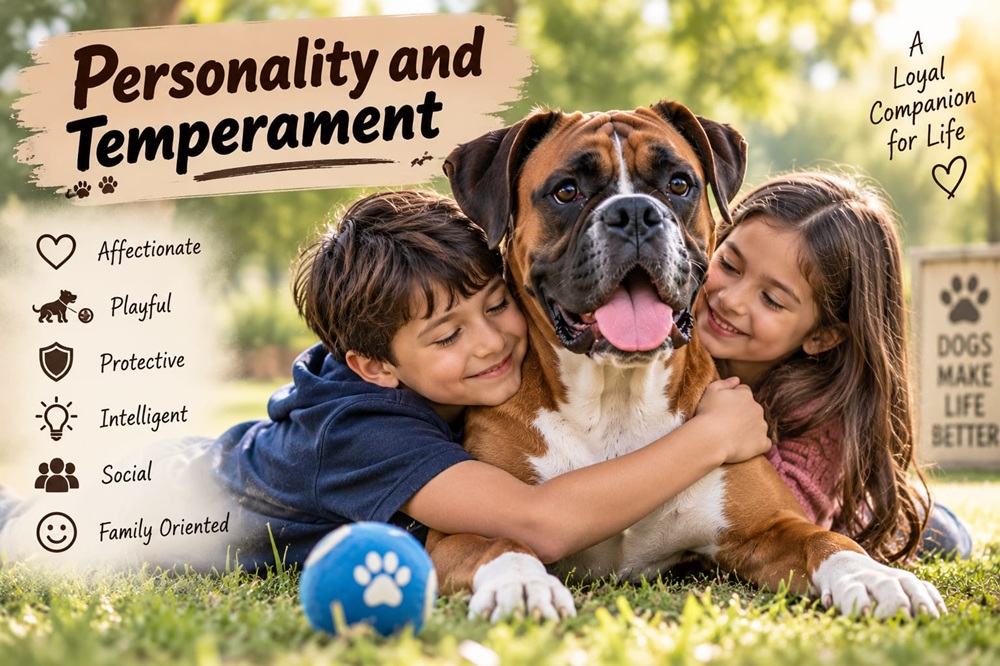
Boxers can also be naturally protective. Their alertness and confidence can make them good watchdogs, but proper socialization is important so they learn how to behave calmly around strangers, visitors, and other animals.
Although they look serious, many Boxers retain a puppy-like attitude well into adulthood. They can be energetic, curious, and wonderfully goofy.
Exercise Needs
The Boxer is an energetic breed that needs regular physical activity. Daily walks are important, but they may not always be enough. Games of fetch, supervised outdoor play, running, and obedience activities can help keep a Boxer physically and mentally satisfied.
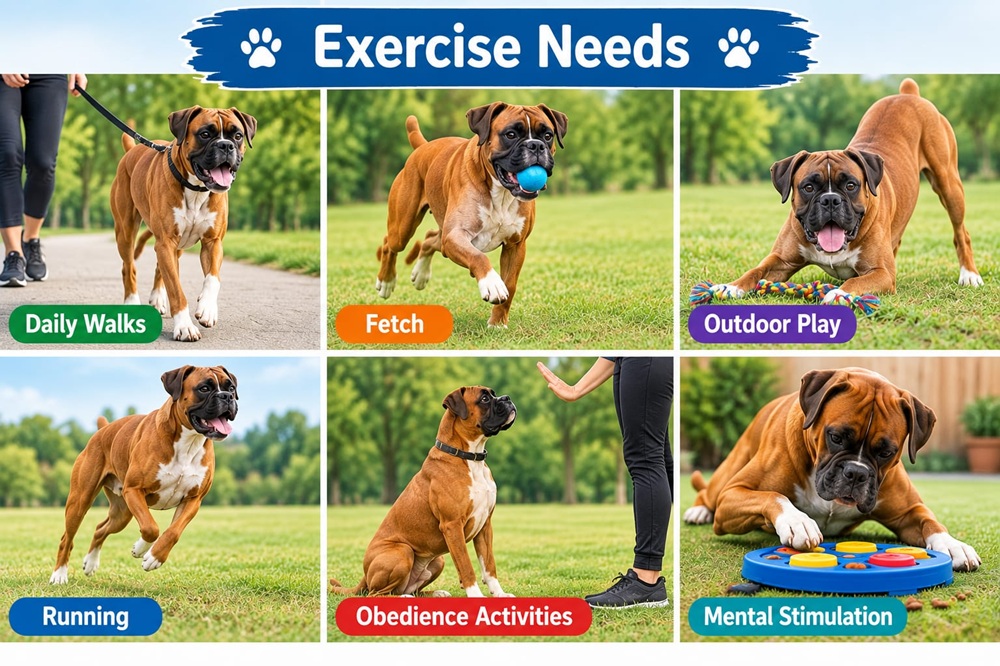
A bored Boxer may become restless and look for its own entertainment, which can sometimes lead to chewing, jumping, or other unwanted behaviors. Exercise should always be appropriate for the dog’s age and fitness level, particularly during puppyhood and hot weather.
Training a Boxer
Boxers are intelligent and capable of learning many commands, but their energetic nature can sometimes make them easily distracted. Training works best when sessions are short, positive, and consistent.
Reward-based training can encourage good behavior while building trust between the dog and its owner. Basic commands such as sit, stay, come, leave it, and polite leash walking provide an excellent foundation.

Early socialization is equally important. Introducing a Boxer gradually to different people, environments, sounds, and well-behaved dogs can help develop confidence and good manners.
Grooming and Coat Care
Grooming a Boxer is relatively simple compared with breeds that have long or thick coats. Its short coat benefits from regular brushing to remove loose hair and help keep the skin and coat healthy.

Bathing is generally needed when the dog becomes dirty or develops an odor. Owners should also check the ears regularly, trim the nails when necessary, and maintain good dental hygiene.
Because Boxers have short coats, owners should also pay attention to extreme temperatures. Their skin can be exposed to strong sunlight, while cold weather may be uncomfortable for some individuals.
Feeding and Nutrition
A Boxer needs a balanced diet that matches its age, size, activity level, and individual health needs. Puppies have different nutritional requirements from adult dogs, while highly active Boxers may need adjustments based on their energy expenditure.

Portion control is important because unnecessary weight gain can place additional stress on the joints and reduce overall fitness. Fresh, clean water should always be available.
Instead of choosing food based only on marketing claims, owners should look for a nutritionally complete diet and discuss specific dietary requirements with a veterinarian.
Common Health Concerns
Like many purebred dogs, Boxers can be predisposed to certain health conditions. Potential concerns include heart problems, hip and joint issues, allergies, thyroid disorders, digestive problems, and certain cancers.

Regular veterinary examinations can help identify health changes early. Responsible breeders also perform appropriate health screening to reduce the risk of inherited conditions.
Maintaining a healthy weight, providing appropriate exercise, feeding a balanced diet, and keeping up with preventive veterinary care can all contribute to a Boxer’s long-term wellbeing.
Boxer and Hot Weather
Hot weather deserves special attention with Boxers. Their relatively short muzzle can make cooling themselves less efficient than dogs with longer muzzles, particularly during intense exercise or high humidity.
During hot days, walks and exercise are best scheduled during cooler parts of the day. Fresh water and access to shade are essential, while strenuous activity should be avoided during extreme heat.
Signs such as excessive panting, weakness, confusion, vomiting, or collapse can indicate a serious heat-related problem. If heatstroke is suspected, immediate veterinary attention is important.
Living With a Boxer
A Boxer can adapt to different types of homes as long as its physical and mental needs are met. A house with a secure outdoor area can be convenient, but having a yard does not replace daily exercise, training, and interaction.
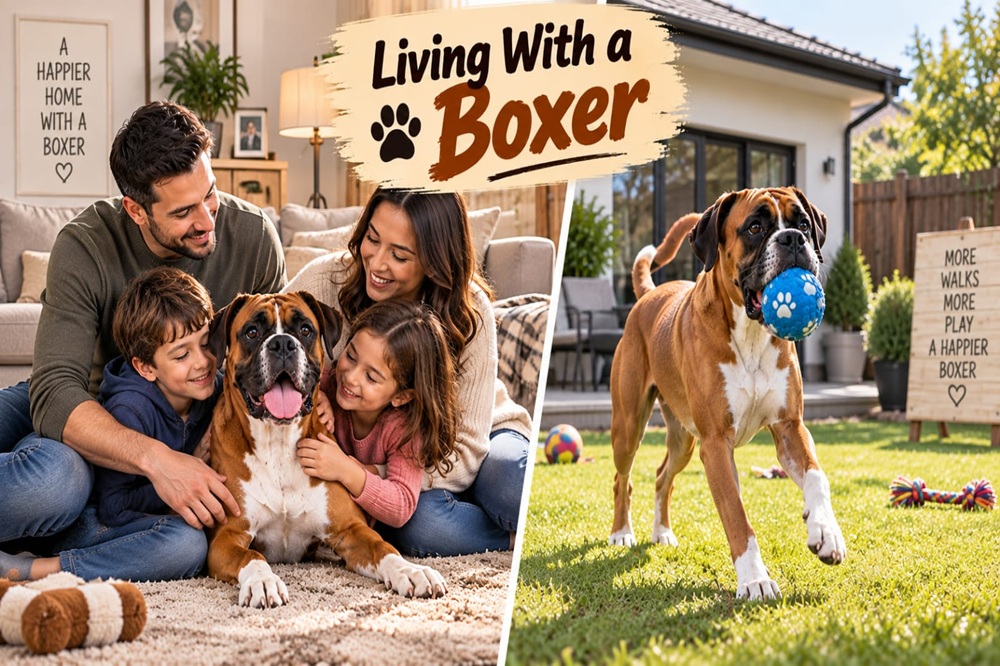
Boxers generally enjoy spending time with their people and may become unhappy if regularly left alone for long periods. They can be wonderful companions for active owners who enjoy walks, games, training, and outdoor activities.
Families with children should teach them how to interact respectfully with dogs. Because Boxers can be enthusiastic and energetic, they may accidentally knock over small children during excited play.
Is a Boxer Right for Your Family?
A Boxer may be an excellent choice for an active family looking for a loyal, playful, protective, and affectionate companion. However, the breed also requires commitment from its owners.
Before choosing a Boxer, consider whether your family has enough time for daily exercise, training, socialization, companionship, grooming, and veterinary care. If you prefer a very calm dog that requires little activity, a Boxer may not be the ideal match.
For active households willing to provide structure, attention, and responsible care, however, the Boxer can become an incredibly devoted member of the family.
Final Thoughts by Whohpet
The Boxer is more than just a strong and athletic dog—it is a loyal, playful, and loving companion that enjoys being part of the family. With proper training, regular exercise, balanced nutrition, and consistent care, a Boxer can become a wonderful lifelong friend.

However, this breed is best suited to families who can provide enough time, activity, attention, and companionship. If you are looking for an energetic dog with a protective heart and a fun-loving personality, the Boxer could be a fantastic choice for your home.
At Whohpet, we believe choosing the right dog is about finding a breed that matches your lifestyle, not simply choosing the one you find cutest. 🐾