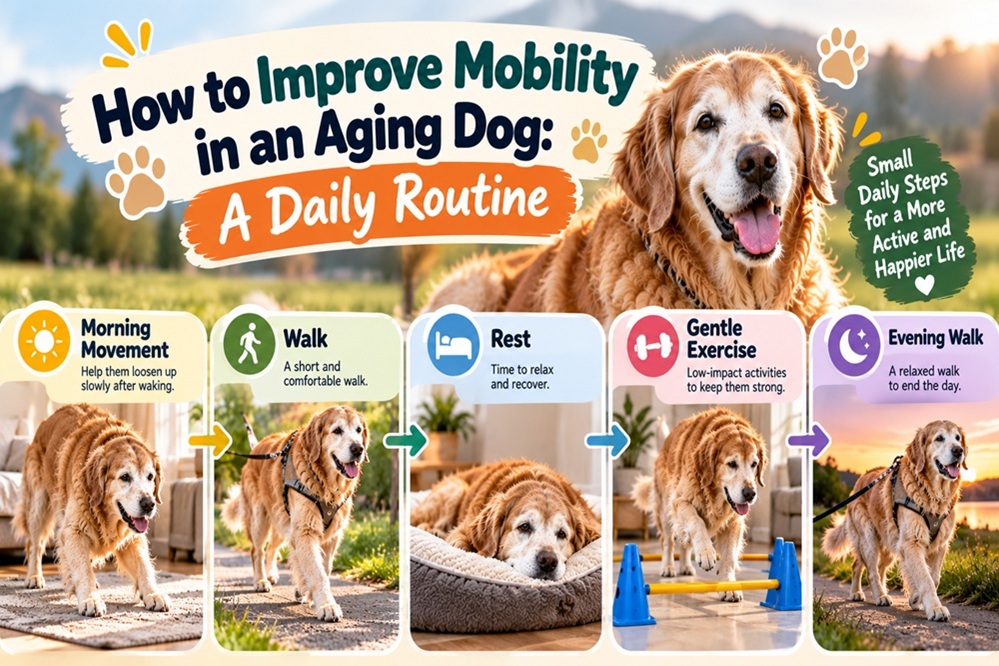
As dogs get older, they may become slower, stiffer, or less willing to move. However, aging does not mean your dog has to stop being active.
A consistent, low-impact daily routine can help an aging dog stay mobile, maintain muscle strength, and enjoy everyday activities. Veterinary guidance emphasizes adjusting exercise to the dog’s physical condition and using short, consistent, low-impact activity rather than pushing an older dog beyond their comfort level.
The goal isn’t to make your senior dog exercise like a young dog. The goal is to keep them moving comfortably and consistently.
Why a Daily Mobility Routine Matters
Regular movement can help senior dogs maintain muscle strength and joint flexibility while also providing mental stimulation.
Dogs with arthritis or other mobility problems may actually become less active because movement feels uncomfortable. Unfortunately, too little activity can contribute to muscle weakness and further loss of mobility.
A controlled routine can help create a balance between movement and rest. For dogs with osteoarthritis, veterinary mobility resources recommend routine, stage-appropriate exercise while avoiding excessive joint stress or additional injury.
A Simple Daily Routine for an Aging Dog
Every senior dog is different, so use this schedule as a starting point rather than a strict prescription.
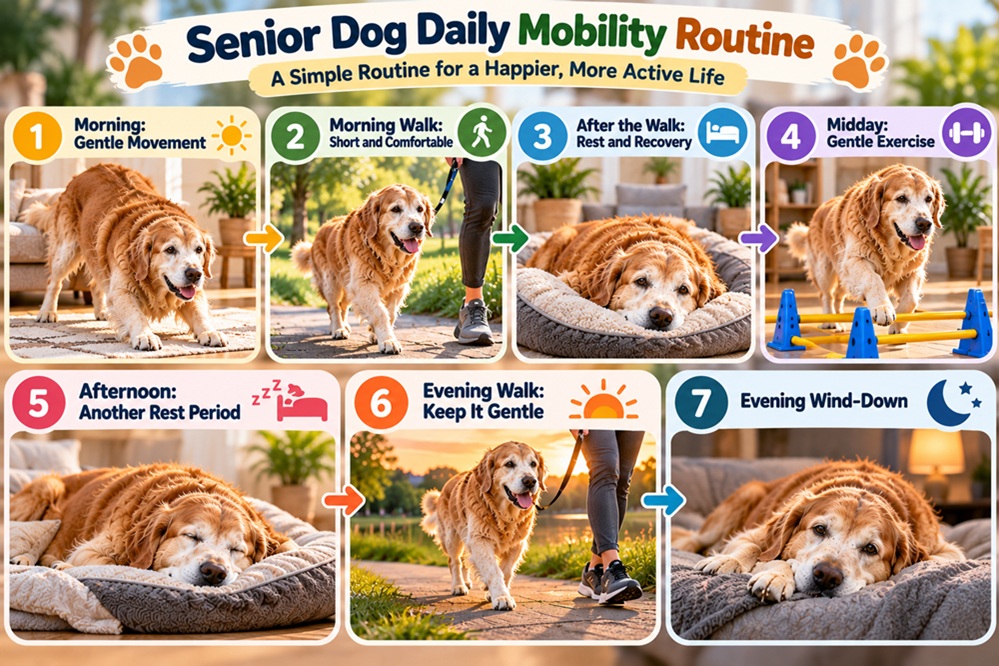
1. Morning: Gentle Movement
After your dog wakes up, give them a few minutes to move around slowly.
Don’t immediately encourage fast walking, running, jumping, or climbing stairs.
Instead:
- Let your dog stand up at their own pace.
- Allow a few slow steps around the house.
- Encourage gentle movement on a non-slip surface.
- Give them time to loosen up after sleeping.
If your dog regularly struggles to stand, appears painful, or seems unusually stiff in the morning, discuss it with your veterinarian.
2. Morning Walk: Short and Comfortable
Once your dog has had a chance to loosen up, take them for a gentle walk.
For a senior dog, shorter and more frequent walks may be easier than one long walk. Veterinary mobility guidance supports controlled, stage-appropriate exercise, with shorter sessions potentially being more appropriate for dogs with more advanced osteoarthritis.
During the walk:
- Choose a comfortable pace.
- Prefer level, stable surfaces.
- Avoid repeated jumping.
- Limit steep hills if they cause difficulty.
- Allow plenty of sniffing breaks.
- Watch for slowing down or discomfort.
The walk doesn’t have to be fast to be beneficial.
3. After the Walk: Rest and Recovery
After the morning walk, allow your dog plenty of time to rest.
Provide:
- A comfortable orthopedic or supportive bed
- Easy access to water
- A quiet place to relax
- Non-slip flooring around the resting area
Avoid immediately following the walk with another demanding activity.
Rest is an important part of a senior dog’s daily routine, particularly if they have arthritis or reduced stamina.
4. Midday: Gentle Exercise
Later in the day, add a small amount of gentle activity.
Depending on your dog’s abilities, this could include:
- Slow indoor walking
- Gentle movement between rooms
- Controlled sit-to-stand exercises
- Easy food puzzles
- Calm interactive play
- Short rehabilitation exercises recommended by a professional
For dogs with significant mobility problems, a veterinarian or qualified rehabilitation professional can help create an individualized exercise program. Rehabilitation may include therapeutic exercise and, when appropriate, hydrotherapy.
Keep It Easy
The goal is controlled movement, not exhaustion.
Stop or reduce the activity if your dog becomes uncomfortable, starts limping, refuses to continue, or shows other unusual signs.
5. Afternoon: Another Rest Period
Senior dogs often need more recovery time than younger dogs.
Let your dog relax after their gentle activity. Make sure their bed is easy to reach and that they don’t have to navigate slippery floors or difficult stairs to get there.
You can also use this time for mental enrichment, such as:
- Sniffing games
- Food puzzles
- Gentle grooming
- Calm interaction with family
Mental stimulation can keep your senior dog engaged without placing unnecessary stress on their joints.
6. Evening Walk: Keep It Gentle
An evening walk can provide another opportunity for controlled movement.
Keep it relaxed and allow your dog to determine a comfortable pace.
You don’t need to make the evening walk longer simply because your dog seems energetic earlier in the day. Watch how they are moving and how they recover afterward.
For some senior dogs, two or three short walks can be more manageable than one long walk. The ideal schedule depends on the individual dog.
7. Evening Wind-Down
After the evening walk, allow your dog to settle down comfortably.
Check how they are moving:
- Are they walking normally?
- Are they more stiff than usual?
- Are they limping?
- Are they having trouble getting onto their bed?
- Do they seem unusually tired?
- Are they reluctant to move?
These observations can help you recognize patterns in your dog’s mobility.
AAHA notes that videos of a senior pet moving at home can also be useful when discussing mobility changes with a veterinarian.
Sample Senior Dog Mobility Schedule
| Time | Activity |
| Morning | Gentle movement after waking |
| Morning | Short, comfortable walk |
| After walk | Water + rest |
| Midday | Gentle exercise or rehabilitation activity |
| Afternoon | Rest and mental enrichment |
| Evening | Short, relaxed walk |
| Night | Comfortable rest and mobility check |
Signs You’re Doing Too Much
Your senior dog may be doing too much if you notice:
- Excessive or unusual fatigue
- Increased stiffness after activity
- Limping
- Reluctance to continue walking
- Difficulty getting up afterward
- Signs of discomfort
- A noticeable decrease in activity later in the day
If these signs repeatedly occur, reduce the activity and speak with your veterinarian.
A sudden or significant change in mobility should not simply be dismissed as normal aging. Chronic pain can be subtle in senior pets, and early assessment can help identify problems and guide treatment.
Make the Routine Easier on Your Dog’s Joints
Exercise is only one part of supporting mobility.
You can also make everyday movement easier by:
- Using non-slip rugs or mats
- Providing a supportive bed
- Keeping food and water easily accessible
- Using ramps when appropriate
- Limiting difficult stairs
- Keeping walking areas free of clutter
- Maintaining a healthy body weight
Environmental modifications such as ramps, non-slip surfaces, appropriate beds, and mobility aids may improve safety and quality of life for senior dogs with mobility challenges.
Don’t Force Movement
One of the most important rules for senior-dog exercise is to avoid forcing your dog to continue when they are uncomfortable.
Your dog may have good days and difficult days. Their routine may need to change depending on their energy level, joint comfort, weather, and overall health.
Consistency is more important than intensity.
When to Talk to Your Veterinarian
Talk to your veterinarian if your dog develops:
- Persistent stiffness
- Repeated limping
- Difficulty standing
- Reluctance to walk
- Sudden changes in mobility
- Trouble climbing stairs
- Difficulty getting comfortable
- Signs of pain
- A significant reduction in normal activity
Senior dogs benefit from regular veterinary monitoring, and mobility changes can sometimes be related to arthritis or other medical conditions. AAHA recommends regular senior wellness care and emphasizes early assessment and management of mobility problems.
Final Thoughts by Whohpet
At Whohpet, we believe senior-dog mobility is about creating a routine that fits your dog’s changing needs.
A gentle morning movement session, a comfortable walk, plenty of rest, appropriate exercise, and a relaxed evening walk can provide a simple structure for staying active without unnecessary strain.
Remember, your senior dog doesn’t need to move like they did when they were young. They simply need opportunities to move comfortably, safely, and consistently.
With patience, observation, and the right support, small daily movements can become an important part of helping your aging dog enjoy a more comfortable and active life.
Because every senior dog deserves to keep moving, exploring, and enjoying life—one gentle step at a time.
— Whohpet