Keeping a senior dog active is an important part of supporting their overall health, strength, and quality of life. But as dogs age, their joints may become less flexible, and activities that were once easy can become uncomfortable.

The goal isn’t to make an older dog exercise like a puppy. Instead, it’s about finding the right balance between gentle movement, adequate rest, and joint-friendly activities.
With a few simple changes, you can help your senior dog stay active without putting unnecessary stress on their joints.
Why Is Exercise Important for Senior Dogs?
As dogs get older, they naturally tend to become less active. However, too little movement can contribute to muscle loss, weight gain, stiffness, and reduced mobility.
Appropriate physical activity can help senior dogs maintain:
- Muscle strength
- Flexibility and mobility
- A healthy body weight
- Balance and coordination
- Mental stimulation
- Overall quality of life
The amount and type of exercise should depend on your dog’s age, breed, fitness level, and health condition.
1. Choose Shorter, More Frequent Walks
Long walks may become difficult for an older dog, especially if they have stiff or painful joints.
Instead of one long walk, consider shorter walks spread throughout the day. This can allow your dog to stay active without becoming overly tired.
Pay attention to your dog’s pace. If they start slowing down significantly, repeatedly stop, or seem uncomfortable, it may be time to head home.
2. Keep Walks at a Comfortable Pace
Senior dogs don’t need to match the pace they had when they were younger.
Allow your dog to walk at a comfortable speed and take breaks when needed. Giving them plenty of time to sniff can also provide mental stimulation without requiring intense physical activity.
A relaxed walk can be more beneficial than pushing your dog to walk farther or faster.
3. Choose Joint-Friendly Surfaces
The surface your dog walks on can make a difference.
Whenever possible, choose relatively even and comfortable surfaces such as:
- Grass
- Dirt trails
- Soft walking paths
- Even, well-maintained sidewalks
Be cautious with slippery floors, uneven terrain, and surfaces that may become extremely hot.
If your dog has significant mobility problems, ask your veterinarian or a veterinary rehabilitation professional which surfaces are most appropriate.
4. Try Gentle Indoor Activities
Exercise doesn’t always have to mean going for a long walk.
You can keep your senior dog mentally and physically engaged with gentle indoor activities such as:
- Slow movement between rooms
- Food puzzles
- Gentle games
- Finding treats around the house
- Controlled obedience exercises
Avoid games that involve sudden twisting, jumping, or rapid changes in direction if your dog has joint problems.
5. Consider Swimming or Hydrotherapy
For some dogs, swimming or controlled water-based exercise can provide movement with less impact on the joints.
Hydrotherapy may be particularly useful for dogs recovering from certain injuries or dealing with mobility problems, but it isn’t appropriate for every dog.
Before introducing swimming or hydrotherapy, discuss it with your veterinarian, especially if your dog has significant arthritis, weakness, heart problems, or difficulty swimming.
6. Avoid High-Impact Activities
Activities that involve repeated jumping, sharp turns, or sudden stops can put additional stress on a senior dog’s joints.
You may want to limit activities such as:
- Repeated jumping on and off furniture
- Chasing balls at high speed
- Rough play with larger or more energetic dogs
- Running on hard surfaces
- Repeatedly climbing stairs
This doesn’t mean your senior dog can’t have fun. Simply choose activities that match their current physical abilities.
7. Warm Up Before More Active Exercise
Just like people, dogs may benefit from gradually getting their bodies moving before more demanding activity.
Start with a slow walk and allow your dog to gradually increase their movement rather than immediately beginning intense play.
A gentle start can be particularly helpful for dogs that tend to feel stiff after resting.
8. Watch Your Dog During and After Exercise
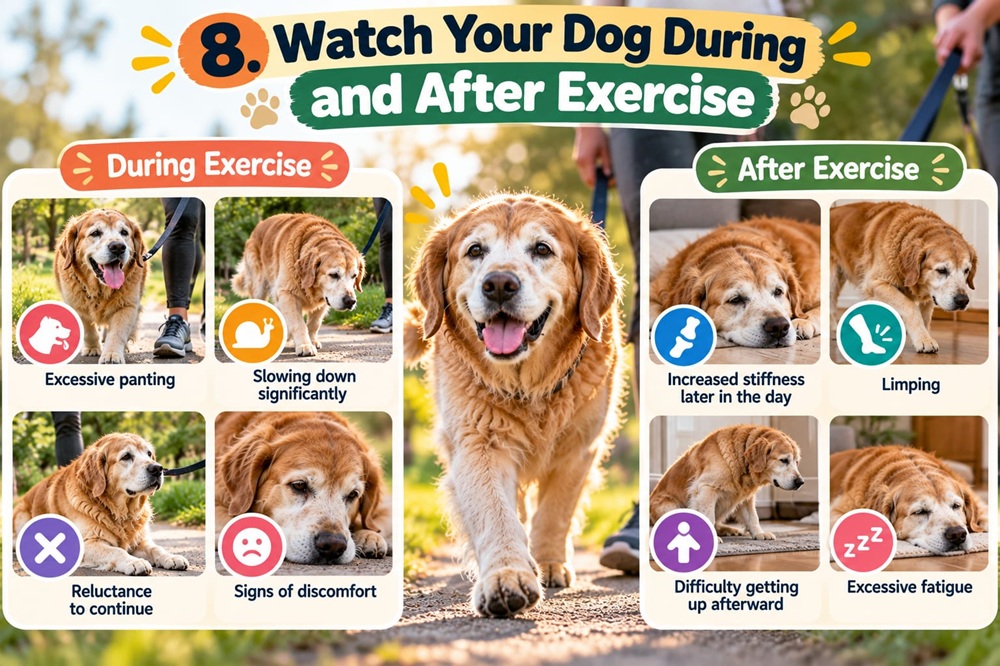
Your dog’s response to exercise can tell you whether an activity is appropriate.
During or after activity, watch for signs such as:
- Excessive panting
- Limping
- Reluctance to continue
- Sudden slowing down
- Difficulty getting up afterward
- Increased stiffness later in the day
- Changes in behavior
If your dog repeatedly becomes stiff or uncomfortable after a particular activity, reduce the intensity and discuss the issue with your veterinarian.
9. Maintain a Healthy Weight
Keeping your senior dog at an appropriate body weight is one of the most important things you can do for their joints.
Extra weight can place additional stress on the musculoskeletal system and make movement more difficult.
If you’re unsure whether your dog is at a healthy weight, ask your veterinarian to assess their body condition and recommend an appropriate feeding plan.
10. Make Your Home Senior-Dog Friendly

Your dog’s environment can have a significant impact on how safely they move around.
Consider:
- Using non-slip mats on slippery floors
- Providing an easily accessible bed
- Keeping food and water within comfortable reach
- Using ramps where appropriate
- Limiting access to difficult stairs
- Keeping frequently used areas free of clutter
These small adjustments can help your dog move around the home with greater confidence.
11. Give Plenty of Rest Between Activities
Senior dogs generally need more recovery time than younger dogs.
Don’t feel that your dog needs to be active all day. Balance periods of gentle movement with plenty of comfortable rest.
If your dog seems tired after an activity, allow them time to recover before another exercise session.
12. Keep Their Mind Active Too
Mental stimulation is another important part of keeping an older dog engaged.
Simple activities such as scent games, food puzzles, gentle training, and interactive toys can provide mental exercise without putting significant stress on the joints.
For many senior dogs, a few minutes of gentle mental stimulation can be just as valuable as a physically demanding game.
How Much Exercise Does a Senior Dog Need?
There is no single exercise routine that works for every senior dog.
A healthy older dog may be comfortable with several short walks each day, while a dog with arthritis or another medical condition may need a much more carefully controlled routine.
Your dog’s exercise needs depend on factors such as:
- Age
- Breed and size
- Weight
- Fitness level
- Existing health conditions
- Joint and mobility status
- Individual tolerance for activity
The best approach is to start with an amount your dog can comfortably handle and adjust it based on their response.
Signs You’re Asking Your Senior Dog to Do Too Much
More exercise isn’t always better.
Your dog may be doing too much if you notice:
- Increased limping
- Significant stiffness after exercise
- Reluctance to move
- Difficulty standing up
- Excessive fatigue
- Reduced interest in the next walk
- Pain or discomfort that persists after activity
If these signs occur repeatedly, stop or reduce the activity and consult your veterinarian.
When Should You Talk to a Veterinarian?
Before starting a new exercise program, it’s a good idea to speak with your veterinarian if your senior dog has known arthritis, significant stiffness, obesity, previous orthopedic injuries, or another health condition.
You should also seek veterinary advice if your dog’s mobility suddenly changes or if they appear to be in pain.
A veterinarian can help identify the cause of mobility problems and recommend an exercise plan appropriate for your dog’s individual needs.
Final Thoughts
Keeping a senior dog active doesn’t mean pushing them to do more. It means helping them move comfortably and consistently within their abilities.
Short walks, gentle activities, appropriate surfaces, mental stimulation, healthy weight management, and plenty of rest can all help support an aging dog’s mobility.
Most importantly, pay attention to your dog’s individual response. If an activity causes repeated stiffness, limping, or discomfort, it’s time to adjust the routine and seek professional advice.
With the right balance of movement and rest, senior dogs can continue to enjoy an active, comfortable, and fulfilling life.