
As dogs get older, changes in their joints and mobility become more common. However, not every change should simply be dismissed as “a normal part of aging.” Joint pain, arthritis, injuries, and other musculoskeletal conditions can gradually make everyday activities more difficult for senior dogs.
The challenge is that dogs do not always show obvious signs of pain. Instead, the earliest symptoms may appear as small changes in their routine, movement, or behavior.
Here are 10 early signs of joint problems in senior dogs that pet parents should watch for.
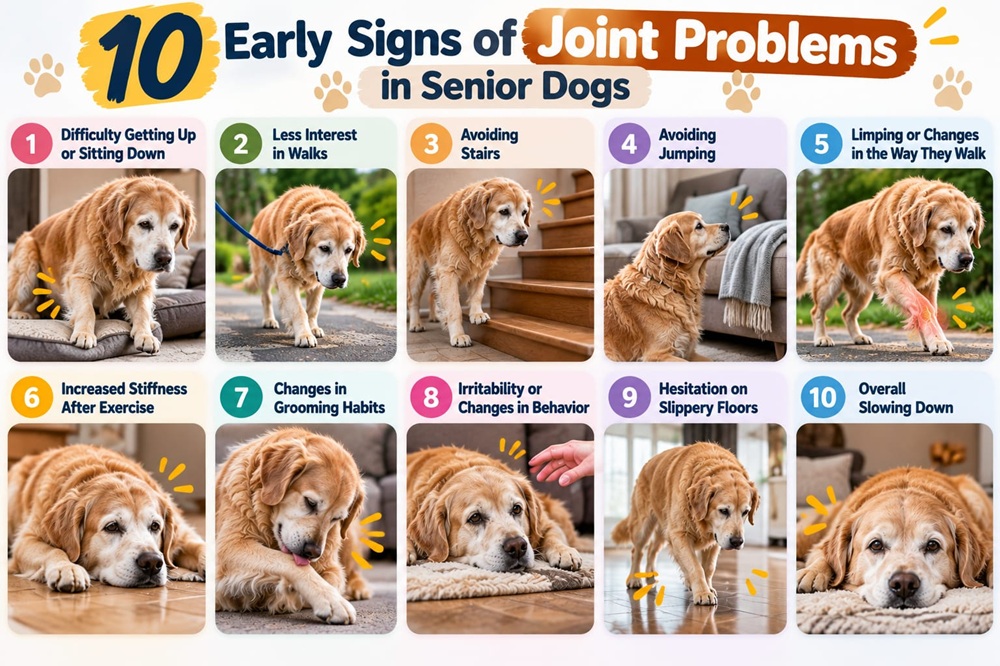
1. Difficulty Getting Up or Sitting Down
One of the earliest signs of joint discomfort can be difficulty getting up after resting.
You may notice your senior dog:
- – Takes longer to get up from the floor or bed
- – Moves slowly after waking up
- – Struggles to sit or lie down comfortably
- – Seems stiff for a few moments after standing
Stiffness after sleeping or extended periods of rest can be particularly noticeable in dogs with joint problems.
2. Less Interest in Walks
If your dog once became excited at the sight of a leash but now seems reluctant to go for a walk, discomfort may be one possible reason.
A dog experiencing joint problems may:
- – Want shorter walks
- – Stop more frequently
- – Walk more slowly than usual
- – Lose interest in longer outings
A gradual decrease in enthusiasm for normal activities should not automatically be considered laziness.
3. Avoiding Stairs
Stairs can put additional demands on a dog’s joints. A senior dog with joint discomfort may become hesitant about going up or down stairs.
You might notice your dog:
- – Stops at the bottom or top of the stairs
- – Takes each step very slowly
- – Needs encouragement or assistance
- – Avoids stairs altogether
A sudden change in how your dog uses stairs is worth paying attention to.
4. Avoiding Jumping
Dogs that previously jumped onto sofas, beds, or into cars may start avoiding these activities as they age.
Instead of jumping, your dog may:
- – Stand beside the sofa
- – Wait for you to lift or assist them
- – Hesitate before getting into the car
- – Look for an easier way to reach elevated surfaces
This change may indicate discomfort or reduced mobility.
5. Limping or Changes in the Way They Walk
Limping is one of the more recognizable signs of a potential joint problem, but not every dog develops an obvious limp.
Subtle changes can include:
- – Walking more slowly
- – Putting less weight on one leg
- – Taking shorter steps
- – Changing their posture while walking
- – Moving differently after exercise
Persistent changes in gait should be evaluated by a veterinarian.
6. Increased Stiffness After Exercise
Some dogs may appear relatively comfortable while they are active but become stiff afterward.
For example, after a walk or play session, your dog may:
- – Move more slowly
- – Have trouble getting up
- – Seem stiff after resting
- – Be less willing to move the following morning
Repeated stiffness after activity can be a sign that your dog’s joints need attention.
7. Changes in Grooming Habits
Joint discomfort or reduced flexibility can make it harder for a dog to reach certain areas of their body.
You may notice:
- – Less self-grooming
- – Excessive licking of a particular area
- – Difficulty maintaining normal grooming habits
- – Increased sensitivity when certain areas are touched
These signs can have many possible causes, so a veterinarian should help determine the underlying problem.
8. Irritability or Changes in Behavior
Pain can affect more than a dog’s physical movement. It can also influence their mood and behavior.
A normally friendly senior dog may become:
- – More irritable when touched
- – Uncomfortable when disturbed while resting
- – Less interested in playing
- – More withdrawn than usual
A noticeable change in behavior should not automatically be attributed to old age.
9. Hesitation on Slippery Floors
Smooth floors can be difficult for senior dogs, particularly those with reduced strength, balance, or joint comfort.
Your dog may:
- – Walk very carefully on tile or hardwood floors
- – Avoid certain areas of the house
- – Hesitate after slipping
- – Have difficulty maintaining balance
Using rugs or non-slip mats in frequently used areas can make movement around the home easier and safer.
10. Overall Slowing Down
Sometimes there isn’t one obvious symptom. Instead, a senior dog may gradually become less active overall.
You may notice that your dog:
- – Sleeps more
- – Moves around the house less
- – Plays for shorter periods
- – Takes longer to reach their food or water bowl
- – Becomes less interested in normal activities
When several of these small changes appear together, it may be worth discussing your dog’s mobility with a veterinarian.
What Can Cause Joint Problems in Senior Dogs?
Osteoarthritis, also known as degenerative joint disease, is a common cause of pain and mobility problems in older dogs. It can cause changes within the joints that lead to stiffness, discomfort, and reduced movement.
However, arthritis isn’t the only possible cause. Injuries, muscle weakness, neurological conditions, and other health problems can produce similar symptoms.
That’s why it is important not to diagnose your dog based on symptoms alone. A veterinarian can help identify the underlying cause.
How Can You Support Your Senior Dog’s Joint Health?
Once your dog’s condition has been evaluated, your veterinarian may recommend lifestyle changes that support mobility and comfort.
Encourage Appropriate Exercise
Complete inactivity isn’t necessarily the best approach for every senior dog. Appropriate, controlled exercise can help support mobility and overall fitness.
The type and amount of exercise should be adjusted to your dog’s individual condition.
Maintain a Healthy Weight
Excess body weight can put additional stress on a dog’s joints. Maintaining an appropriate body condition can therefore be an important part of supporting joint health.
Provide Comfortable Bedding
A comfortable, supportive bed can give senior dogs a better place to rest, particularly if they are uncomfortable lying on hard surfaces.
Improve Traction at Home
Non-slip rugs or mats can help senior dogs feel more secure when walking across slippery floors.
Schedule Regular Veterinary Checkups
Regular veterinary examinations become increasingly important as dogs age. If you notice a persistent change in your dog’s mobility, behavior, or activity level, discuss it with your veterinarian.
When Should You Contact a Veterinarian?
Some mobility changes require prompt veterinary attention.
Contact your veterinarian if your dog suddenly has significant difficulty walking, cannot put weight on a leg, appears to be in severe pain, repeatedly falls, or experiences a sudden and dramatic change in mobility.
Even gradual changes are worth discussing when they continue or become more noticeable over time.
Conclusion
Joint problems in senior dogs don’t always begin with obvious signs of pain. Difficulty getting up, avoiding stairs, reluctance to jump, stiffness, slower walks, and changes in behavior can all be potential early clues.
One of the best things you can do as a pet parent is learn what is normal for your dog. When you notice a consistent change in their usual movement or daily routine, don’t simply assume it’s part of getting older.
Early recognition, veterinary evaluation, and appropriate management can help support your senior dog’s comfort, mobility, and quality of life as they age.