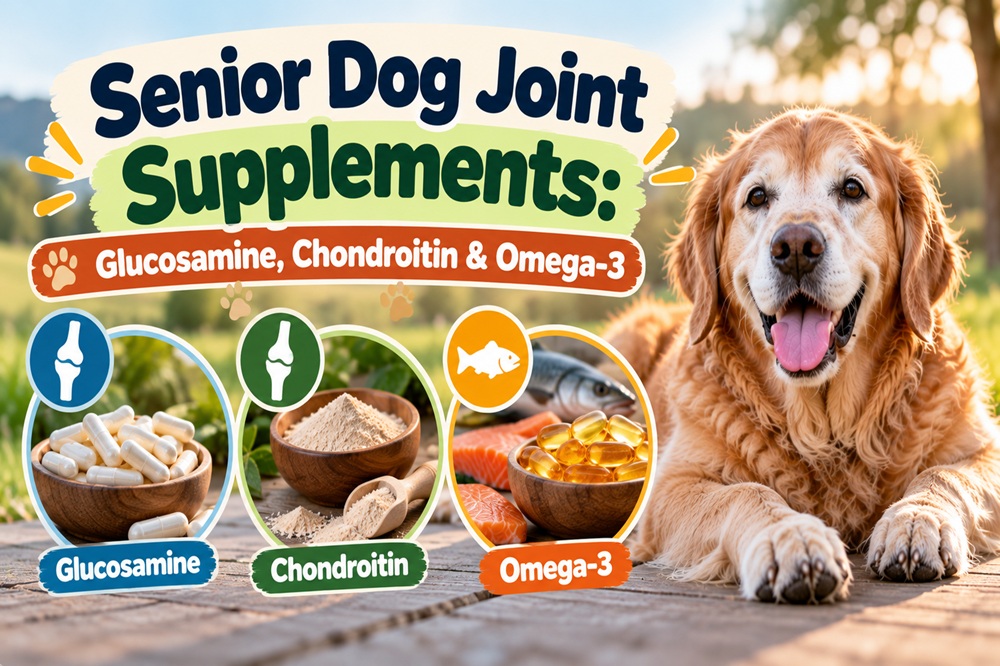
As dogs get older, joint stiffness and reduced mobility can become more noticeable. Many pet parents consider joint supplements such as glucosamine, chondroitin, and omega-3 fatty acids to support their senior dog’s mobility and comfort.
However, not all supplements have the same level of scientific support. Current veterinary guidance suggests that omega-3 fatty acids have stronger evidence for dogs with osteoarthritis, while evidence for glucosamine and chondroitin is more mixed.
Why Do Senior Dogs Need Joint Support?
Aging, previous injuries, excess weight, and normal wear on the joints can contribute to osteoarthritis and reduced mobility. Affected dogs may become slower, hesitate before climbing stairs, avoid jumping, or have difficulty getting up after resting.
Supporting joint health can involve several strategies, including maintaining a healthy body weight, providing appropriate exercise, using comfortable bedding, and working with a veterinarian when mobility changes appear.
Glucosamine for Senior Dogs
Glucosamine is a naturally occurring compound involved in cartilage and other joint tissues. It is commonly included in canine joint supplements and is often marketed for maintaining cartilage and supporting joint function.
However, clinical evidence for glucosamine supplements in dogs with osteoarthritis is not as strong or consistent as the marketing around these products may suggest. It may be included as part of a broader joint-support plan, but pet parents should avoid assuming that it will provide pain relief on its own.
Chondroitin for Senior Dogs
Chondroitin is another popular ingredient found in joint-support products. It is associated with cartilage and joint tissue and is frequently combined with glucosamine.
Some veterinary nutrition plans for dogs with osteoarthritis include added glucosamine and chondroitin, but evidence for their clinical benefits remains mixed.
This means they may be considered as part of an overall plan, but expectations should remain realistic.
Omega-3 for Senior Dogs
Omega-3 fatty acids—particularly EPA and DHA—have stronger evidence for supporting dogs with osteoarthritis.
Long-chain omega-3 fatty acids have anti-inflammatory effects within the joints, and veterinary pain-management guidelines identify omega-3 fatty acids as having stronger evidence among canine nutraceuticals.
Omega-3s may come from fish oil or specially formulated veterinary diets. The appropriate amount depends on the dog’s diet, size, health status, and the specific product, so dosing should be discussed with a veterinarian.
Glucosamine vs. Chondroitin vs. Omega-3
| Supplement | Common Purpose | Evidence in Dogs |
| Glucosamine | Cartilage and joint support | Mixed/limited |
| Chondroitin | Cartilage and joint support | Mixed/limited |
| Omega-3 (EPA/DHA) | Joint and inflammatory support | Stronger evidence |
These supplements should not be viewed as interchangeable. A veterinarian can help determine which option, if any, makes sense for an individual senior dog.
Should You Give All Three?
Not necessarily.
Some joint-support products combine glucosamine, chondroitin, and omega-3 fatty acids. While combination products can be convenient, more ingredients do not automatically mean better results.
Your veterinarian can consider your dog’s age, weight, diet, mobility, existing health conditions, medications, and nutritional needs before recommending a supplement.
How to Choose a Joint Supplement

When considering a supplement for your senior dog:
- Look for clearly listed active ingredients and amounts.
- Choose products from reputable manufacturers.
- Avoid assuming that “natural” automatically means safe.
- Check whether the product is appropriate for your dog’s existing diet and health conditions.
- Ask your veterinarian about possible interactions with medications or other supplements.
- Remember that supplement quality and formulation can vary between products.
Don’t Forget About Weight Management
A healthy body weight is one of the most important parts of protecting aging joints.
Extra weight places additional stress on weight-bearing joints and can contribute to osteoarthritis-related problems. Veterinary guidelines emphasize weight optimization as an important part of managing chronic pain and osteoarthritis.
Even the best supplement cannot replace appropriate nutrition and weight management.
Supplements Are Only One Part of Joint Care
A senior dog’s joint-health plan may include:
- Regular, gentle exercise
- Maintaining a healthy weight
- Comfortable and supportive bedding
- Non-slip flooring
- Appropriate ramps or steps
- Physical rehabilitation when recommended
- A balanced, age-appropriate diet
- Veterinary monitoring
- Supplements when appropriate
A complete approach can help support mobility and quality of life as your dog gets older.
When Should You Talk to Your Veterinarian?
Speak with your veterinarian if your senior dog develops:
- Persistent stiffness
- Limping
- Difficulty standing up
- Reluctance to walk
- Trouble climbing stairs
- Difficulty jumping onto familiar surfaces
- Sudden changes in mobility
- Signs of pain or discomfort
A sudden or significant change in mobility should not simply be attributed to aging. It may indicate an underlying condition that needs evaluation.
Final Thoughts by Whohpet
At Whohpet, we believe helping senior dogs stay comfortable and active starts with understanding their individual needs. Joint supplements such as glucosamine, chondroitin, and omega-3 fatty acids may play a role in a broader joint-care routine, but no single supplement works the same way for every dog.
For senior dogs, joint health is about more than supplements. A balanced diet, healthy weight, appropriate exercise, regular veterinary care, and a comfortable home environment can all contribute to better mobility and quality of life.
If your dog is showing signs of stiffness, reduced activity, or difficulty moving, speak with your veterinarian before starting a new supplement. Together, you can choose an approach that is appropriate for your dog’s age, health, and lifestyle.
Because every senior dog deserves to move comfortably, stay active, and enjoy more happy moments.
— Whohpet